Taylor the Ritualist, Ceremonialist, Priestess and Swiftian Divine Feminine Values

(Note: there are times in this post where I address women only just because that’s primarily who I work with in my own Priestessing, and I am very Divine Feminine centric in my approach, but that obviously doesn’t mean only women can be witches, that every Swiftie is female, or that people who aren’t women can’t experience the Divine Feminine).

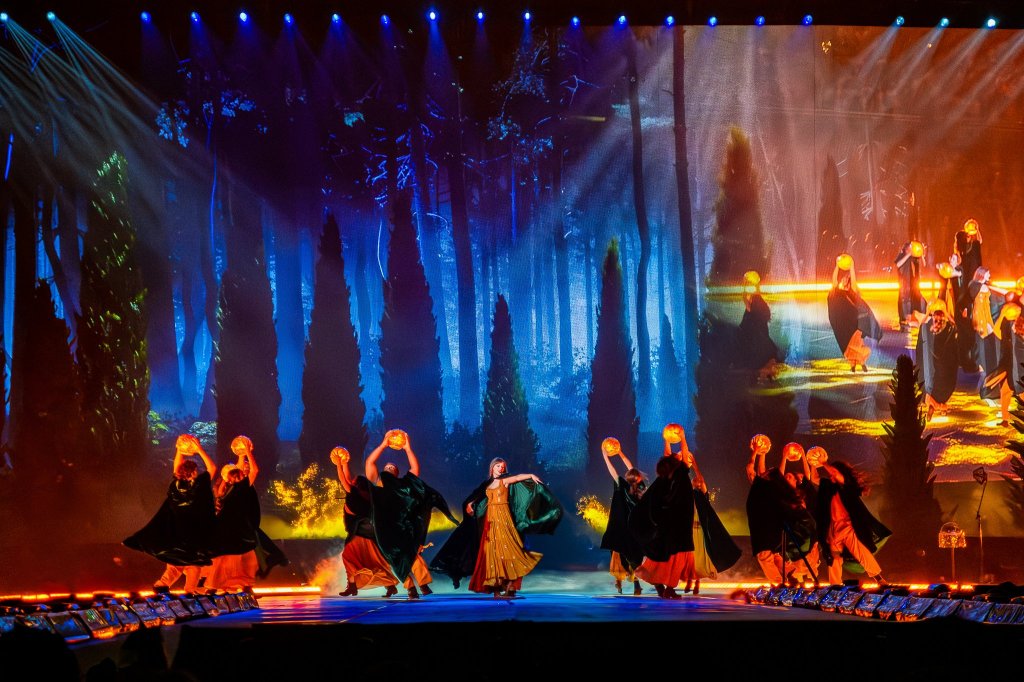
I saw a review for an Edinburgh Eras Tour show which described it (positively) as a ‘mass ecstatic ritual’. Many of the typical crowd (evangelical Christians and those adjacent) view this as a bad thing, because they hate anything slightly resembling witchcraft or paganism, but to me I see it as something extraordinarily positive and powerful.

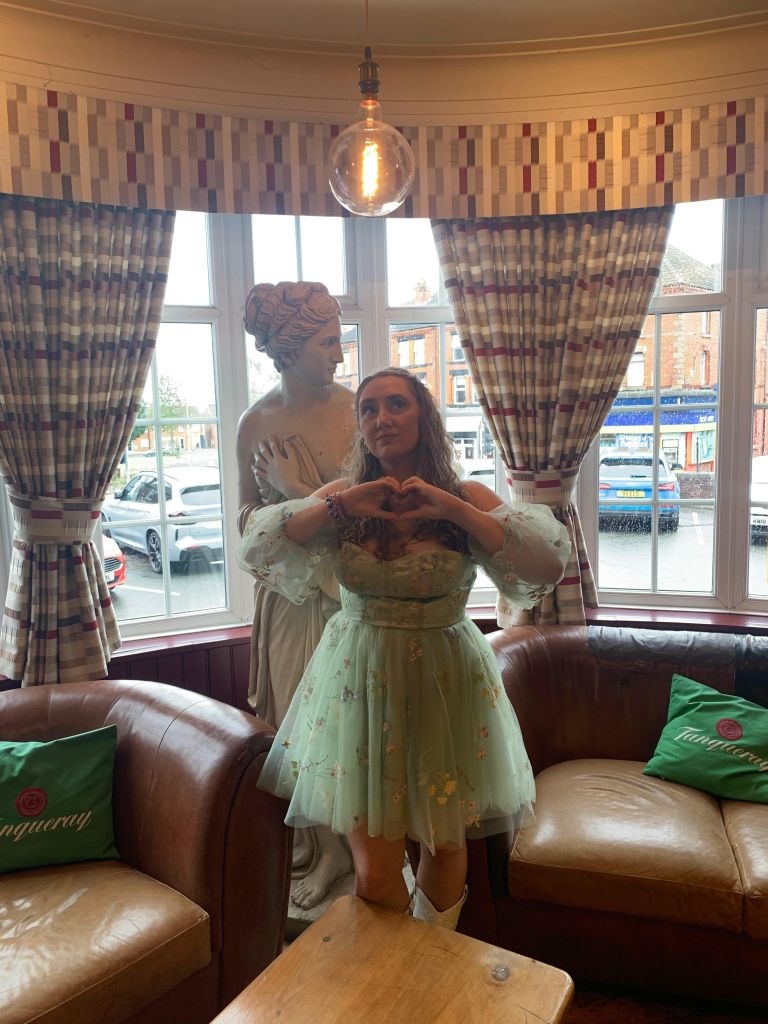
I was at Liverpool Night 1, and it really solidified my theory that Taylor is a priestess of the Goddess leading us in ritual. Perhaps she is conscious of this, perhaps she isn’t, but it lies within her.

The purpose of ritual, as well as to worship, is to create the conditions to allow us to experience the Divine through our emotional bodies and our spiritual bodies alike. This can be a huge catalyst for healing, processing, letting go, or revelation and epiphany. The purpose of a priestess/priest is to lead us through that, by acting as a mediator between Goddess/God/the Divine/Gods/Sprit and the ritual attendees. As much as I cringe when people call Swiftieism a religion and call Taylor their god, there is truth in the idea that a concert, especially one as emotionally charged as the Eras Tour thanks to the emotional resonance of Taylor’s music, is a ritual. In Rome, once a year women would attend a festival for Bona Dea (meaning Good Goddess) that was exclusively women only. We don’t know exactly what went down there but if similar mystery cults are an indicator we can assume it was an ecstatic ritual. Without the outright religious element and the women only element I feel as though the Eras Tour functions somewhat as a modern version of what I imagine the Bona Dea festival was like.

The Divine Feminine, unlike the Patriarchal Masculine (not the true Divine Masculine who is the Goddess’s lover) is all about accepting all emotions as part of life. We do not separate things into ‘good’ and ‘bad’ emotions or experiences, we seek to integrate the dark, hysterical, messy parts of ourselves and love them as much as we love our fun, happy, loving parts because it’s only when we shed light on our darkness that we can utilise it for good. We know that female rage is a sacred thing. We know that when our heart breaks, it opens us up to let more love in. Divine Feminine-oriented women love our sensuality and sexuality, and take pleasure in our own bodies, rather than view it as something that exists solely to please our husband who is seen in patriarchy as our sexual master and us as private property, or men in general when we are seen as public property. We see other women as our sisters and allies, and not competition. We know women and femininity aren’t just one thing but a diverse range of archetypes that can coexist at once. All of that is very much in alignment with Swiftian values. A Taylor concert then becomes a ritual or ceremony that brings all of that into coalescence.

When Taylor and her dancers performed Lover, Enchanted or Love Story, I felt the presence of the Goddess of Love (duh). When she sang Don’t Blame Me, Ready For It? and I Can See You, I felt the Lover again, but this time in a more sexy and erotic way. When she sang Shake It Off, But Daddy I Love Him, Fearless and You Belong With Me, I felt the presence of the unbothered, playful Maiden. When she and her dancers performed Willow, an obvious one, I felt the earthy, mystical Goddess of the Witches. When she performed Look What You Made Me Do or Who’s Afraid of Little Old Me?, I felt the presence of the angry and vengeful Goddess. When she sang The Smallest Man Who Ever Lived and Illicit Affairs, I felt the presence of the Goddess of Grief. When she performed marjorie, I felt the love of all of our beloved ancestors present in the stadium, pouring their love onto us.

Beyond the Eras Tour, Taylor has always used Divine Feminine imagery and symbolism in her writing and visuals, either consciously or subconsciously. From the ’13’ on the back of her hand, to her Inanna-esque declaration that ‘I rose up from the dead, I do it all the time’ and the snake imagery from that same era, to her usage of the images of Classical goddesses Diana/Artemis, Venus/Aphrodite and Themis to convey themes in her work.
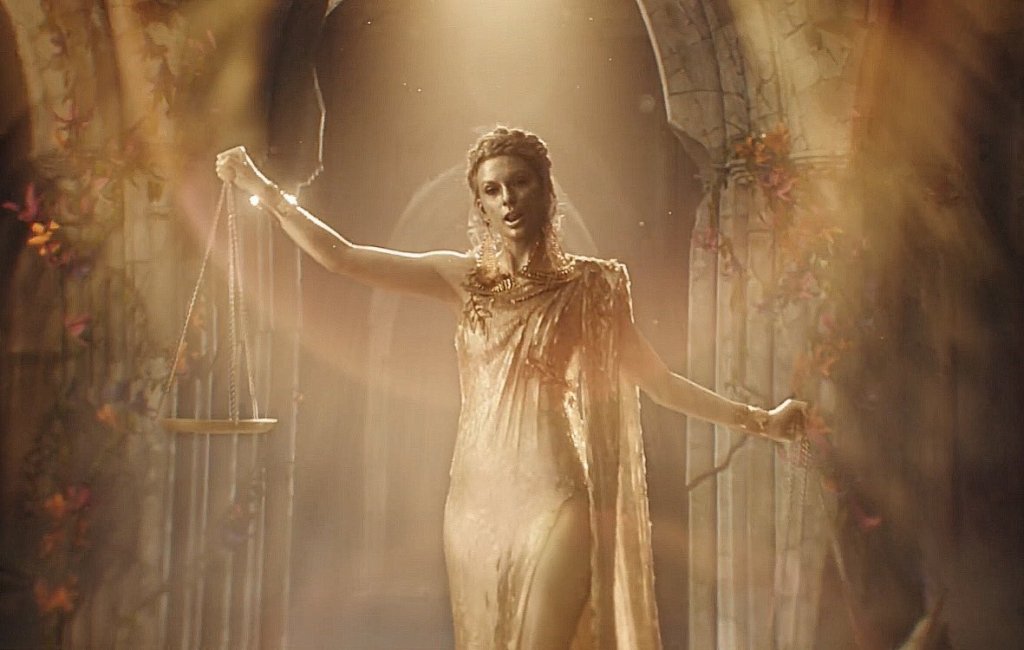
Taylor is not a goddess, and it makes me cringe to hear people say so. But I think what the Swifties who say that are trying to express is that Taylor is a priestess, whether this is intentional or not (personally I think she is clued into this stuff, as certain lyrics in her last album and other things she’s said/done would lead me to believe). There’s nuance here and I don’t want to take it too far or too literally, because after all, it isn’t actually a religious ceremony and there is no Deity being literally and overtly invoked. But the Goddess/Divine Feminine has always hidden in plain sight ever since She was suppressed in Western civilisation. You can find echoes of her in art, fairytales, other literature, even in the patriarchal religions themselves (Virgin Mary etc). To quote other incredible female singer-songwriters The Indigo Girls: “Pushed under by the main press, buried under a code of dress / Relegated by the Vatican / But you can’t keep a spirit down that wants to get up again.” The Eras Tour is about Taylor on one level, but on the spiritual level there’s more going on here. She is mediating Divine Feminine energies to her fans. She is acting as a Priestess.

As a pagan and specifically a Goddess-centric one, I truly believe many Swifties, especially atheist ones, would find even more Swift-esque joy in Goddess religion and Divine Feminine spirituality, but it’s up to them to make that jump if they want to, as we do not evangelise.

People, especially women but not exclusively, all over the world have been consciously remembering the Goddess for the past century or so. But I believe just as many are remembering Her subconsciously. She doesn’t stop touching us and healing us and loving us just because we don’t consciously acknowledge or worship Her. She is always there, leading every single person who allows themselves to surrender to their emotions and heart through their healing. And despite what anyone says, I know what I felt in that room on Thursday night. I know that I felt a strong energetic shift unlike anything I’ve ever experienced outside of actual dedicated pagan, Goddess and Divine Feminine centred spaces. And I’m not the only one who felt it, either. Several of my friends who attended messaged me to tell me the same thing. Traumas they’ve been unable to let go of are suddenly gone, as are limiting beliefs and fears and self-loathing.

So yes, Satanic panic conspiracy theorists, the Eras Tour is a ritual.

And that’s a beautiful thing.
~ Rhianwen

Reflections on Beltane: The Goddess of Sovereignty & Feminine Power

It is the first day of May, and for the first time this year, we’ve had our first *properly* warm weather in my neck of the woods. Couldn’t be more fitting.

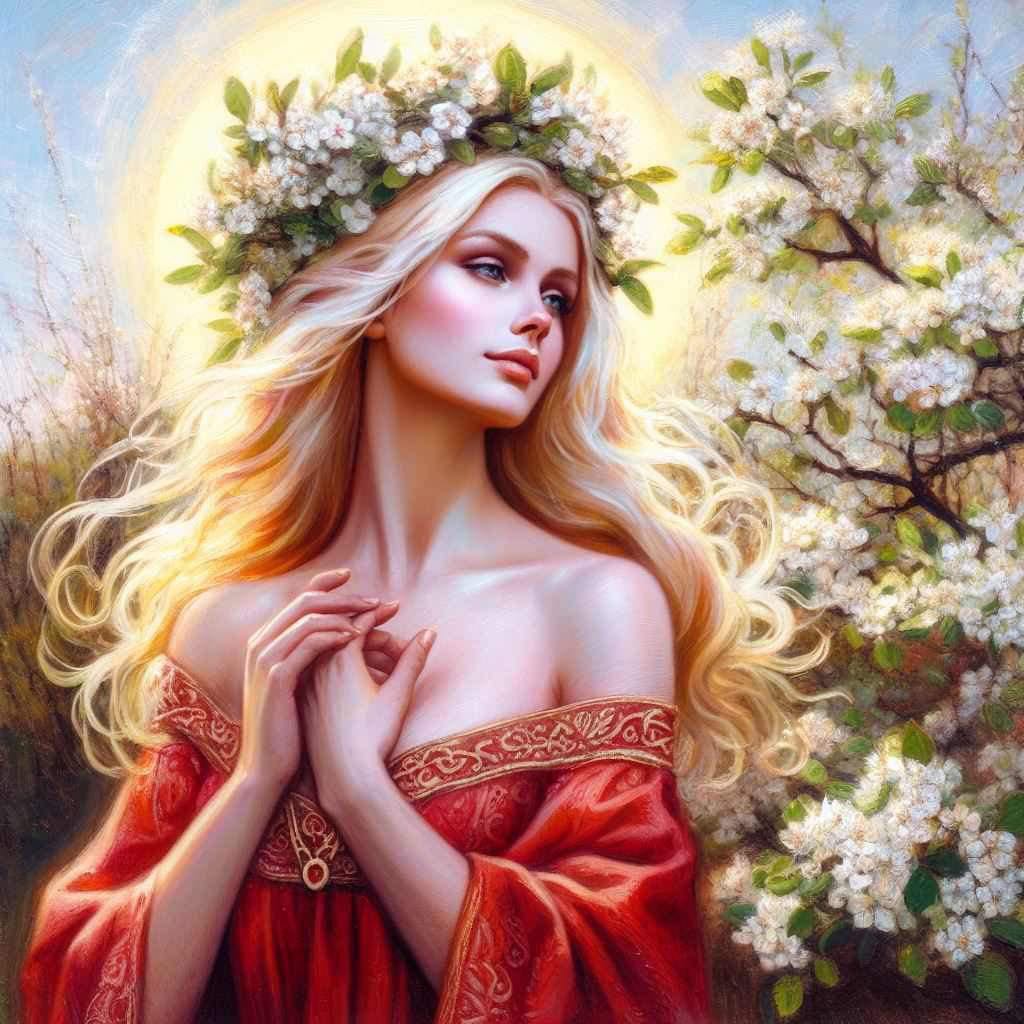
It’s the time of year where you look out the window and see bird couples cosying up to each other like a newlywed couple on their honeymoon. Despite the start of winter being labelled ‘cuffing season’ where people try to couple up to seek companionship and warmth in the cold months, it is this time of the year that is most aligned with romantic love and sexuality. Traditionally, young couples would go into the woods together on May Eve to make love and come back with flowers.

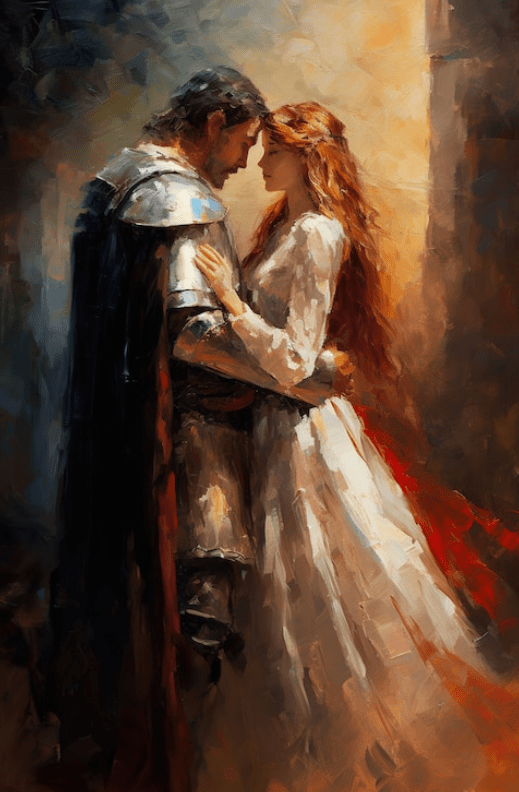
Art Credit

In some of the modern pagan religions who take their inspiration from ancestral Celtic myth and lore, this is the time we acknowledge the marriage of the Sovereignty Goddess, Goddess in the aspect of Lover-Queen, and the divinely anointed King. The Goddess chooses the King who is right for the land, making him Her chosen Lover, Champion and Protector. He is an absolutely necessary part in fulfilling and executing Her visions. To quote Caitlín Matthews in her illuminating Mabinogi companion King Arthur & the Goddess of the Land:

The king’s union with the land, the Goddess of Sovereignty, is a very special one characterised by an exchange of energies and powers: the king swears to uphold his land and people and to be true to them, while Sovereignty gives him otherwordly gifts enabling him to keep his oath. At its base, the Celtic concept of Sovereignty is related to the Middle Eastern concept of wisdom as Sophia, who consorts with kings as the creative and wisdom-bestowing mystic woman appearing in the form of either an angelic presence or an earthly woman. Solomon and Sheba are the prime example of this king-Sophia paradigm. In British symbolism, Arthur and one of Sovereignty’s representatives, such as Gwenhwyfar, exemplify the similar king’s paradigm.

This dynamic is hotly debated. I have read some hardcore reconstructionists and feminists alike caution against romanticising it too much as they believe it is nothing more than a patriarchal construct in which patriarchal monarchy is validated through claiming the Goddess gives them the right to conquer a land. And sure, we can’t know for sure that it wasn’t that, but we can’t know for sure that it was, either. To me, this seems very obviously an example of a time where patriarchal civilisation/order cracks and underlays the matriarchal, dare I say gynocentric foundations it is based upon. The masculine may rule in the outer realms, with our society being patriarchal for much of history, but the feminine rules the inner realms. In fact, many Celtic tribes were matrilineal, and while it was men who were the regnant rulers, the right to rule, the literal ‘divine right of kings’, was passed through the female line, meaning the king’s nephew through his sister, not his son, would inherit the crown (which potentially is what the struggle between Arthur and Mordred is referencing). To quote Caitlín Matthews once again from the same book:

Sovereignty is not merely a passive archetype, some kind of negative cypher whose sole purpose is to empower kings and heroes. As a goddess and through her human representatives she exists in her own right and actively promotes, obstructs, or dismisses her chosen candidates. She and her elect continually modify and develop their relationship; as the essential quality of the land personified, Sovereignty has the right to change her mind and frequently does so. Even Arthur himself is not exempt from her strictures.

And…

Throughout the course of our study of the relationship between Sovereignty and her champion, we note that the Goddess is not submissive, mild and biddable; rather, she is a powerful force armed with subtle skills and deep wisdom.

I’ve talked the ear off anyone who will listen to me ramble about this topic but there has been an obsession in the new age spirituality community (and its branch-off- the polarity dating coach scene) for a while to exalt ‘feminine submission’ and to push the narrative that the true ‘nature of the divine feminine’ is to submit to a powerful man. I’m aware that some people’s definition of ‘submission’ is different from my own, but following the dictionary definition, that term does not refer to most divine feminine figures I am aware of. New age spirituality is often just evangelical Christianity cosplaying as paganism or esoterica and I’m getting quite sick of it. It’s no reason why so many of them end up reverting back to Christianity (which I have no problem with in and of itself) and immediately start denouncing their previous path as demonic and evil. There is a very clear pipeline, and the misogyny found in both movements is very much the same. Whether this has been a feature of the new age movement from the beginning or has been a subtle takeover from the ‘alpha male’ dating coach bros, I don’t know, but I’m tempted to say it’s a combination of both, perhaps. But ‘divine feminine’ does NOT mean ‘divinely ordained Abrahamic patriarchal gender roles’, it means the power of the Goddess, that lives in everyone and everything, though women are the most direct embodiment of Her power on earth. We ourselves are not goddesses (Caitlín has recently written about this on her Substack– I highly recommend subscribing or grabbing the free trial so you can read it and its follow-up posts yourself) but we certainly are Her hands upon the earth, and if the Goddess herself is not submissive, why would we be?

Certainly there is a time and a place to let a man lead, make decisions, etc. Many women in the modern day feel burned out. Women are overtaking men in many areas of public life, but as a result of this they feel overworked and exhausted. Many feel the need to compete with men in the workforce to ‘prove’ they can ‘do everything a man can’- and that’s no good either. Your work ethic should come from you, not some desire to prove a point and it should not come at the expense of your emotional, mental, physical and spiritual wellbeing. Furthermore, many women in the dating scene, myself included, have expressed frustration with male passivity at the moment. Men are too frightened to initiate anything with women they’re attracted to and refuse to lead in anything. Just look at the comments in any video of Travis Kelce and Taylor Swift interacting to see how much many women, even feminist/liberal ones, find it attractive when a man is able to lead, be protective and masculine. But this doesn’t make every women at the receiving end of this inherently ‘submissive’. She leads in her own way, through setting the emotional, spiritual, sexual and romantic tone of the relationship. Through being the divine power source of masculine executive action. She plays the role of the Sovereignty Goddess. She is leading in the subtle, otherworldly, divine realms.

I have seen it said that the role of femininity is to support, amplify and nurture the masculine’s vision and power, but as a Goddess-worshipping Celtic pagan I can’t help but laugh at this because whilst it may be true in the sense of Abrahamic-traditionalist relationship structures, it is ignoring that this is mirrored in many pagan traditions where the role of the masculine is to support, protect and execute the visions and power of the feminine. It really depends on which angle you’re approaching it from and in which sense you’re actually talking about.

That’s not to say there aren’t times when the Goddess appears passive and submissive in these stories, but it is usually against Her will. In the fourth branch of the Mabinogion, Blodeuedd is created as the perfect, biddable, pliable, submissive wife for Lleu Llaw Gyffes. It is not until Lleu is away and she falls in love with the hunter Gronw Pebyr that she breaks free from this spell, initiated into decisive feminine sexuality that allows her to choose who she’ll love- and she chooses Gronw. Some pagan scholars have interpreted this as a seasonal allegory. The Sovereignty Goddess switches between a King representing Summer/Order/Light and a King representing Winter/Chaos/Darkness in order to hold the seasons in balance. I have talked about this here this time last year. There is a misinterpretation that the Winter King/Summer King narrative was invented by Robert Graves, but he only created a modern framework for a very old pattern in Celtic mythology. We see this same thing with Creiddylad as she is kidnapped by Gwyn Ap Nudd when she is due to be wed with Gwythyr. Gwenhwyfar, also, in many early Arthurian stories, is abducted by men in a similar fashion. Interestingly enough, with both of these stories there have been interpretations that these ‘abductions’ are actually rescue missions- the man that represents the Otherworld rescuing an Otherworldly faerie woman from her Christian captors and taking her back home. When the French got a hold of Arthuriana, they create Lancelot, and the abduction becomes a consensual love story. Lancelot is associated with the Lady of the Lake, and thus represents the Otherwordly Champion aspect of the divine masculine to Arthur’s Solar Hero.

Other goddesses/figures I consider to embody this Sovereignty Goddess (both in the Celtic tradition and otherwise) archetype are:

  • Olwen
  • Elen Luyddog
  • Rhiannon
  • Modron
  • Morgan le Fay
  • Elaine of Corbenic
  • Macha
  • Áine
  • Isolde
  • Mary Magdalene
  • Sophia
  • Inanna
  • Helen of Troy
  • Isis

And many more.

I am currently reading a book on courtly love- a medieval literary genre that influenced gender roles in the medieval court. Because of courtly love, women went from being seen as temptresses and the embodiment of evil, to the driving force behind all great masculine action, mediatrices between God and man, embodiments of Venus, and yes, the Sovereignty Goddess. Women hold the Power of Love, which transforms and initiates the masculine, as seen in the Heroes Journey. After all, what does a man getting on one knee to propose represent if not this? This ontological view throws a wrench in the submissive woman and ancillary femininity paradigm. In the courtly love dynamic, the feminine is the centre, the masculine is the protective rim that moves around her. I’ve talked about similar ideas to this in other posts. My path is extremely Goddess focused, but that does not mean I reject divine masculinity. Without the direction and executive powers of the masculine, the raw creative power of the Goddess would have nowhere to go. He carries out Her mission. In spiritual matters, the divine feminine leads, and so my spiritual path is divine feminine focused. In the physical, every day realm, I want a man who can step into his divine masculinity to lead in the physical. It’s not inaccurate to say neither of us are submitting to the other but actually I’d say we both are submitting to each other. And, of course, even if we are more feminine or more masculine we should each seek to integrate our animus/anima and incorporate aspects of both in order to lead the most fulfilled lives and not rely entirely on the opposite sex to embody all of the other traits for us (still working on this myself).

Ultimately, for me, Beltane is a celebration of all of this, and the most important festival in my personal observation of the Wheel of the Year. For most pagans it seems to be Samhain, for me it’s Beltane. I named my blog Idylls of the Queen for a reason, a play on Tennyson’s Idylls of the King. There is a whole feminine realm to Arthuriana that has gone over a lot of people’s heads until very recently, thanks to the work of the Matthews’, Dion Fortune, pioneers of the Avalonian branch of the Goddess movement, and many others, and much of it concerns this idea of the divine feminine as the true power driving the events of the stories: NOT the Christian god. In order to acknowledge divine feminine power, we need to look beyond the material, the exoteric, the obvious. We need to pull back the veil, go beneath the surface, read between the lines.

The Devil isn’t in the details, the Goddess is.

Further study:

  • Blodeuwedd: Welsh Goddess of Seasonal Sovereignty by Jhenah Telyndru
  • Rhiannon: Divine Queen of the Celtic Britons by Jhenah Telyndru
  • Ladies of the Lake by Caitlín and John Matthews
  • Courtly Love: The Path of Sexual Initiation by Jean Markale
  • Priestess of Avalon, Priestess of the Goddess by Kathy Jones