The Faery Lover & the Manic Pixie Dream Girl Trope

It’s been a hot minute, but I have a notes app list of ideas to write blog posts about! So I’m hoping to get back into the swing of things.

It always seems to be this time of year I get the urge to post on my blog. I think it’s because Beltane is the summation and epitome of everything my ‘path’ celebrates: sexuality, vitality, Celtic storytelling, sacred union, love, the faery world, the Sovereignty Goddess. Beltane is the festival in which we celebrate the marriage between the archetypal Celtic Queen and King. Of course, this marriage is the metaphysical basis for all the seasons, and the sovereignty goddess is the central axis upon which the festivals spin around, but if I had to choose one Celtic holiday to sum up the ‘Celtic Hieros Gamos’ it would be Beltane. I have made a number of posts referencing these ideas now, which you can find if you scroll back through my blog.

The Faery Queen and her Human Consort

As a Priestess of Rhiannon in training, one of the main Sovereignty stories I’m thinking about this particular Beltane is the story of Rhiannon and Pwyll from the first branch of the Mabinogi. Most of you reading this will already be familiar with the story, but if not, I recommend reading or watching a summary of it first. This story will feature heavily in the latter part of the post.
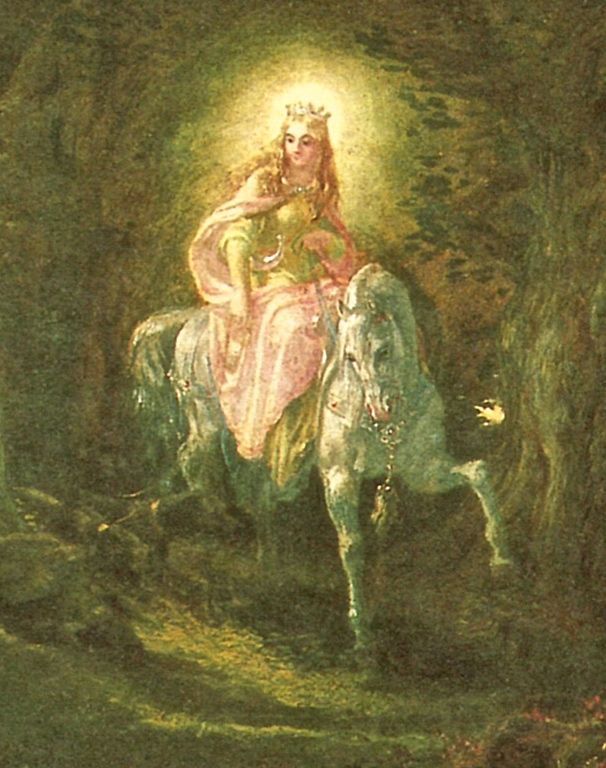
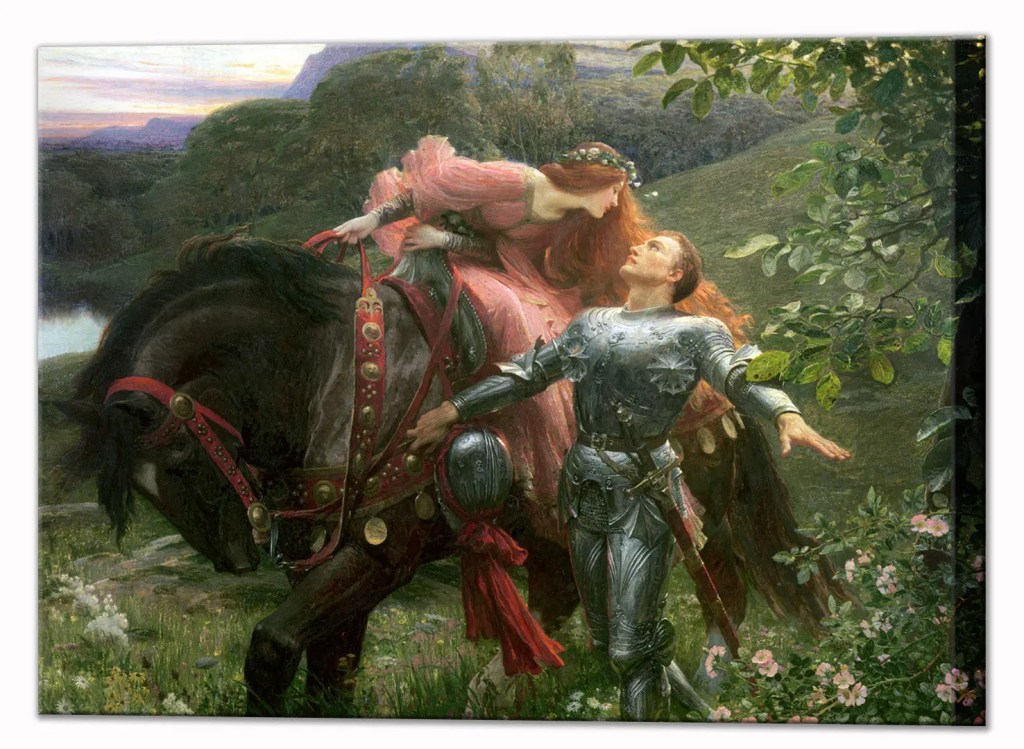
Rhiannon’s story is only one story in our collective Celtic consciousness about the ‘Faery Lover’ or ‘Faery Bride’- a mystical woman, arguably a goddess, who comes out of the mists or the waters or some other liminal faery gateway to take a human man as her lover. Quite the far cry from the timid medieval princess being married off to a stranger for the benefit of her father’s worldly kingdom, the Faery Lover often has agency, and chooses her lover for herself. In many of the stories, she only chooses a man who is already in right-relationship with the land and the world of Faery, and through her divine sexuality that anoints and empowers, he becomes a king. There are different versions of the Faery Lover/Queen/Bride motif, however- sometimes, the Faery Bride does not have much say in the matter, but usually when she is married off against her will, or is mistreated by her human husband, tragedy befalls the man or his kingdom. The Faery Queen/the Sovereignty Goddess will not accept marriage or sexual union with a man she doesn’t choose without putting up a fight. Sometimes, she is the hinge in a love triangle between two men who represent the polarities of Winter/Summer, Old/Young or the Otherworld/This World, and betrays one for the other to represent the changing of the seasons or the ruling order of the realm. Sometimes, she presents her human lover with trials or challenges, which represent the man’s initiation into kingly, divine masculinity. We see this in stories of Courtly Love, where the Lady, such as Guinevere, represents the Faery Lover/Queen. We also see this with Morgan le Fay, who is usually presented as an adversary to Arthur’s knights rather than a lover to most of them, but nevertheless falls into the archetype of the Faery Queen ‘cruelly’ presenting the knight (male initiate) with trials, which ultimately make him into a better, stronger man.

The Manic Pixie Dream Girl

The ‘Manic Pixie Dream Girl’ trope, is a phrase that describes a pattern in (mostly modern) storytelling. In MPDG stories, we begin with a normal, average Joe, ‘everyman’ type of guy, often with a mundane office job that takes up the majority of his time. He goes home to his apartment every evening, watches the news, eats dinner, and goes to sleep, and then repeats this every day hereafter apart from on the weekends where he does some equally mundane ‘normie’ leisure activity. His life is fine, he may be slightly depressed, but he’s otherwise ‘just getting on with it’. Until one day, he meets this woman. She is larger-than-life, quirky, interesting, bohemian, devil-may-care, eccentric, mischievous, philosophical, ‘different’. She enlivens his world in a way he hasn’t experienced since he was a child. Sounds romantic, right? Except often, the MPDG has no goals or desires of her own. She exists to ‘enlighten’ the male protagonist, to be projected upon in his quest to bring whimsy and magic back into his life, and that’s it. Some writers play with deconstructions of the trope, in which the MPDG may actually be mentally ill (‘manic’ in a literal sense) and thus deeply troubled (Effy from Skins, Alaska from Looking For Alaska), or they show that the male protagonist was only using her in his quest for self-discovery and abandons her when he has absorbed enough of her sparkle. He may also try to make her ‘normal’ by the end of the story once he no longer needs her to be her faery-esque self, both in critical deconstructions of the trope or uncritically in media utilising the trope itself (typically older media). We see this archetypal pattern play out in real life, too. Tropes are just media versions of archetypes, and archetypes define our lived reality.

If you ask me, the Manic Pixie Dream Girl can be seen in two ways that are interconnected: 1) A modern version of the ‘Faery Lover’ archetype, and 2) Man’s subconscious desire for sacred union with the Divine Feminine, or Goddess. The MPDG shows him there is another way to live, another way to view the world. His world is black and white before he finds Her, who fills it with vibrant colour. She is his initiator into the ways of the Divine Feminine.

Human Women Aren’t Goddesses

Now, I don’t actually think this is inherently a bad thing at all. I actually think it’s beautiful that women can help men enter sacred union with the Goddess. Women represent the portal between this world and the Otherworld, through our wombs that can be seen as portals. This is why I think stories of a free, lively woman brightening up a man’s life can be a representation of something both real and healthy: the way feminine power can be a true blessing to men. The problem lies wherein the man forgets that his woman is not actually the Goddess, but a human woman. Yes, she has the Goddess within her, and he recognises that. She becomes a mirror to him, and in seeing Goddess within her, he finds God within himself. He realises there is more to this world than his 9-4 office job, the pub and watching the evening news. But she is not actually the Goddess, and both parties must remember that. I truly dislike the new age spirituality trend of human women being called ‘goddesses’. I find it both blasphemous hubris, but also dangerous to a woman’s spiritual journey, especially if she is having this projected on to her by a male partner who expects her to be the perfect image of the infallible, shining Venus, with no ‘human baggage’. And in the oldest stories, Venus isn’t always the radiant, exalted Queen of Heaven. She also finds herself on her hands and knees, in the Underworld, stripped of all her power. Men raised in a patriarchal society (which is most of them) often have a much easier time accepting the light feminine than the dark. The woman’s partner who is projecting his desire for the Goddess onto her may not accept this cthonic aspect of her inner Venus, especially if he has not integrated his own shadow. The idea that projecting an image of Venus/the Goddess onto human women can be contrary to women’s liberation is also present in criticisms of Courtly Love, wherein the idealised Lady was seen as functionally identical to Venus or the Virgin Mary. Whilst Courtly Love certainly did uplift the status of women in my opinion, it is valid to claim it is not identical to the aims of today’s feminism. Feminism needs to allow room for women to make mistakes, to be human. In order not to fall into this idealisation/pedestal pitfall, it may be helpful for a man to meet and integrate his own inner feminine first before becoming the lover of an archetypal ‘Faery Woman’, or to already have a relationship with the Goddess without the need for a female partner to be a perfect reflection of Her for him. Just like how it is helpful for women to learn to ‘rescue themselves’ without needing their Prince Charming to do it for them. This doesn’t mean a woman cannot love the structure and safety provided by the Divine Masculinity in her male partner, or that a man cannot love the magic and radiance provided by the Divine Femininity in his female partner, but that in order to avoid falling into projecting an unrealistic ideal onto your partner, you must find it in yourself, or in the actual Divine, first.

Another problem that might occur when a ‘Normie’ Man falls for a Faery Woman that her way of living and viewing the world may not always serve him and his lifestyle. What happens if he wants her to prioritise a corporate job and make more money, but she would rather work fewer hours in order to honour her feminine cycles and need for rest? What happens if he wants her to be more ‘normal’ before his friends and family, but she refuses to hide her true self? What happens if their parenting styles clash because she wants to homeschool their children in a wild and holistic way and he’d rather them go to a traditional school? The man may unconsciously believe that the ‘Otherworldly Faery Goddess’ nature of his partner may be nice in the bedroom, or when he needs a break from the slog of his 9-5, but not in the ‘real world’. The very qualities he once loved about her now become something he comes to dislike. The man may let modern society’s patriarchal norms colour his perceptions of his ‘Faery Goddess’, and he may come to see her ‘Faery Goddesss’ traits as ridiculous, uncivilised or unhinged, where he once saw those same traits as the missing puzzle piece in his life. He tries to ‘tame’ her.

Rhiannon and Pwyll

In the first branch of the Mabinogi, before Pwyll even meets the otherworldly faery goddess/queen Rhiannon, he goes on an initiation through the Otherworld as a favor to Arawn, the king of Annwn (sometimes seen as interchangeable with Gwyn ap Nudd). Rhiannon, presumably hearing of this brave and adventurous man in her own faery world, comes to earth to seek him out to be her husband, despite being betrothed to another man. By being already initiated in the ways of Faery, Pwyll impresses Rhiannon, and the two end up marrying. But despite his Otherworld initiation, they do not live Happily Ever After. When Rhiannon is struggling to conceive a child, Pwyll’s court and people began to turn on her. Finally, she gives birth to a beautiful, healthy baby boy and is in their good graces again. But when their baby disappears from Rhiannon’s bedside in the middle of the night, Rhiannon’s cowardly handmaidens, fearing they’ll be blamed, smear their sleeping mistress with puppy blood, and accuse Rhiannon of killing her own son. Rhiannon doesn’t fight back, and takes the blame, in what I personally perceive to be an act of compassion and grace for her handmaidens not unlike Jesus dying on the cross for the sins of the world, as well as perhaps resignation that she wouldn’t be believed even if she defended herself and denied wrongdoing. While it doesn’t say this in the text, I imagine Pwyll’s court and people would’ve had an easy time accepting Rhiannon’s guilt because they likely already viewed her as ‘other’. She came out of the worlds of Faery. She is different, potentially dangerous, to these human tribes who have already at this point began shifting into true patriarchy, which views the feminine and the Faery realms as something to fear. Sound familiar? Like I said earlier, a man can turn on his MPDG or Faery Lover once other people’s thoughts and opinions get into his head. Rhiannon’s Otherworldly nature, that Pwyll once adored about her, is now something to be feared- Nature and powerful women something to be feared, as was quickly becoming a core axiom of the new patriarchal order that was falling out of harmony with the subtle, mystical, and arguably feminine Otherworld.

In punishment for the crime of infanticide she did not commit, Rhiannon is sentenced to play the role of her mare for years, offering to carry visitors to Pwyll’s palace on her back. The mare, once a symbol of her power and sovereignty, has now become a symbol of her shame and humiliation, just like her Faery nature has now become something to be feared and reviled.

Later on, finally, Rhiannon is vindicated. A peasant couple found her baby in their stable, and have been raising him for years. He is strong, healthy and unharmed. The kingdom rejoices, and so does Pwyll, but he never so much as offers her an apology in the story. Rhiannon names her son Pryderi, meaning ‘anxiety’, to represent the years she spent mourning for him and fearing that he is dead.

After Pwyll presumably dies, Pryderi arranges a marriage between his mother and Manawydan fab Llyr, who is often interpreted as the god of the sea. You can take this as a patriarchal act of a woman needing to have a husband to be provided for, and her son handing her over to her new ‘master’, but you can also take it, as I tend to do, as it being Rhiannon’s choice. As I mentioned earlier, many ‘Faerie Bride’ stories feature a love triangle between her and two men representing the polarities of Dark/Light, Old/Young or Mystical Otherworld/Ordered Civilisation. While Pwyll had made his Otherworld journey and at one point was in alignment with the Otherworld, he arguably fell out of alignment with it when he humiliated Rhiannon in favour of the anxieties of the ‘civilised’ world against the so-called ‘chaotic, dangerous’ Otherworldly faerie woman/goddess. Manawydan, as a sea god, very much represents the forces of the Otherworld, and thus Rhiannon taking him as her husband may represent a sort of ‘homecoming’ for her, as the sea was often thought to be associated with the Otherworld, or the portal through which one enters it. Horses, too, in some of the Celtic and other Indo-European thought seem to have been associated with the sea. Manawydan’s Irish cognate Manannán rode a magical horse named Enbarr, whose name means ‘froth’, bringing the image of the horse-like appearance of the frothy white waves. Rhiannon’s white mare has also been interpreted as one of these oceanic horses, too.

Compare the above to the other Faerie Bride love triangles, in many of which the Faery Bride ends up choosing to be with the ‘Otherworldly’ man, and you could argue that these stories serve as a warning to the real life human men who choose to be with a ‘Faery’-esque, ‘Manic Pixie Dream Girl’-esque woman. If you don’t respect her Faery ways, if you try to shame her, tame her, and can’t accept her for who shame is, she may leave you for a man who can.
The Maiden of Spring: Hope and Sorrow

Well, it’s been a hot minute!

I know I’ve abandoned this blog, and I can’t say for sure that I’m ‘back’, but I am going to try to post on here at least once a month going forward.

For the last 3 weeks or so I’ve not been in a great mood, ranging from just kind of low to completely emotionally distraught to feeling just numb inside. I deactivated Facebook, stopped replying to inboxes and have spent a lot of time just enjoying my own company and resting, experiencing an inner winter even as spring is blooming.

Today is the spring equinox, with the fixed modern pagan observance of Ostara happening tomorrow on the 21st. Walking to and from work this week has been lovely. Monday in particular had beautiful weather and I decided to walk to work instead of getting the bus, but regretted wearing a jumper, leggings, long boots and my winter coat when I could’ve at the very least gotten away with my denim jacket instead of the coat. It’s that awkward time of year where you never know how to dress.

I always really notice a palpable energy shift this time of year. I don’t just mean because the weather is different and because the earth looks different, but it feels almost like in late March we’ve stepped into a slightly different version of the world. It’s not something that can be described logically with words, but something you just feel with your body & soul. In the Celtic traditions, liminal spaces are seen as extremely magically potent. The shift from winter into spring and the shift from summer into autumn are, to me, the most magically potent times of year because they are extremely liminal. The shifts from autumn to winter and spring to summer are noticeable too, but not almost as much.

Many of the trees are covered in lovely, delicate pink blossoms. The Earth Goddess wears the mantle of the Spring Maiden. Women’s mystery traditions such as Dianic Witchcraft and the Glastonbury Avalon tradition observe the seasons as the Goddess ageing, dying and being reborn, and work with the uncanny resembles that has to the cycles in human women’s own lives, be that on a macro level (birth to death), or a micro level (our menstrual cycles). Other Neopagans view the Goddess as ageless and it is instead it is Her son or lover who goes through this process. Some see it as both. In the Filianic tradition which I used to be a part of and still somewhat align with, as Neoplatonists it is believed that the cycles of the earth reflect eternal truths and metaphysical events that take place outside of matter, time and space. In Filianism, the Spring Equinox and the days leading up to it are observed as the death and rebirth of God the Daughter, the World Soul who mediates the light of the Divine Mother to us here on earth.

Goddesses who embody the archetype of the young spring maiden (who I typically see as a teenager of about sixteen years old) include Ostara/Eostre (who, regardless of whether or not she was an invention by the monk Bede or actually worshipped, certainly is a goddess who is worshipped and adored today so it doesn’t matter. I also personally do believe she was really worshipped, and an obvious descendant of the H₂éwsōs lineage of Indo-European dawn goddesses), and Kore/Persephone. You could broaden this to include Brigid, though I’m specifically talking about goddesses often associated with this time of year and Brigid is obviously more associated with Imbolc. Similarly, you could broaden this category to include the May Queen goddesses such as Flora, Olwen, Gwenhwyfar, Creiddylad and Blodeuedd, though in terms of women’s mysteries archetypes I see them as embodying the Lover archetype which I see as a woman in her twenties, and they are obviously more associated with Beltane.

The element and cardinal direction associated with the season of Spring will differ depending on your tradition. In the Glastonbury Avalon tradition, it is associated with the cardinal direction East and the element of Fire. In Filianism, it is also associated with the cardinal direction East but instead of Fire, the element of Water. I can see arguments for both of these. On the one hand, the sun rises in the East and Spring is associated with the rising of the sun, which is a huge ball of fire. Fertilising heat quickens and awakens the land from slumber. On the other hand, it also makes sense for Summer to be associated with Fire instead, leaving Water for Spring. In many parts of Europe, especially here in the UK, Spring (especially March and early April) still tends to be very wet (although this is changing due to global warming).

But related to the idea that spring is the season of water, I wanted to explore a quote I read about the Spring Maiden recently, and relate it back to my life and personal journey at the moment.

“Ostara is usually experienced as a young maiden – as Ember Cooke writes, ”…old enough to bear children, but not a mother.“ She is wreathed in flowers or new greenery, and often dances.
She is often joyous, but can just as easily turn suddenly solemn, like the spring weather that can quickly turn to rain.
Like Spring itself, she is capricious, innocent and knowing by turns.
Hail to the Maiden of Spring, the dawning of the year! Bring freshness into all our lives.”


I have been feeling so upset with myself for not feeling all positive and perky now that spring is here. But just as I was able to partially heal my fear of getting older by observing that many of the most fecund, passionate, lusty beautiful gifts of the Goddess of Love and Beauty don’t occur until mid summer (roses) to late summer and early autumn (apples), once again Nature teaches me that to embody the Spring Maiden isn’t always to be a smiling, dancing, positive sweetheart. Patriarchal modes of being and thinking love femininity when it’s all pretty pink blossoms and giggles and a soft touch, yet they shame our emotional expression, complexities and depth. This is why it’s incredibly important to recognise when men say they want feminine women if they want feminine women in their fullness, or feminine women who are only feminine when it benefits them. The Spring Maiden archetype is one of two feminine archetypes that patriarchy has accepted the most, as well as the abundant Summer Mother, but even these archetypes have aspects that patriarchal men who don’t actually like femininity (even if they insist they do) are threatened by.

Water is the element of emotion, and so if we believe spring to be the season of Water, that means accepting the Spring Maiden for all these She is, not just the easy-to-appreciate pleasant parts, and for all that we are, too. And so, it’s okay that I’m struggling right now. My rain-clouds are just as beautiful as my blossoms.

The Spring Maiden is identical to the Dawn Maiden. Dawn and Spring symbolise hope, renewal, and indomitable innocence and optimism that refuse to be crushed by the cruelty of the world. Sadness only becomes all-consuming once you abandon the spirit within you that believes KNOWS things can get better. I might be lonely and hurting over my dating prospects right now in a world that seems to be abandoning virtue, monogamy, marriage and family, but I refuse to believe that all men are like that and that chivalry and romance are completely dead, no matter how many voices tell me they are. On a much more important note I look at what’s going on in Palestine at the moment and while it’s incredibly tempting to just lose yourself to despair, I see beautiful smiling, laughing children in refugee camps, and I remember that if they can keep their innocence and hope alive, I have to, too. For them, for myself, and for the world. Evil only wins once we lose hope that it can be defeated. “We’ll cry tonight, but in the morning we are new // Stand in the sun, we’ll dry your eyes.” – Arise, Flyleaf.

You can listen to my Ostara playlist here.

~ Rhianwen

Finding The Solar Goddess of Love: A Look at UPG and Recorded Lore

Daylight by Taylor Swift

Hello beauties. I hope if you’re in the Northern hemisphere like me, you’re enjoying the last of our summer days.

Here in the UK it has rained most days for the past six weeks. We had summer solstice, and then immediately after the jet stream and low pressure has doused us with nonstop rain, a sharp contrast to the droughts and heatwaves of last summer. In a way, it’s a good thing. The land probably needed it. I remember this time last year spending a week down south, and everywhere we went the grass was brown and dead. This year everything is beautifully green. Green and soggy. I really miss the sun. I’ve spent so much time inside. Last summer I spent hours every day sitting in my back garden soaking up the rays and feeling the warmth of the Divine Lady Sun Goddess kiss every inch of my body.

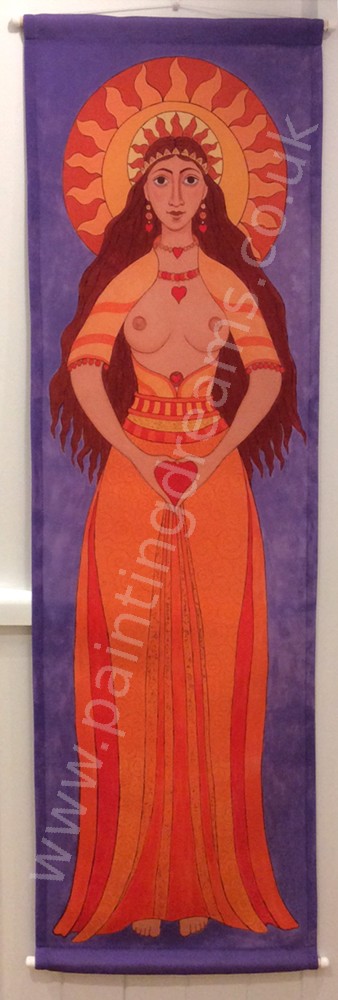
Which is my segue in to the topic of this blog post. The solar feminine, and specifically, the ‘solar goddess of love’.

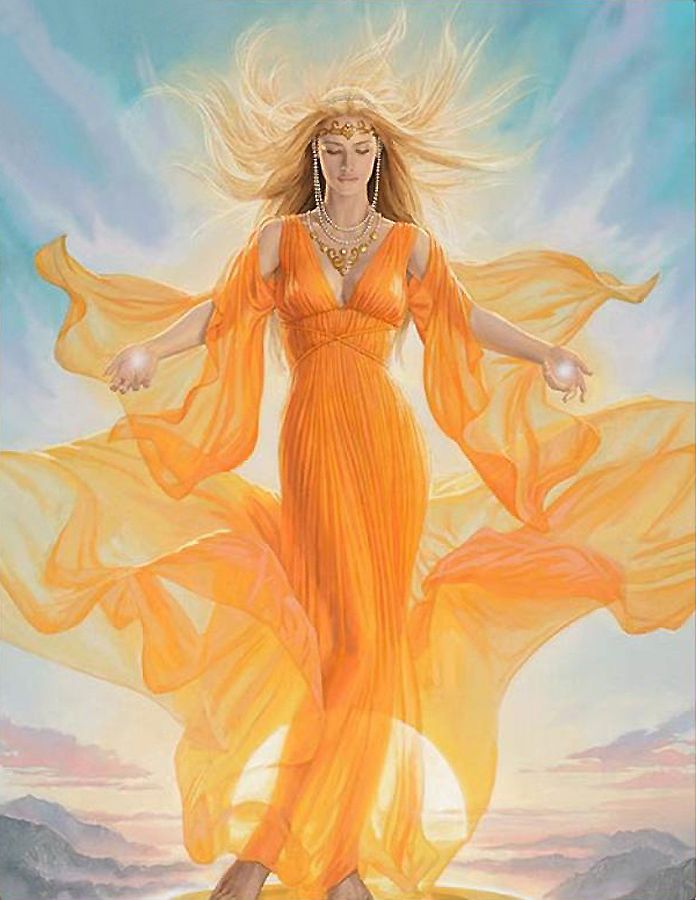
Art by Wendy Andrew

Last night at my moot, we listened to an illuminating talk about the origins of sun worship and the role it plays in our lives today as modern pagans. Most modern pagans focus more on the moon, which makes sense. In a world where solar energies have been the focus of patriarchal religion for thousands of years, and on a planet which is being devastated by global warming, it would make sense that many of us would want to seek refuge in cooler, gentler lunar energies- which are typically viewed as divine feminine energies. The sun, in many cultures, has been seen as masculine. This does make sense. If the earth is feminine, the womb of creation, the sun is the fertilising aspect of creation that joins in union with Mother Earth so that she can birth life. The rays can be seen as phallic, and the firey, sometimes angry nature of the sun can be compared to warrior-like energies. The moon and the earth, meanwhile, are typically seen as feminine, with the moon representing the mystical, intuitive aspects of the feminine (like the High Priestess card in the Tarot) and the earth representing the fertile, fecund aspects of the feminine (like the Empress card). This makes sense, and it works for plenty of people. For me, however, I’ve always felt more connected to not only solar energies, but specifically, divine feminine solar energies. I’ve tried, for years, to convince myself I should just do what everyone else does and go along with the solar masculine/lunar feminine dichotomy. I spend a lot of time in what many would class as ‘new age’ spaces, and that’s the party line at those. And I have no problem with them doing that, but it’s not me. It is so reductive and dogmatic to state with absolute conviction that the sun is masculine, when world history has gave us probably just as many sun goddesses as sun gods.

There are many reasons the sun has became much more associated with the masculine than the feminine in modern paganism and occult/magical thought. The incredible book Drawing Down the Sun gives some reasons for this, one of the major ones being the popularity of Max Müller’s theories at the time. Müller hypothesised that every single myth told the story of a heroic male solar god overcoming the darkness. His theories were later debunked, but certainly stuck around long enough to play an active role in what would later become the pagan revival movement. I’ll share a quote of hers below, but I really recommend buying the book and reading the whole thing. The chapter at the beginning, the Hidden Sun, goes in to a lot of detail about why the erasure of the solar feminine has occurred.

Ultimately, an active female sun would not have agreed with the morals and social taboos of the Victorians. Their interest in a universal language and making ancient myths fit the mold of Christianity made it impossible for the solar feminine to be recognized. A woman playing such a vital role in religion didn’t fit into their worldview. The passive, gentle moon reflected the ideal woman of the time far better than the vibrant, sometimes warlike sun. The popularity of classical myths further ingrained as the norm the idea of male/sun, female/moon.

Drawing Down the Sun by Stephanie Woodfield

The solar feminine, to me, is also the Empress card in the Tarot just as much as the Earth is. She is Hemera. Helen of Troy. Eos. Aurora. Theia. Demeter. Dea Dia. The Sun Goddess of Arinna. Aditi. Hathor. Sekhmet. Bast. Isis. Aine. Etain. Epona. Alectrona. Rhiannon. Olwen. Gwenhwyfar. Elaine of Corbenic. Elen Luydogg. Iseult. Brigid. Grainne. Amaterasu. Sunna. Sulis. Eostre. Ausrine. Ostara. Hewsos. Saule. St. Lucia. Sai Rayya. Sophia. So many more.

While I do not want to bring gender stereotypes in to this so much (seeing as even the very fact that I view the sun as feminine contradicts typical modern Western gender associations), there’s a point I want to bring up here. Many people view the sun as masculine because its heat can be fierce, angry, full of rage, like a masculine warrior. In hot countries, the sun was often viewed that way (sometimes with sacrifices made to appease him). But in colder climates, especially in the North, the sun is more like a gentle lover, leaving kisses all over the land and radiating us with her presence. Some scholars have identified that Northern countries often opted towards sun goddesses, because its loving and gentle warmth would’ve been seen as feminine, whereas in hot countries closer to the equator the sun would be seen more as masculine because of its angry and often violent nature. Egypt is an interesting case because they had both male and female solar deities, and two solar goddesses who were two sides of the same coin, Hathor and Sekhmet, that embody both aspects of the sun.

Since I live in the rainy UK and suffer from Seasonal Affective Disorder in the winter, the sun to me is like a gentle lover who awakens me from my slumber. She blesses the land, and me, with Her solar kisses. In the spring time, she signals the animals, the land, and us to awaken. Animals begin reproducing at Her call. When I lie on the grass in the summer (fully covered in sunscreen- gotta be safe) and lay back, the feeling of Her rays on my skin feels like being wrapped in pure, divine, ecstatic love. I have a high heat tolerance, and when most people are suffering through heat waves, I am living my best life sitting in the shade and reading a book in a cute sun dress. Her playful games of hide and seek as she retreats behind clouds and slowly re-emerges make for breathtaking works of art in the sky, which fill me with awe and remind me of the love the Creator has for all of us. When She rises in the morning, She paints the sky all sorts of different hues: yellow, orange, pink, blue, purple, as the birds sing for Her. When it rains, She paints the sky even more colours with beautiful rainbows. Just before She sets at night, She makes everything golden, and this is my ideal time to take selfies because I have warm undertones and cool lighting does nothing for me! Even in the winter, She is a paler and cooler shade of yellow, but in some senses even brighter, and clear winter days can be just as exceptionally beautiful as summer ones. One of my favourite words is ‘Apricity’, which refers to the warmth of the sun in winter. I think of the Sami people, who have worshiped the sun for thousands of years in their icy climate, and the love they have for Her as she brings love and light to their frozen landscapes.

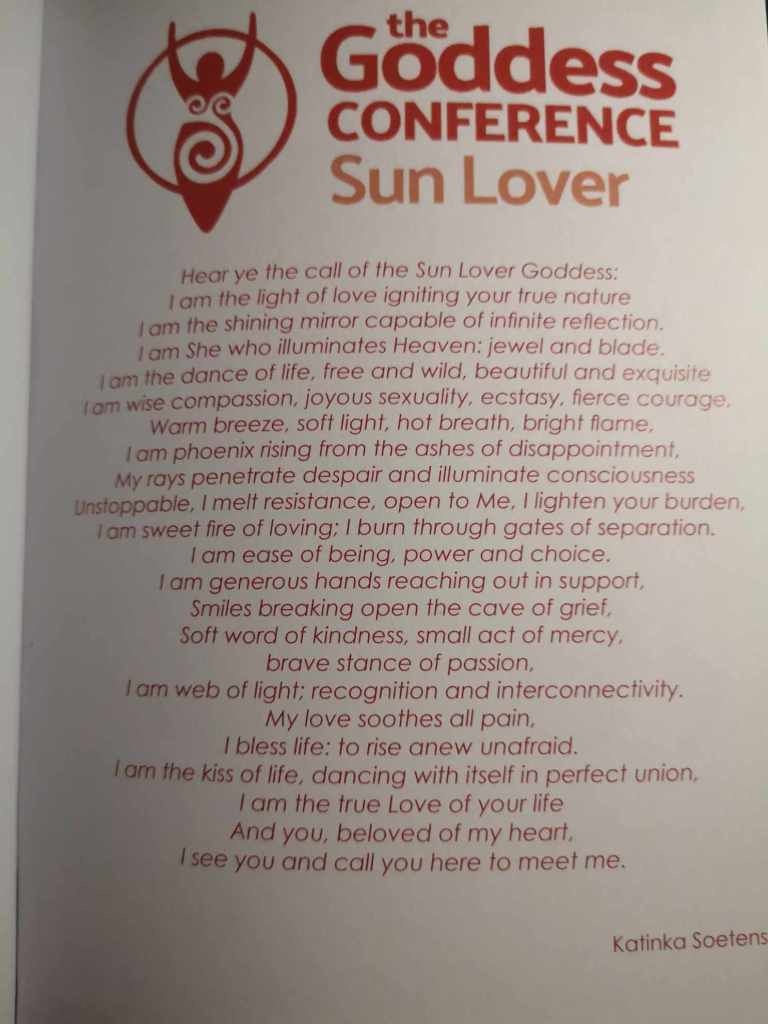
For these reasons, the sun, to me, is a symbol of love in all its forms: the love of a mother for her children, the altruistic love we ought to have for all of mankind, the love of a romantic couple in the throes of passion on their wedding night. I feel deeply connected to what I call the ‘Solar Goddess of Love’, which, interestingly enough and annoyingly enough because I wasn’t there, was the theme for the Goddess conference in 2019. The problem is, I don’t know what name I should call Her by. An obvious choice for a solar love goddess would be Hathor, but I know so little about Kemetism and have no connection to the land of Egypt, and want to stick in my relatively nearby and/or ancestral spheres. There is also Eos/Aurora, who takes many lovers, who is very near and near to my heart and I am incredibly fond of the Indo-European dawn goddess in all her forms, but again, I want to stick to the Celtic spheres. I have some hunches, and I have nailed it down to a few choices. I’m focusing on Celtic goddesses who I can link both to love and the sun, not one or the other.

Olwen

Olwen was the focus of an article I wrote in May here. I’ll touch on something here that I didn’t very much there, though. One aspect of the sun goddess, and the sun in general, is that of the descent in to the underworld and ascent back out of it. This is typically associated with Venus because of Her journeys through the sky, but the sun literally makes this same journey every night. In my research into Olwen as a sun goddess, I found several articles arguing that Olwen’s story can be interpreted similarly to that of Creiddylad’s, Guinevere’s and Blodeuwedd’s love triangles, aka the goddess being with the king of summer/solar hero half of the year and the king of winter/otherwordly champion the other half of the year (consensually or non-consensually, depending on the story and the lens through which the story is interpreted- but that’s a topic for another day). The difference is, the ‘winter king’ in Olwen’s story isn’t a lover, but her own father who will die if she marries. Her father, Ysbaddaden Bencawr, is an ancient giant, representing the old order (winter) trying to cling to his throne. The young Culhwch, then, is the untested solar hero seeking the hand of the Goddess. This story in the Mabinogion also features the love triangle between Creiddylad, Gwythyr, and Gwyn ap Nudd. Gwyn is the King of the Otherworld/Underworld (the two are often conflated and seen as one in the same). The ‘otherworldly champion’, ‘winter king’ figure represents cthonic values of darkness, chaos, magic, death and descent in to the underworld. When the solar goddess, or the nature goddess, is with him (be it as her father or her lover), she is in the underworld. When she is with the solar champion, who represents order, law, life, and logic, she is on the land or in the sky. The night and winter are obviously thematically connected, as are the day and summer. In this regard, Olwen and other sun goddesses can be seen as psychopomps, bringing their light to the dead and the souls in the Underworld when they descend down there at the dark half of the year, and bring them life anew as reincarnated souls at the start of the bright half of the year, like the Divine Daughter in Filianism. As I said in my original Olwen post, in my UPG Olwen is a ‘Lover archetype’ goddess and I associate her with sacred sexuality, viewing her similarly to how Rhiannon is often viewed in the Avalonian traditions of Glastonbury.

Rhiannon

Art by Wendy Andrew

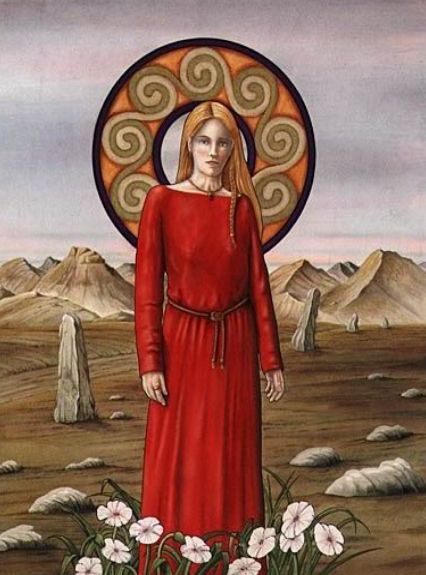
Rhiannon, in modern pagan circles, is for some reason often viewed as a lunar goddess. To be honest, I’m yet to find the reason for this. A big part of me wonders if its to do with the fact that the witchy figure in the song Rhiannon by Fleetwood Mac has become conflated with Rhiannon of the Mabinogion to the point people can’t tell where one ends and the other begins. More likely, though, it has something to do with the Wiccanised ‘every goddess is a moon goddess’ idea that is still firmly embedded in the Neopagan collective consciousness. Rhiannon, to me, is solar. She wears a gold dress, an undoubtedly solar colour, and is obviously a horse goddess. Horses, in most Indo-European traditions, represent the sun and the solar chariot. She, too, can be interpreted as a psychopomp figure in some senses, with her birds, the Adar Rhiannon, that can ‘wake the dead and lull the living to sleep’. At this year’s Goddess conference Katinka Soetens did an amazing talk on birds as psychopomp figures. Her journey across the land in her gold clothing (solar symbol) on her white horse (solar symbol) mirrors the journey the sun takes across the sky each day. While not much in Rhiannon’s story points to her being an obvious ‘love goddess’ upon first reading, her union with a human man to bless him with the sovereignty of the land can be read similarly to ‘Hieros Gamos’, the love-making between a priestess of the Goddess Inanna and a King in the Middle East to bring prosperity and abundance to the land. In this sense, many Celtic sovereignty goddesses can be read as love goddesses, but Rhiannon’s story speaks of not only love for a mortal man that she chose, but love for humankind, when she chooses to accept her punishment even though she knew she didn’t kill her baby rather than call her traitorous handmaidens out for lying. Today, many of her devotees have had direct experiences with her in which she manifests to them as a goddess of love, beauty and sacred sexuality, and that makes infinitely more sense to me than viewing her as a goddess of witchcraft and the moon, which some modern sources claim her to be. Many modern artistic depictions of her, such as the one above, depict her in red rather than gold. Possibly for two reasons: showing her as a goddess of love and sexuality, and also because the colour red is associated with the Otherworld from which she hails. Many of these depictions remind me of Olwen or Aine. I love the picture above, because of the large sun behind her. I assume the aquatic imagery is because of her later marriage to Manawydan, often interpreted as a sea god cognate with the Irish sea god Manannán mac Lir. I’ve seen other more modern ‘love goddess’ depictions of her with the sea, too, so I’m wondering if it’s also some syncretism with Aphrodite/Venus going on.

Áine

(Content warning for rape). Alright, hands up, I know fairly little about Irish paganism (other than Brigid) and I have not sat down and properly read Áine’s story. After writing this article, I’m going to make a concerted effort to do as much research on her as I can. From what I understand, she is a ‘fairy queen’ (which we all know is basically code for goddess) who is raped by various men seeking to be king, as she is a sovereignty goddess, like Rhiannon, and one must join in sexual union with her to be able to rule. However, it must be a union she consents to, as it is HER choice who the king is, and HER choice who she will sleep with. She righteously punishes these vile men and remains a powerful, sovereign goddess of love and beauty, and takes several lovers. Some believe her to be the lover of Manannán mac Lir, though some have him down as her father. Her name means ‘brightness, radiance, glow’ which obviously points her to being a sun goddess, though some interpret her as a moon goddess also. She is celebrated at Midsummer, obviously pointing to her solar associations. I placed her oracle card on my Midsummer/Litha altar this year. Considering her links to Manannán, her sovereignty goddess status, and the fact that she is also associated with horses, it’s reasonable to wonder if she derives from the same proto-goddess as Rhiannon, though I can’t prove that and would have to read more in to it. Some believe Áine’s sister to be another Irish goddess Grian/Gráinne, who weds the god of the underworld. Gráinne may also be another aspect of Áine herself. The two potentially represent the sun goddess in the light half of the year, and the sun goddess in the dark half of the year. Certainly Gráinne aligning herself with the god of the underworld points to the love triangle of seasonal sovereignty we see played out in Celtic myth again and again. I really like this idea of two sister sun goddesses for both halves of the year because, since I’ve been a kid, I’ve always felt like the winter sun and summer sun had very different energies, almost like they were two different luminaries. There’s a great article on this here.

There are a few honourable mentions, whom I also considered, but didn’t have enough to say on to justify their own paragraphs.

  • Iseult: Not a goddess so much as a literary figure (but then the same can be said of a lot of the goddesses I worship, and it’s possible she, like many of them, is a humanised form of an earlier goddess). No direct links to the sun but her role as a skilled healer (the sun can be associated with healing) and a quote I read a while ago (see below) make me consider her a solar heroine. She is also, obviously, a figure associated with love and beauty and has been compared to Helen of Troy, another solar love figure.
  • Elen Luydogg: While this story in the Mabinogion basically just serves as justification for the Roman colonisation of Britain, Elen’s depiction as a regal, golden-garbed (see a pattern here?) queen calling to the man she loves through his dreams to come and take his place by her side is very beautiful if you strip back the whole colonisation thing. The figure of Elen is a complicated web to untangle. There are a few different Elens all associated with Wales and sovereignty and to be perfectly honest with you I still don’t know where one ends and another begins. Don’t even get me started on the Elen of the Ways debate. Caitlin Matthews in the incredible book King Arthur & the Goddess of the Land speculates that she is related to Elaine of Corbenic, and though this is highly speculative conjecture, it’s worth mentioning. Wonderful priestess Ann of the Sheffield Goddess Temple wrote an article on similar lines about this elusive Elaine/Elen figure here as she was a goddess chosen for the circle of nine at the 2022 Goddess Conference which was themed on the Celtic sovereignty goddess.
  • Brigid: Whilst Brigid is an obvious choice for Celtic sun goddess, she is not super related to romantic love, which was why I’m not sure if she’s the sun-lover goddess I’m looking for. That being said, she’s still a sister of her. Brigid has so much abundant, overflowing love for all of humankind, and does have different consorts depending on the story. Despite this, though, the sun-lover goddess I feel in my heart and soul has an obvious link to romantic love as well as altruistic love, and I’m just not getting that from Brigid. She is still a goddess very near and dear to my heart, though.
  • Gwenhwyfar/Guinevere: Much of what has been said about virtually every goddess I’ve discussed in this article can also be said about Gwenhwyfar. She is an obvious figure of romantic love. She is the Queen of the Light Half of the Year (which Morgana being the Queen of the Dark Half of the Year) in Arthurian-influenced modern paganism. She is the sovereignty goddess who is often in a love triangle with Arthur, the solar hero, and various other men who represent the otherworldly champion archetype. Much of how I work with her, not just as an Arthurian queen but also a Brythonic goddess, is UPG based. Yes, she is the floral spring maiden like Blodeuwedd, and the summer queen like Aine, but she also has autumnal and winter aspects where she appears to me as a white goddess of death similar to the Cailleach or Ceridwen. Part of me believes this to be her sister aspect, Gwenhwyfach. I see her as both solar and lunar, depending on which side of the year she is representing. Interestingly enough, I know for a FACT I read something a while back that said someone had theorised Guinevere as a dawn goddess. It was either Max Müller or someone who believed in his theories and was working within his solar myth framework. However, I now can’t find it for the life of me and feel like I’m being gaslit by the internet. She has, however, always had solar energy to me (as well as lunar, like I said) and I’ve heard at least one other person share this UPG on a podcast, citing a vision she had of her as the ‘goddess of the golden wheel’ to Arianrhod’s silver wheel (which I’ve also seen said about Olwen). At one point soon I think I’ll write a full article on my views of Guinevere/Gwenhwyfar as both solar May Queen but also ‘white shadow’ goddess of death and winter (potentially her Gwenhwyfach aspect) which is very UPG based.

Here is a quote I read a while ago about the solar feminine, specifically pointing to the solar feminine’s function as Goddess of Love. This is the quote I was talking about above when I discussed Iseult/Isolde.

And again in the Irish heroine, Grainne, whose name comes from the Gaelic grian, “sun,” and who is the prototype for Isolde the Blonde. Moreover, isn’t it worth noting that, in modern Germanic and Celtic languages, the sun retains the feminine gender while the moon is masculine? It is even said that Tristan, the moon-man, cannot live for more than a month without having physical contact with Isolde, the sun-woman.

The Great Goddess by Jean Markale

We are about to enter in to the dark half of the year (or we already have, depending how you split the year). For most of my friends, this is a celebratory occasion, as many can’t stand summer and can’t wait for cosy cardigans, pumpkin spice lattes, and Samhain celebrations. But for me, I know my already precarious mental health is about to dip once again. But I have to remember that even when the goddess is in the underworld, she won’t be there forever, and neither will I. I have recently completed orientation in to the Sisterhood of Avalon, and am about to start the Avalonian Cycle of Healing shadow work practices as outlined in our founder Jhenah Telyndru’s book, Avalon Within, beginning with the Station of Descent. I am a solar, love-and-light energy type of girl, and always will be. But that doesn’t negate the parts of me that are darker, lunar, and wintery, that I must shine my solar light on to, and learn to love.

I am leaning towards Olwen as the ‘sun goddess of love’ that I am called to honour, but I know that whatever her name is, she is always with me, loving me, inspiring me, healing me, bolstering me, and filling me with energy. May I be Her Moon, Her priestess that reflects Her light to the world.

I hope you always feel the love of the solar goddess of love. I respect that, with the temperatures of our planet rising because of human error, the sun isn’t exactly a gentle, sweet lover in everyone’s eyes anymore, even here, far away from the equator. But let us reminder the Goddess is a Destroyer as well as a Creator, like Sekhmet, solar warrioress aspect of Hathor. May we begin to treat our planet with the respect she deserves, so the sun can remain a kind and sensual lover as much as possible.

I leave you with the lyrics to the beautiful song Hunter Moon by Kate Rusby, in which the moon is in love with the sun, who is female. Go listen to it, though, instead of just reading the lyrics. I promise, it’s worth it. Go listen to Daylight by Taylor Swift, as well, while you’re at it.

Softly the morning light,
Softly the dew,
Softly my soul will bend,
As she comes in view,
At dawn she is delicate,
And burning by noon,
The end of the day will come soon.

And the stars in my lonely sky,
Are infinite bright,
And the stars know my soul will fly,
They’re holding it tight.

There she is rising now,
My heart it might break,
The birds in her warmth will fly,
My soul it will ache,
And the world comes alive for her,
In awe at her gaze,
And suddenly the sky is ablaze,

And the stars in my lonely sky,
Are infinite bright,
And the stars know my soul will fly,
They’re holding it tight.

Say not her name to me,
For I live in the shade,
Briefly I see her,
As she starts to fade,
In silence we pass,
Our path is well worn,
In silence I wait for the dawn.

And the stars in my lonely sky,
Are infinite bright,
And the stars know my soul will fly,
They’re holding it tight.

Calmly I drift along,
Oh I will endure,
I only belong to her,
Of that I am sure,
Will I ever hold her,
I cannot presume,
For she’s the sun,
I’m only the moon.

And the stars in my lonely sky,
Are infinite bright,
And the stars know my soul will fly,
They’re holding it tight.

And the stars in my lonely sky,
Are infinite bright,
And the stars know my soul will fly,
They’re holding it tight.

~ Rhianwen

Some book recommendations on the solar feminine:

  • Sun Lover Goddess Myths (x)
  • Drawing Down the Sun by Stephanie Woodfield
  • O Mother Sun! by Patricia Monaghan
  • The Sun Goddess by Sheena McGrath

Ostara/Eostre: Hail to the Goddess of the Dawn & Spring

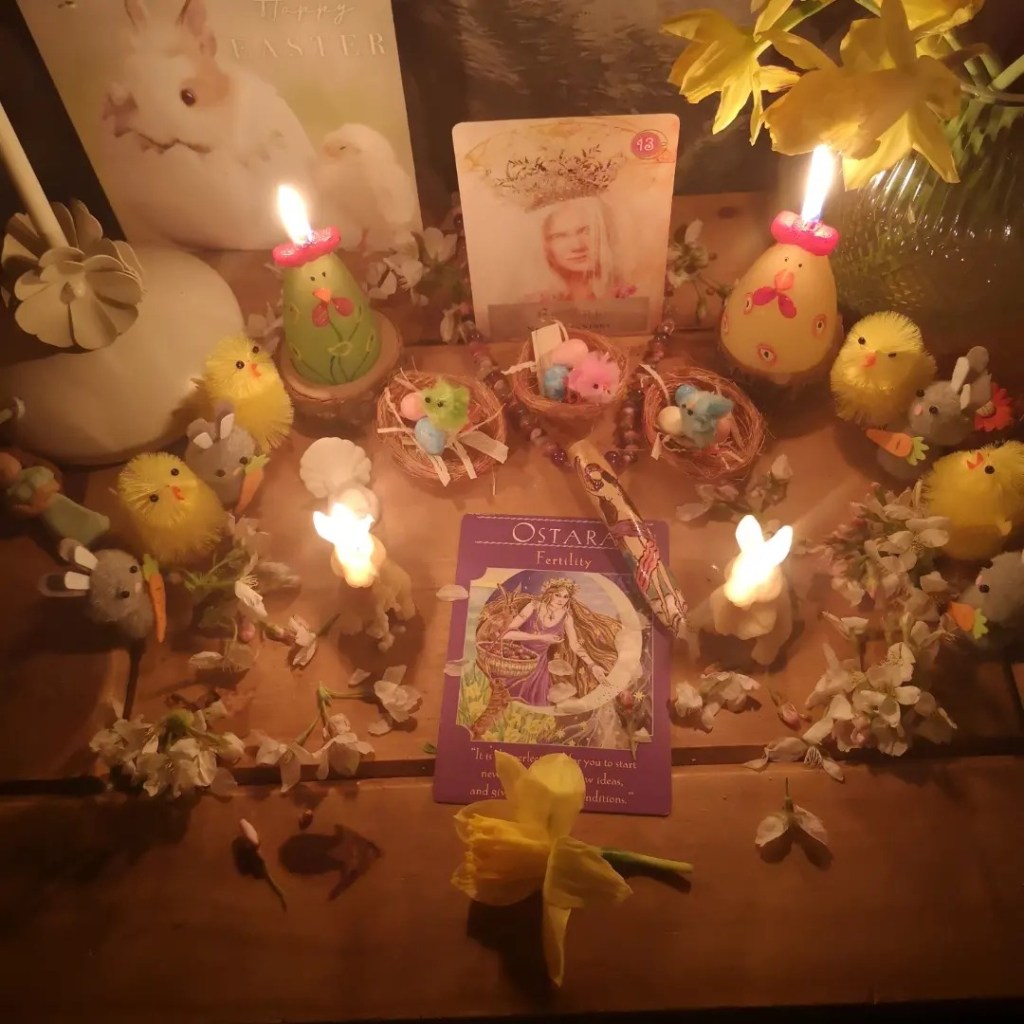
My Ostara altar

So, last week, we who follow the modern Celtic-Anglo-Germanic Wheel of the Year with its equinoxes, solstices and four Celtic cross quarterly festivals celebrated Ostara last week. Ostara has always been one of my favourites in the Wheel, and when I was a Christian I always loved Easter. Every year when we were little, my mum would make us these Easter bonnets for school, with daffodils and chicks and pastel eggs all over them. I love the aesthetics and imagery of this time of year, and how we finally emerge fully from the Descent period, ready to climb up the mountain of Summer that reaches its peak at Summer Solstice.

My mood has been up and down. I think I truly believed that by the time spring rolled around I’d be over my breakup and be going on dates, ideally with the same person with view to exclusivity. Instead, my love life is still nonexistent despite my best efforts at using dating apps and websites, speed dating, joining new social groups to meet like-minded people, etc. Last year, it seemed like everything in my life was so perfectly aligned with the seasons, especially my love life, in which I went on a first date around Ostara with the man who would end up becoming my first love, and then the two of us made things official around Beltane, and so on. While I still have a bit of time to recreate that pattern, I don’t want to set my hopes too high because unfortunately, life doesn’t always follow the reliable, ordered patterns of Nature, especially not when other people are involved. So, I’m doing everything I can to find happiness and contentment without the need for another partner. The fear I have is that while it’s okay that I’m single now, I’m vastly approaching my thirties and am terrified of the drop in my fertility that will accelerate each year from now on.

But I’m trying not to think about it (not easy) and just focus on the wonderful, magical experiences I’ll get to have this spring and summer by myself and with friends. At this point my approach is just ‘fake it until you make it’ and pray that eventually, all the things I’m doing to try and trick my brain in to being happy will eventually work. For some reason every time spring rolls around, my social life tends to take off. I have a few concerts, parties and things coming up, and of course, I’m excited about my annual visits to our little women’s gathering in Wales and my yearly pilgrimage to Glastonbury-Avalon, my spiritual home.

I wanted to talk a little about how I understand Ostara, because there’s a lot of conflicting information out there around it. Following on from that I wanted to do some comparative analysis to the story and character archetypes in the story of Sleeping Beauty. There are many deities associated with this time of year, but I’m going to choose a handful of ones that are relevant to my practice and understanding of spiritual metaphysics.

Astrological New Year

The Spring Equinox is the astrological new year, when the Sun enters Aries, celebrated in Babylon as the day light emerges from the darkness as the warrior god Marduk defeats the Creatrix dragon goddess, Tiamat, and reforms the world. Some believe this to represent the defeat of the matriarchal order by the patriarchal order, some believe it to represent us learning how to make sense out of nature via agriculture and scientific progress, other believe its a mix of the two. As a Mother Goddess worshipper, I’m not a fan of this story and the understanding it has given so many that the Mother Goddess is a malevolent force of chaos that must be conquered and dominated (cough Jordan Peterson cough) but in terms of its connection to the astrological new year, I thought it was worth mentioning.

Dying & Resurrecting Son-Gods

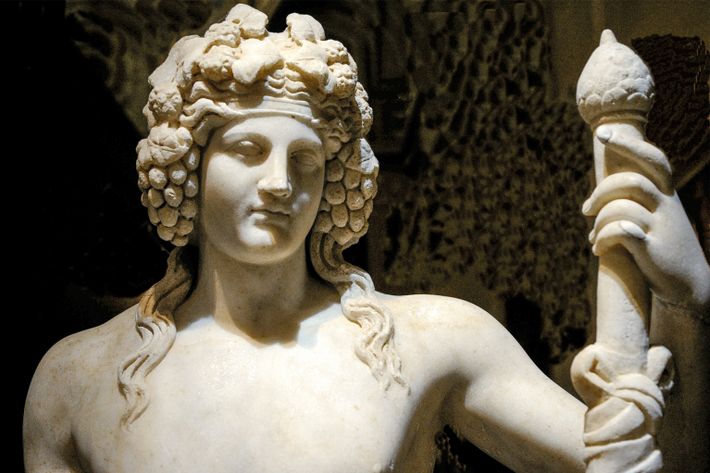
One of the main motifs we see is the resurrection of the god of vegetation, the King of the Land. This is one of two ‘Son God’ variants we tend to see across the world. He is the Son, Lover, or sometimes both of the Earth Goddess. The other one is associated with the sun, and is often reborn (sometimes, but not always, as a baby) on Winter Solstice. Examples of this include Mithras, Sol Invictus, etc. The former ‘Son God’ is more rooted in the Earth than the sun, and his body is linked with the vegetation itself. This god tends to be reborn on Spring Equinox. Examples of this include Attis, Osiris, Dionysus, etc. I prefer this version of the archetype over the latter because I don’t like this earth feminine/solar masculine split we see fairly often in new age spaces, just doesn’t feel right within my soul. Whether it be the Vegetation God or the Sun God, it’s not hard to see parallels between this and the birth, death and resurrection of Jesus Christ, leading many to speculate that there may be a link. It is possible that this theme of death and rebirth is simply an eternal truth that is so instinctual that we have told the same story over and over again, rather than Christians simply taking the idea from earlier pagan mystery cults. One thing to keep in mind is in both of these myths, the Goddess is the unchanging, primordial force. The Sun arises from the Earth when it comes over the horizon, or from the darkness (most spiritual systems believe darkness came before light). The Vegetation, which is constantly grown and then reaped and replanted, arises from the Earth, the ever-present soil. This does not make the Son subservient to the Mother, He grows to be Her equal in all things and is just as necessary as She is to the Cosmic Order, but it is a humbling reminder to all of patriarchy’s most ardent defenders that all life comes from the Divine Feminine. Perhaps that is why Abrahamic tradition subverts this, and to this day, those religions are the only ones to do so, as far as I know. Even patriarchal pagan religions knew that the masculine arises from the primordial feminine.

The Divine Daughter

While there is no official date given for the return of Kore/Persephone to her mother Demeter in the myth, it is fair to assume it is Spring Equinox. I always felt like Dionysus and Persephone were parallels, and while the Orphic tradition mainly worshiped Dionysus’ resurrection, I believe they honoured Persephone’s emergence from the Underworld, too. While Inanna-Ishtar is not related to this time of year (despite viral misinformation claiming so), I feel like many people within the Goddess tradition, syncretists, comparative mythologists etc intrinsically understand Inanna, Persephone, and similar goddesses who descend in to hell and then return to be the parallel Divine Daughter archetype to the Divine Son mentioned above. Whereas the Son dies and is reborn, the Daughter descends and ascends (much like Venus, the Morning Star). Some researchers claim that the Mother-Daughter/Maid Dyad is older yet than the Mother-Son Dyad, and that the Demeter and Persephone story is merely one of the few Mother-Daughter myths that carried through to patriarchal Hellenic religion from an older, more matriarchal belief system (potentially from Crete). Unfortunately I do not have any citations for you at this moment but it’s something I’ve seen mentioned a few times in books. For years I was part of a tradition called Filianism in which this Dyad (as well as the feminine trinity of Mother, Daughter and Absolute Deity, similar to Maiden-Mother-Crone) was the core focus of the mythos and metaphysics. Eastre (Ostara) was the day in which the Daughter (known as Inanna, Anna, Jana, or Kore) is resurrected by the love of the Mother (Marya, Mari) and reigns as Princess of the World, ready to be crowned Queen of Heaven at Exaltia (Beltane). While I have moved away from this tradition for a couple of different reasons, their syncretic approach to this Divine Daughter archetype truly moves me, because I believe Her erasure in our traditions to be such a missed opportunity. If Patriarchy seeks to separate the Son from the Mother, it DEFINITELY seeks to separate the Daughter from the Mother, and as women, reconnecting to our Mother-Line and female ancestresses is so important to our goal in relighting the flame of the divine feminine in the modern world.

The Light of the Dawn

I did mention this in some detail in my Imbolc post, but it is actually more relevant here than it was there. One of the oldest goddesses whose worship, correspondences etc we know about is the Dawn Goddess. Usually the Daughter of the Sky Father, she awoken the world from its slumber at morning, and was also associated with spring. Like I said in my Imbolc post, if the year was a day, Spring Equinox would be the glorious dawn when the sky is ablaze with glorious gradients of pink, lavender, orange and blue. While the sun is usually considered masculine in modern Neopagan syncretism, many syncretists would be hard pressed to argue that the dawn doesn’t bring to mind a beautiful solar maiden. She has many names across the Indo-European sphere: Eos, Thesan, Mater Matuta, Prende, Ataegina, Aurora, Ausrine, Ushas, some even theorize a link to Aphrodite, but for our purposes, as this is holiday in a Wheel of holidays based on syncretised Celtic and Germanic roots, we are focusing her under the name of Ostara (Germanic) or Eostre (Anglo-Saxon), beautiful spring maiden who loves all things fresh, innocent, and new. It is frustrating to see misinformation on two opposite sides of the spectrum that claims She is either definitely a modern, new age invention, or that the Christians stole absolutely everything from Ostara/Eostre which also isn’t true. Or worse, the belief that somehow Easter derives from Ishtar. The facts: We know beyond a shadow of doubt that Hewsos, the Dawn Goddess, had several variations as the Indo Europeans conquered various territories and bought their gods with them. It stands to reason that Eostre and Ostara would be linguistically connected with these, and while Bede was the only one to mention Her, there’s little reason to suspect he was lying, and it would in fact be counteractive to his Christian agenda to do so. This is by far one of the best articles about this topic I’ve read.

While many bad faith so-called ‘feminist’ interpretations of the fairytale Sleeping Beauty have been written over the years about how it tells the story of a man sexually assaulting an unconscious woman, the story is arguably a parable for the return of spring. The Divine Daughter is born to the King and Queen. The wicked fairy represents the Queen of Winter, of the Unseelie Court. The royal family attempted to shut her out of their homes, but they can not deny her for long. As much as they like to deny it, they are not too civilized and protected that Winter won’t come to them (compare to the Green Knight disturbing the festivities at King Arthur’s New Year’s Eve party). The baby is cursed by the Queen of Winter to die upon reaching the full stature of maidenhood. The curse is altered by three good fairies of the Summer Seelie Court, who ensure that she does not die but is simply in a slumber but can be awoken if she receives true love’s kiss- representing that due to divine providence, the very natural order of things, winter will always come to pass. She grows up fair, graceful and good, and meets a young man with whom she falls instantly in love with (I don’t want to hear your yapping about how unrealistic it is- it’s a fairy story!). Soon after this her curse catches up to her and she dies upon pricking her finger on the spindle of a spinning wheel. But her prince, as promised by the fairies, is able to awaken her with a kiss. Now, I can hear the ‘UM ACTUALLYs’ about to tell me that she was actually raped by the prince, but that version of the tale belongs to a version called Sun, Moon and Talia by Giambattista Basile and is not, as far as we know, present in every version of the earliest oral tradition. There are many, many versions of these fairy stories and trying to say one way or another which is ‘the true one’ is a waste of time, but there’s no evidence Basile’s version represents the ‘original story’ as many pseudo-intellectuals claim. Now, there is still room for some feminist analysis here- why is the solar Daughter principle made in to a passive Earth allegory in Her story instead of awakening the land in Her golden chariot as She actually does in Nature and mythology, for instance? But, overall, it’s not something I worry about because I’m just happy that, once again, the Goddess hides in plain sight in our fairytales and folklore. Plus, technically it was the good fairies that saved her, not the prince, seeing as they made the prince’s rescue mission possible to begin with! Just like how the prince is credited for saving Cinderella when, if anyone did, it was her Fairy Godmother (the Crone who initiates the Maiden, allowing her to step in to her power).

I don’t think it’s a coincidence that Disney chose to name their version of Sleeping Beauty ‘Aurora’, a name of the Dawn Goddess (although perhaps this name was found in an earlier version of the story- I’m unsure). Even her dress has variants in both pink and soft blue, reflecting the colours of the sky at dawn.

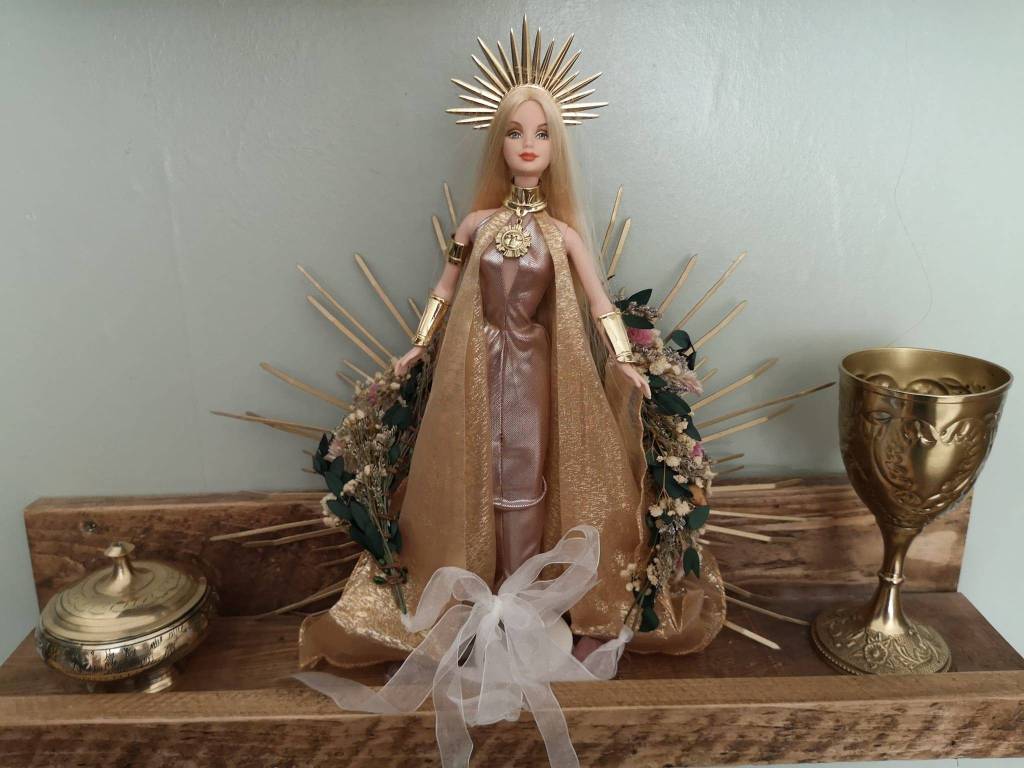
I have experienced the Dawn Goddess so strongly for years. Since I was a little girl obsessed with Greek mythology, in fact, and came across a picture of Eos with her ruddy wings and hair and fell in love. She became somewhat an imaginary friend of mine and it’s crazy to me that two decades later She is still such a massive part of my life. I have this Barbie, Morning Sun Barbie, who very clearly represents this Auroran Goddess archetype and sits on one of my shelves. I do not consider this an altar and I do not use the doll for worship purposes but I have to admit I do smile at her, blow her a kiss or simply touch the hem of her gown before I leave the house sometimes.

Lastly, here’s a link to my Ostara playlist. I want to make these for every Wheel festival from now onward.

Things still kind of suck for me right now, and maybe they do for you, too. But we don’t know what’s around the corner. Life comes at you fast and can change at any minute. Congratulations on getting through the winter, and I wish you nothing but happiness and joy as we begin our ascent to the Summer Solstice. Love you all.

~ Rhianwen

Imbolc: The Predawn of the Year

So, I know what you’re thinking. “Rhianwen/Erin, Imbolc was five days ago! You’re late!”

To which I would say, technically it depends which calendar you’re following, and secondly, I’ve been so busy! And in fact, I’m not even mad that I’m only getting this blog post out now, because today marks the official end of my Imbolc observance, so I didn’t want to make this post prematurely and have to make another one.

I had wanted to start a new blog for a while, but the depths of winter did not feel like the right time. After an amazing summer last year, as soon as we hit mid September I was called once again like many of us on the Venusian path are to descend like Inanna in to the depths of my own personal underworld after my relationship, which was still very much in the honeymoon period, ended abruptly, coldly and without any forewarning. I spent most of this winter lying in bed, dreaming, reading, journaling, just trying to process the pain I was experiencing. Trying to move through it with grace and beauty like Queen Rhiannon, but also wanting to howl and screech and grow claws and fangs like a werewolf and tear everything apart. That was absolutely not the time to be starting a new blog. But Imbolc? Couldn’t be more perfect.

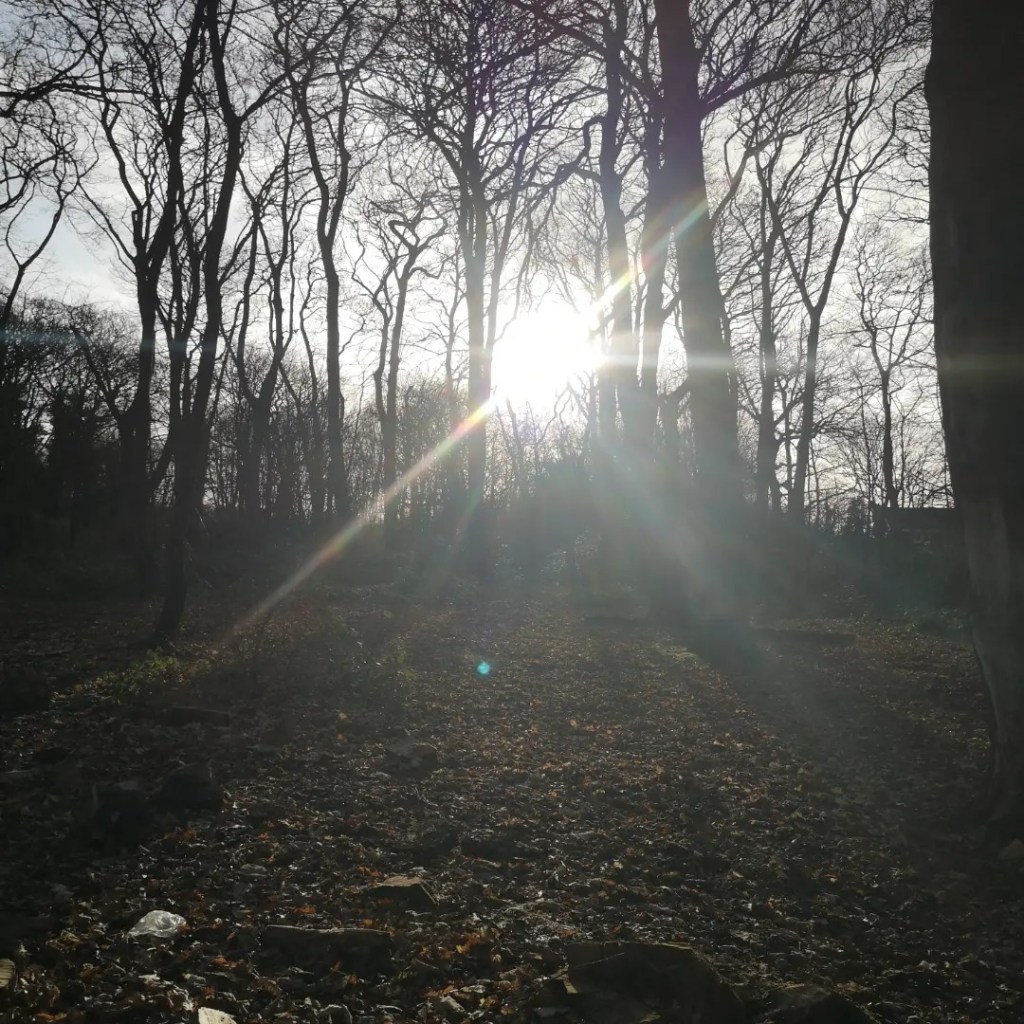
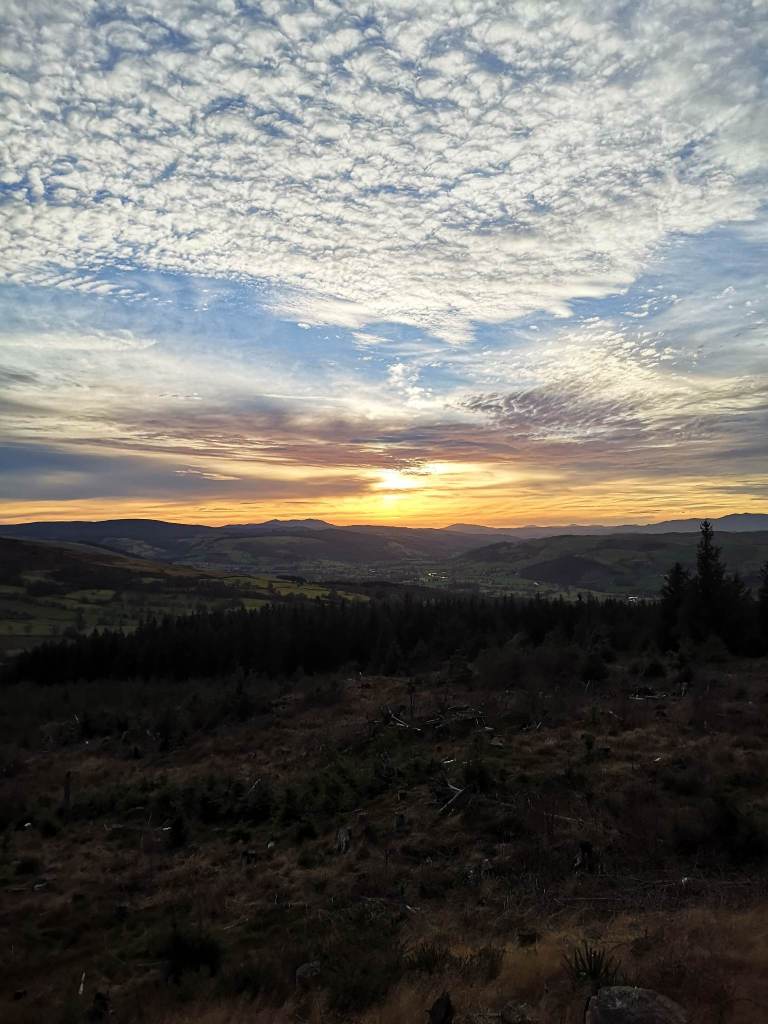
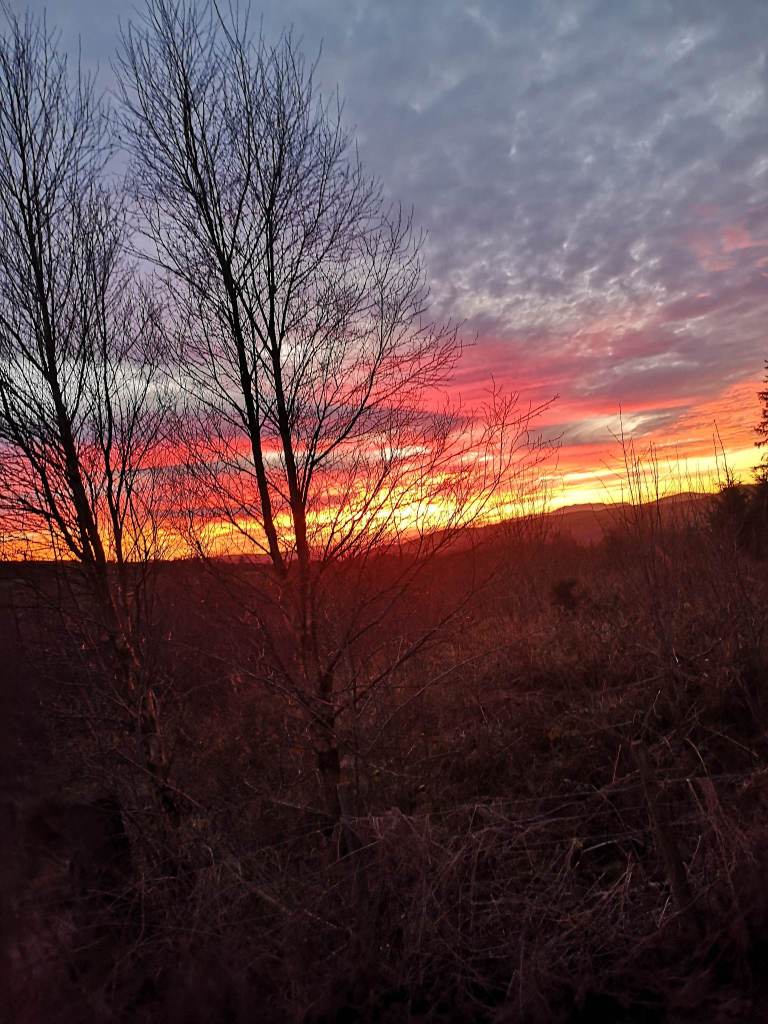
Whilst most contemporary Celtic-focused polytheists hold the Celtic new year to begin at Samhain, I cannot bring myself to resonate with that. For a while I have struggled to find the balance between my belief that spiritual cohesion and shared truths are important, but also not trying to force myself in to a paradigm that does not fit me. I needed the start of my year to be about newness, freshness, life, not descent and death. When I was a Filianist, we celebrated the new year at Spring Equinox (Eostre/Ostara). That always felt more fitting to me, and still does. In fact, I am torn between either Imbolc or Ostara as the new year in my personal wheel observance. I could be mistaken, but from what I understand, the Dianic tradition honours Imbolc as the New Year. Either way, I realised that if Ostara is the dawn, where we honor the Indo-European dawn/spring goddess and all Her cognates, Imbolc is the pre-dawn. When the sky is still navy blue, but you can see the sun’s light just slightly beginning to creep in, like this photo:

Brigid is, in one sense, a Dawn Goddess, much like the goddess Ostara/Eostre who is thought to be associated with Her (I will post more about this at Ostara itself). The IE Dawn Goddess (H₂éwsōs) is one of the oldest forms of Goddess we have concrete evidence for, up there with the Sky Father and Earth Mother. Brigid’s name is cognate with “the Sanskrit word Bṛhatī meaning “high”, an epithet of the Vedic Hindu dawn goddess Ushas. We know that Brigid’s name means ‘the High One’ or the ‘Exalted One’, and that early Hindu gods share some interesting similarities with Irish ones (see Danu, the same goddess name thousands of miles away from one another). Therefore, like Ushas, Eos, Aurora, Ausrine Eostre, Ostara, Thesan, Mater Matuta etc, Brigid may be related to H₂éwsōs, but her Dawn Goddess aspects seem less apparent than with those other goddesses and what survived Christianisation (through Her relegation to a Catholic Saint) the most were her other aspects, particularly those associated with healing.

She is ‘the goddess the poets adored’, and the spark of inspiration to begin new projects this time of year. But it is a gentle spark, and so in my desire to live in harmony with the cycles of nature I am trying to restrain myself from pushing myself too hard just yet when I am still feeling the dormancy of winter, and not yet fully out of my Descent period. That being said, I have started a new job, written the first chapter of my book, and started a course for work. Brigid’s energy has been the instigator in all of this. With Her wand, she gently awakens the land, and with that, all of us. It is a testament to how beloved this Goddess was that She not only survived Christianisation but remained one of the most beloved saints in Ireland, up there with St. Patrick. As of this year, St. Brigid’s day will be celebrated in Ireland as a bank holiday on February 6th. Like many saints, She is a bridge (fitting, given her name) between the Old Ways and the New. She was known not just in Ireland, but also in Scotland, England and Wales. In England, She was also known as Brigantia, the sovereignty/pastoral goddess of the Brigantes. Another fascinating thing is that while she has a consort and sons, She is the primary ‘character’ in her own Divine Drama, not just a mother of a divine son or wife of a divine father. We do not need to reclaim Brigid from patriarchy like we’ve had to do with some other goddesses. She always represented a sovereign matriarchal/matrifocal way of being, which is probably why she is one of the most primary goddesses of the feminist goddess movement.

I won’t dive too deeply in to Brigid’s mythology and correspondences outside of what I’ve already said. The point of me mentioning the Dawn Goddess aspects were because I feel as though it is an aspect of Her personality that is often overlooked, especially in an age when ‘the divine feminine’ is so strongly associated with the moon largely due to the influence of Wicca, the New Age movement and the desire to use comparative mythology to form a cohesive framework for a modern day pagan practice, also known as syncretism (which I do to some degree because I think it is somewhat necessary at times, but I find it sad it has erased the individuality of many of our native gods and goddesses in favor of fitting one binary formula). The other point was to show that while we’re not fully standing in the radiant, triumphant golden light of the dawn, her ‘cousin’ Eostre/Ostara right now, we’re almost there, and many of us may feel ourselves beginning to awaken once more. Brigid paves the way for Eostre to ride Her chariot across the sky. She is the light just beginning to rise above the horizon, the predawn. She is not the bright flowers and pink blossoms of spring, but the white snowdrop flowers that promise we are almost out of the cold, dark months.

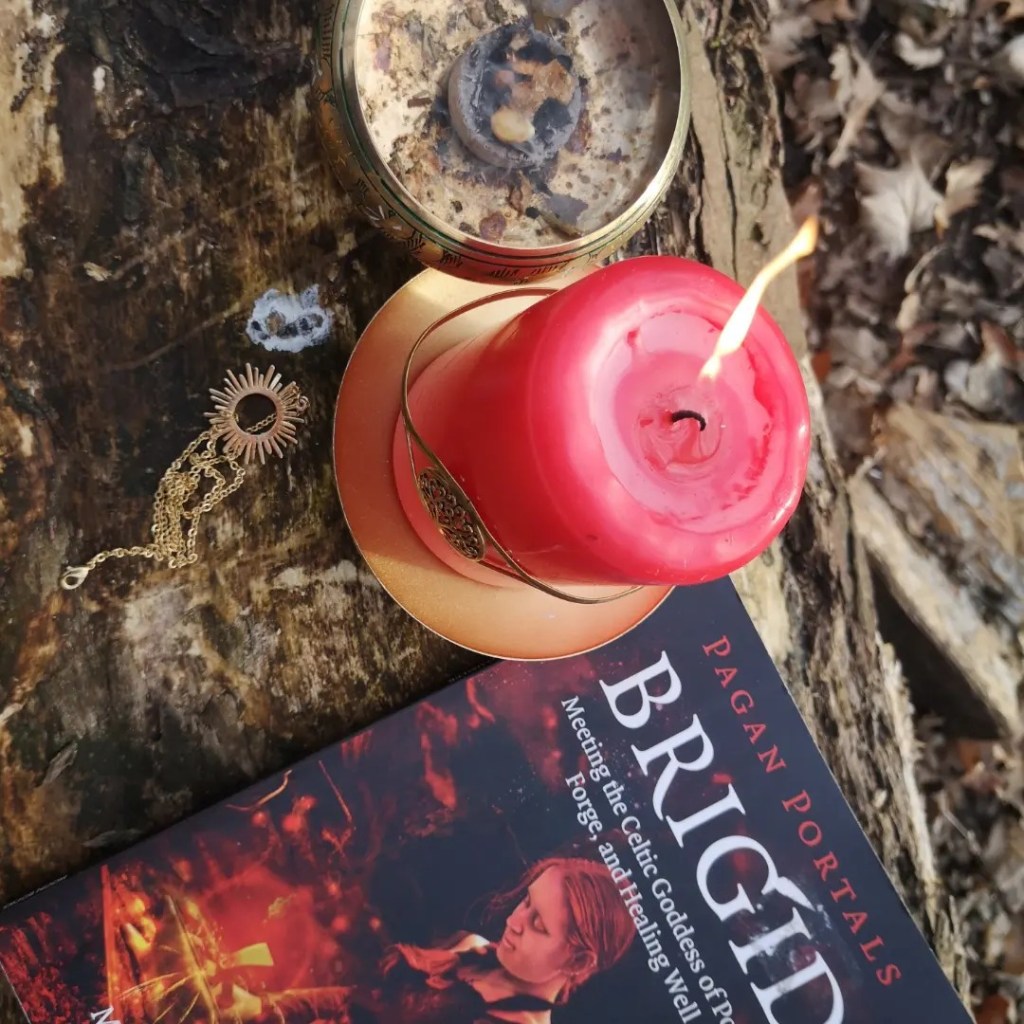
As for how I’ve actually celebrated this beautiful festival and turning point in the wheel: I began celebrating and preparing for Imbolc last Sunday, where I went to the park, sang some songs, looked for materials to make a Brideog and a Brigid’s Cross with (I wasn’t sure what I was looking for and ended up leaving empty handed, so I decided to order some wheat stalks online instead) and looked for signs of the world awakening.

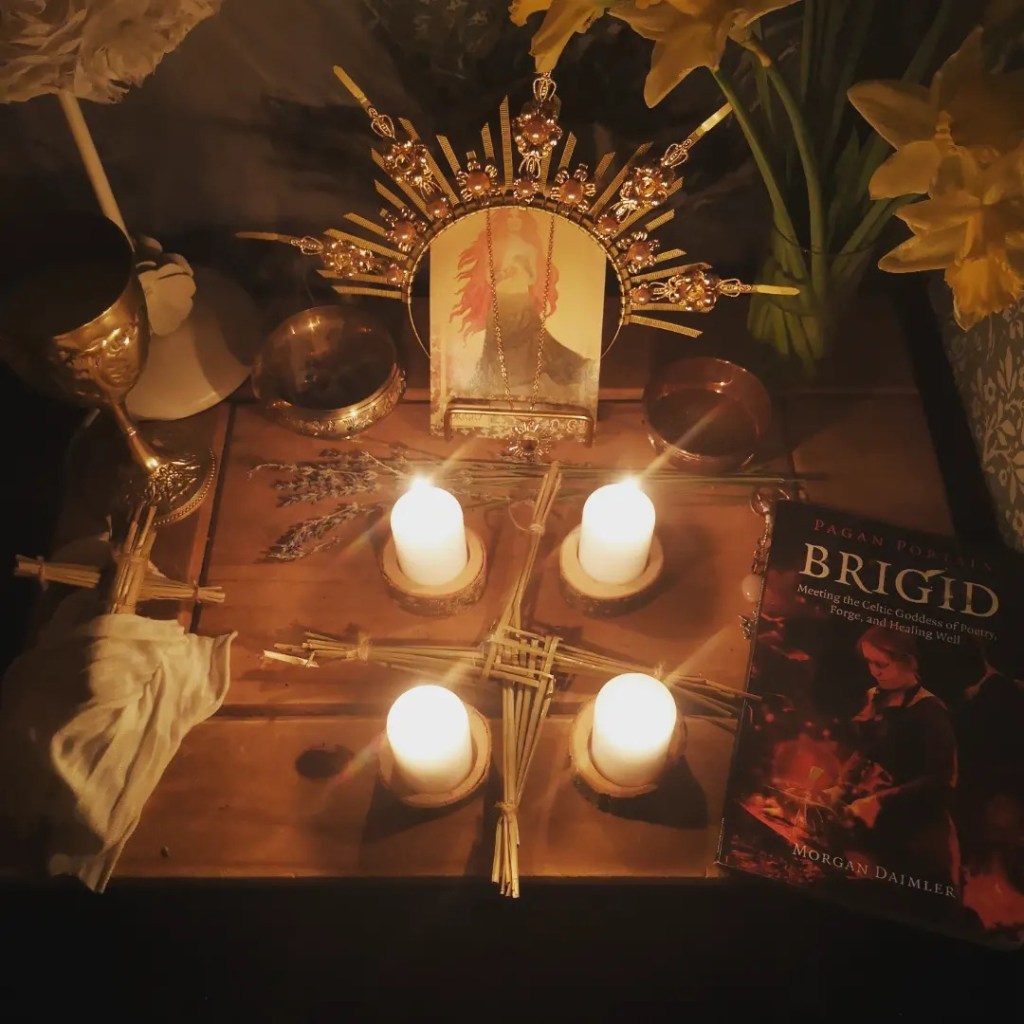
The night before Imbolc itself, after I got back from a different park, I made my Brigid’s Cross, my Brideog (‘little Brigid’ doll), set up my altar, took a cleansing bath, spent some time in prayer and set up a white-gold scarf for Her to bless on Her way by as She awakens the land. I did this last year and found it worked well with headaches and sore throats.

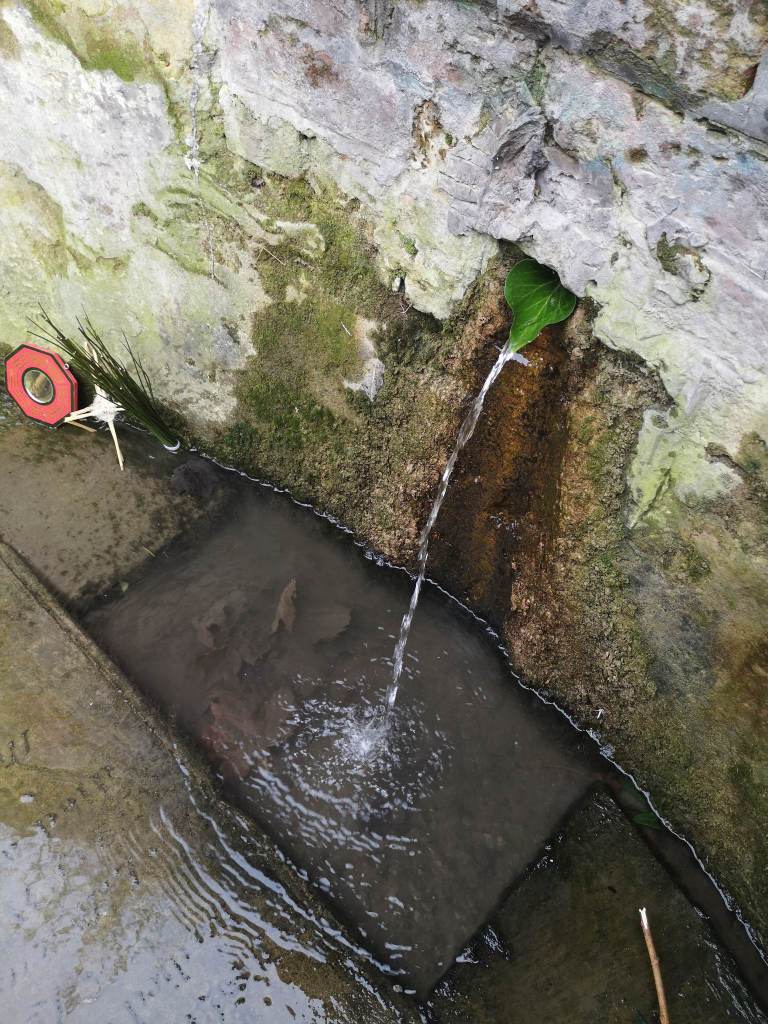
On Imbolc itself, I took part in a beautiful tour hosted by my city’s Irish society in honour of Brigid, where we were showed buildings and sites relevant to Her, and discussed Her many qualities. After this, we went to a spring sacred to Her in the Anglican cathedral gardens, where we all laid out our Brigid’s crosses, and held a sharing circle where we talked about what Brigid and Imbolc mean to us, read poetry and sang songs. I met some wonderful people and couldn’t have asked for a better day.

Lastly, on Sunday night, me and some beautiful sisters went to Wales for an incredible hike, where we sang songs and blessed the parts of the land that had been violated by humans such as destroyed trees and a cockfighting pit. The amount of healing I felt in these moments can’t be understated because it felt like while we were offering our love to the land to apologise and offer healing for the trauma She had faced, the land was sending love and healing back. My favourite moment on the hike was singing Wild Mountain Thyme/Blooming Heather, one of my favourite folk songs, with a sister called Bexi whom I’m convinced is an actual Disney princess. On our way back down, we almost got lost and ended up walking through wild forest where I almost fell over several times, but I didn’t: I think one of the benefits of my path becoming more earth-based and less heaven-based is that I’m learning to trust the Land a lot more to hold me, show me where I need to go, and not let me fall. I swear I’ve been a lot less clumsy lately on my outdoorsy excursions. When we got back to the off-grid retreat centre we were staying in, we ate a beautiful communal meal (I brought veggie curry), held a small ceremony, and spent the rest of the night under the stars and glorious full moon singing songs and talking. We then slept in a lovely little roundhouse, with the fire blazing all night to keep us warm.

To finish off, I’d like to say that while it’s fun to honour different deities across the Wheel at points that are most associated with them, you don’t have to wait for Imbolc to pray to Brigid and tap in to Her energy. She is always there. Whenever you’re going through a dark night of the soul and need to be reminded that there is light at the end of the tunnel. Whenever you need inspiration to finish a poem, song or story. Whenever you need healing of mind, spirit or body. Whenever you need motivation to spring in to action. I began my journey with Her this time last year, but this Imbolc especially, She has been there for me in a huge way, healing my broken heart and awakening me from my slumber. Please let her be there for you too.

Blessings,

Rhianwen