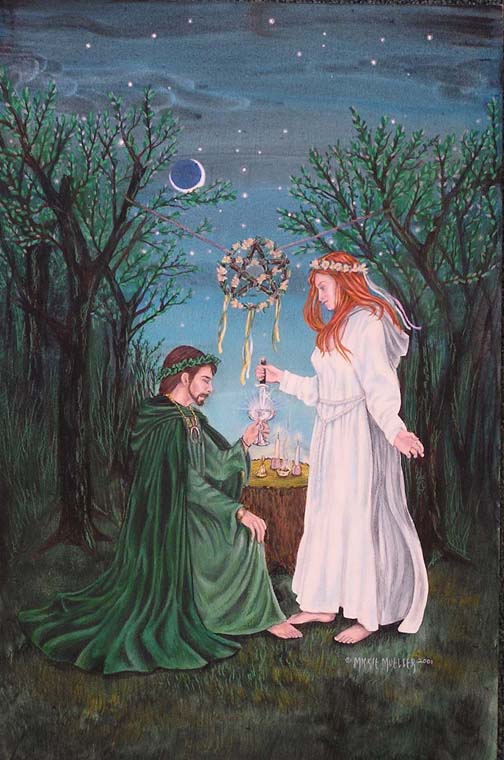
Beltane, or, as I’ve been calling it more often since I’ve adapted a more firmly Welsh/Brythonic influenced path (I have just applied to join the Sisterhood of Avalon), Calan Mai, is my favourite festival in the Wheel of the Year. Everything about this festival sings to my soul. I’ve always loved May. The transition from the beginning of April to the end of April is so stark. The days are much longer, the trees are approaching their leafy fullness, and every patch of grass is alive with daisies, dandelions, bluebells, forget-me-nots and more (in my neck of the woods, your local wildflowers may be different). In the UK, we have two bank holiday Mondays this month, too, with an extra one this year due to the king’s coronation (which, regardless of your thoughts on the monarchy, the day off is very nice, and metaphysically May is the best month they could’ve picked for a coronation).
Beltane is celebrated slightly differently across different pagan paths, but there are some shared themes: fertility, the sun, summertime, light, fire. Historically, cattle would be driven between two bonfires to purify them. People would wash their faces with the morning dew to bring them beauty and a youthful appearance throughout the year. Hawthorne branches would be gathered and homes decorated with wildflowers. When the Romans conquered Britain, the festival was syncretised with Floralia, the feast day of Flora, the Roman goddess of flowers, and young women would weave flower crowns in her honour.
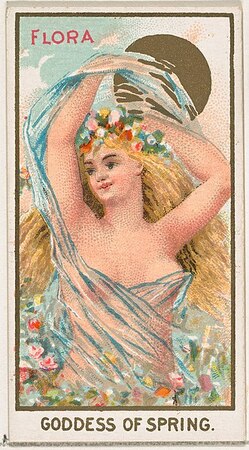
In my practice and Wheel observance, which is inspired by the various Avalonian traditions and Brythonic/Welsh mythology, Beltane/Calan Mai is where we honour the Sovereignty Goddess in Her Maiden guise of the Flower Bride, known by many names such as Gwenhwyfar/Guinevere, Olwen, Blodeuwedd, Creiddylad, Bláthnat, Iseult & more.
I’ve began to explain the Flower Bride deific to those unfamiliar with these stories by dubbing her a ‘Welsh Persephone figure’. Stories of the Flower Bride usually involve a love triangle, and she is always associated with spring time/summer time, and flowers; the Goddess that every May Queen embodies as well as the goddess Flora.
Like all Sovereignty goddesses, a man cannot step in to Kingship or more broadly speaking any sort of true power or leadership unless he is married to Her. If we are to take Her consort as being a god as well as a mortal king in these stories, which is fair to do because we know many deities were demoted to mortals in the Christianisation of the Welsh tradition, it is fair to say that while She is always a Goddess, He ascends to the rank of a God through Her, anointed and awakened through sacred sexuality. The phrase ‘men must become, women just are’ may have sexist connotations, but when applied metaphysically to divine masculinity and femininity, there is basis for it in some of our mythology. To me, this is because, if you imagine a wheel, the divine feminine is at the center at the divine masculine is the protective, moving rim, but there are many different perspectives on this.
In some Flower Bride stories, she is kidnapped and passed from one man to another and seems to have little agency, leading some to perceive these stories as sexist. I completely understand that, but something to consider is that we don’t have to perceive it that way if we don’t want to! There is no metaphysical, spiritual or nature-based reason why we have to imagine the Flower Bride being forcefully passed between two men, OR as an unfaithful woman of loose morals committing adultery, when we can instead cut away all the baggage and get to the metaphysical HEART and thesis of the story, which is “Seasons and Kings come and pass, but the Goddess is forever.” Her two lovers usually fill these two archetypes: Otherworldly Champion, associated with Winter, (sometimes known as the Holly King), and Solar Hero, associated with summer (sometimes known as the Oak King). Who she begins the story with and who she ends up with depends on the story. In Blodeuwedd’s story, she begins married to the Solar Hero, and falls in love with the Otherwordly Champion. In Olwen’s story, while not her lover, her father can be seen as analogous to the old Otherworldly King, and the young, untested Solar Hero has to win her hand. Gwenhwyfar/Guinevere, throughout Arthuriana, is constantly being kidnapped by various Otherworldly/dark figures who obviously represent the Winter King, or betraying Arthur for the young Lancelot who is, interestingly enough, both more of a young/youthful Summer figure, and also an Otherworldly Champion seeing as he is raised by the Lady of the Lake. In Creiddylad’s story, where she begins betrothed to the Solar Hero and is kidnapped by Gwyn Ap Nudd who is absolutely an Otherwordly Underworld king, the story is open ended because she returns to her father’s house and the two men must fight over her every May Day. Whichever man steals away (either by consensually wooing her or by kidnap) the Flower Bride can give us a clue about whether or not the story is about the dark half of the year giving way to the light half, or the light half giving way to the dark half. However, since myths are supposed to be read not as literal events taking place within the realm of time and space (unlike the Abrahamic stories which we’re supposed to take as factual events happening in linear time), but eternal, out-of-this-world events that play out on the World Stage (the Plemora in Platonism), all of the stories can be read as a metaphor for Seasonal Sovereignty and when the story ‘ends’, it begins again and she returns to her original lover, and the story repeats itself. Another thing to consider is that some scholars believe that when the Flower Bride is seemingly ‘kidnapped’ by these mystical/otherworldly figures such as Gwyn ap Nudd kidnapping Creiddylad or Melwas (who is potentially Gwyn in disguise) kidnapping Gwenhwyfar, what is actually happening is that he was her original lover first- the Flower Bride was kidnapped initially by the Solar Hero and the Otherwordly Champion is merely taking her home where she belongs. Considering Flower Brides are very clearly otherworldly in origin, this holds up. The most interesting example of this, to me is a lesser-known story in which Edern ap Nudd, another son of the clearly otherworldly Nudd/Nodens and brother of Gwyn ap Nudd, who in one story is adversarial towards Gwenhwyfar, is her lover who seduces her away from Arthur. Perhaps the Otherworldly figure was truly the good guy in these stories and him being demonised as a ‘kidnapper’ is simply a case of ‘history is written by the victors’ since the Solar Hero is much more in alignment with Christian ideals as opposed to pagan, faery ones.

In other Sovereignty stories, where She takes forms other than Flower Bride, She is the golden-robed Apple Queen of the Otherworld who reveals Herself to worthy men who would be Her King. I see this as a more mature form of the Flower Bride. While the Flower Bride can be viewed as Spring/Early Summer Maiden, the Apple Queen is the Late Summer/Early Autumn Mother, fully authoritative and at the height of Her power. Sometimes she is a Winter Crone, who is turned in to a beautiful maiden again by the kiss (or more) of a worthy knight, representing either winter becoming summer again or simply the fact that the land must be brought back in to balance by choosing a rightful king. Sometimes she takes an adversarial form, such as Morgan le Fay, where she appears on the surface to be actively trying to hinder the heroes but from a pagan perspective we can understand Her as testing them to ensure they are up to the job of ruling the land that is Hers, especially given the fact that She represents the old pagan order and in the Christianised Arthurian stories, they represent the new Christian order. Given that they are essentially bringing great change upon the land, why would She not do what she can to ensure those of the new order can respect the natural laws of Sovereignty and do right by Her people?
While Beltane is usually a celebration of the Flower Bride aspect of Sovereignty, I consider Rhiannon to represent more of the Golden Queen/Apple Queen aspect, placing her period of rule more firmly in the later days of summer. However, she is celebrated at this time of year, too, in the Avalonian tradition practiced by Glastonbury Goddess Temple and its priestesses and priests. I do think, as a sovereignty goddess, it makes a lot of sense to celebrate her at Beltane too. Rhiannon of the Glastonbury Avalonian traditions seems to embody aspects of various goddesses of love and sexuality, placing Her in a red gown (like that worn by Olwen), and is seen in a similar way to other sovereignty goddesses such as Aine and Medb. She also seems to have more obviously Venusian elements, acknowledging the Celtic connection between mares and the sea, and the fact that in the third branch of the Mabinogion she marries Manawydan, often thought to be a Welsh version of Manannán mac Lir, an Irish sea god. This modern view of Rhiannon is very much that of a love and femininity goddess in the vein of Aphrodite, Ishtar and Mary Magdalene, and while the Celtic tradition doesn’t really have deities with such clearly defined domains, I can very much understand why Rhiannon has taken on that mantle, and believe other Sovereignty Goddesses such as Gwenhwyfar to also be love goddesses (To quote Caitlin & John Matthews in their book Ladies of the Lake: “In a tradition that does not go in for Classical goddesses of love, Guinevere is virtually the British Venus.” I recommend this video for further exploration of this, in fact, her whole channel is excellent, and so is her blog which you can find over at White Rose of Avalon. Demelza Fox of Rockstar Priestess also references Rhiannon as a love goddess here at 7:09 onwards.
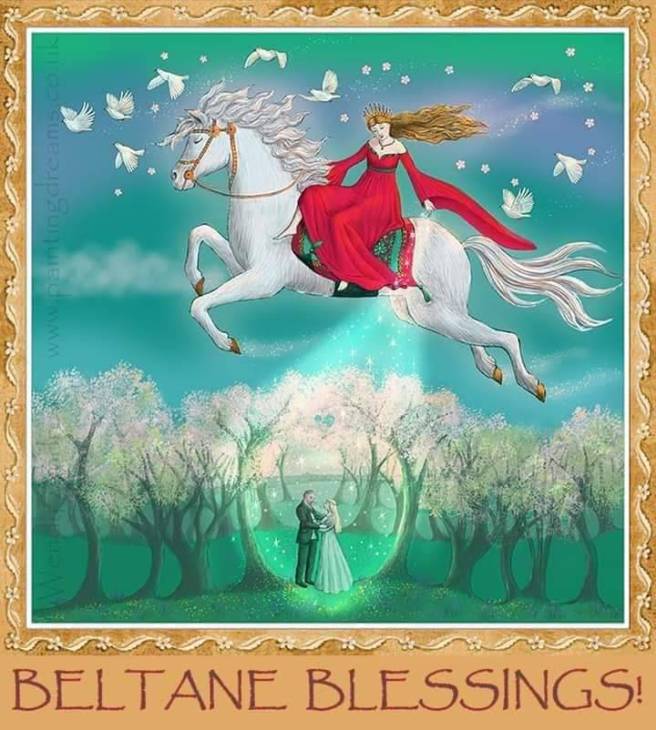
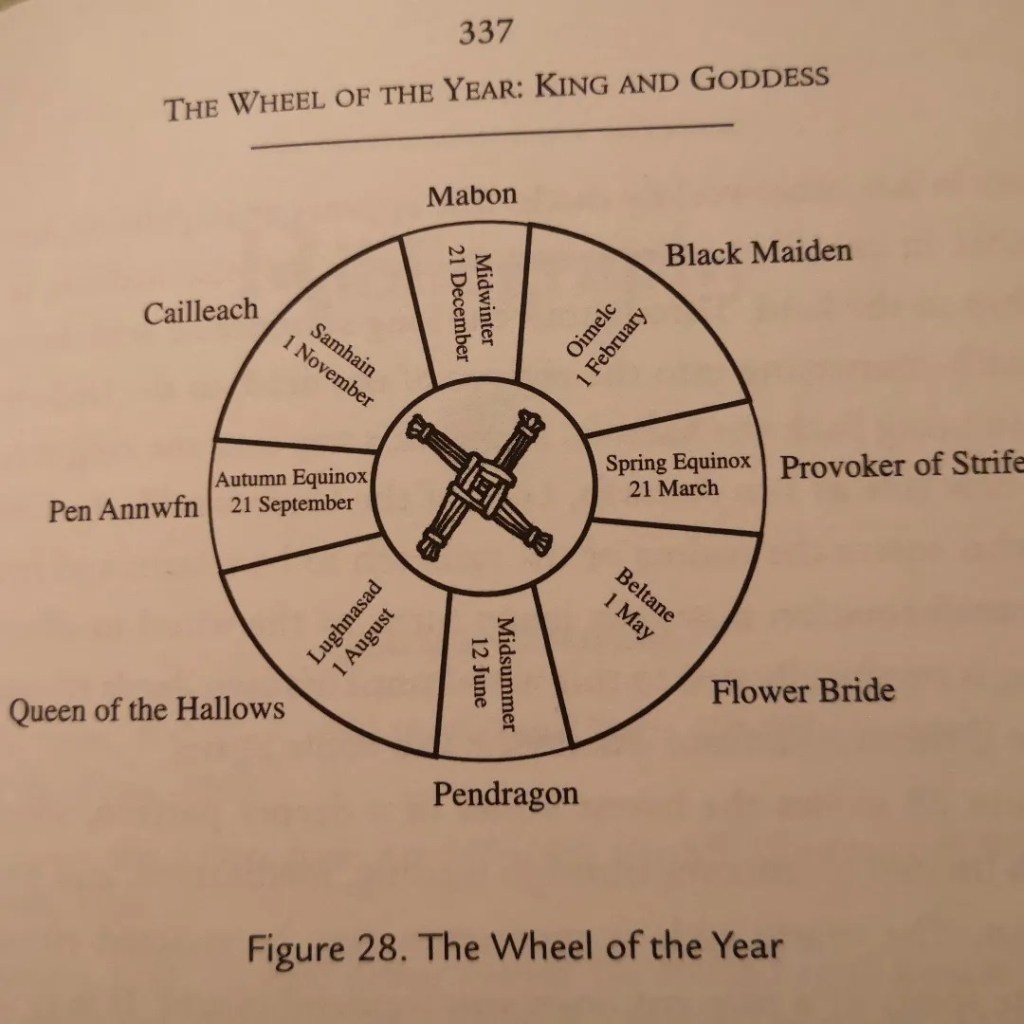
A priestess I know and admire said the other day that being single during the Beltane period is almost like being single during Valentine’s Day and she’s so right, it really is. Celebrating sacred sexuality, union, the sacred marriage/hieros gamos and all of those things when you’re single feels a bit weird. Especially because it was this time last year that I entered my first proper relationship and now I’m back to square one. But I truly love this topic, and am celebrating fertility and the union of masculine and feminine within myself and in the earth around me. Considering I’ve had such a complicated relationship with the topics of love and sexuality, though I am not the kind of woman who most obviously embodies this type of energy at first glance, I feel very much in alignment with the Lover archetype of the Goddess, and when I’m financially better off and can afford the costs of travel & accommodation I very much intend to do the Priestess of Rhiannon sacred sexuality training one day. While I do not currently worship the masculine God, I do acknowledge him in his archetype of King of the Land, in both his Otherwordly Champion and Solar Hero guises. For deeper exploration of this, check out Caitlin Matthews’ ‘King Arthur and the Goddess of the Land’. I may not be devoted to the pagan God but He is a part of my life, and I credit Him with healing many of my issues with the masculine and allowing me to feel safe enough to enter in to my first relationship with a man last year. He does not force Himself in to my life or my practice as He knows this isn’t what I need right now. Instead, he is a presence that holds me, protects me and asks for nothing in return, and perhaps one day I will devote myself to Him as fully as I do with the Goddess. Below is the King & Goddess Wheel of the Year from King Arthur & the Goddess of the Land, which I am incorporating in to my usual Wheel observance as a way to acknowledge the journey of the Sovereign King.
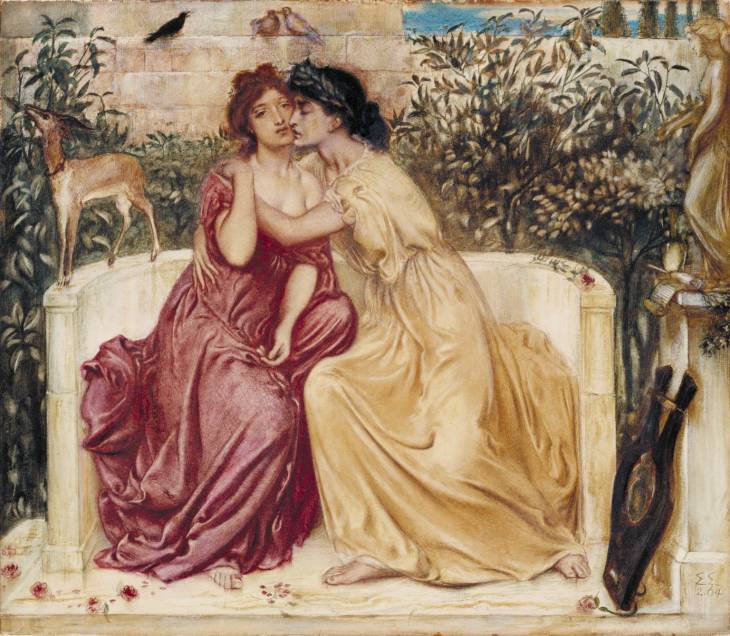
Sexuality is something I don’t think our culture has ever been able to ‘get right’. The pendulum never settles nicely in the middle. Instead, the ideal woman is either a chaste Madonna or a wild Whore with no sexual boundaries. Sex before marriage makes you tainted and impure (especially if you’re a woman) or it’s a requirement to be as sexually open as possible if you want to find a partner and those who don’t are shamed as prudes. Either the only acceptable way to have sex is a married, heterosexual couple doing missionary once a month with the lights off until the man finishes and the woman lies there unsatisfied OR all kinks and fetishes, even the most dangerous and degrading ones, are seen as utterly exempt from criticism and teenage girls end up hospitalized trying to do things their boyfriends have seen in hardcore porn. Either we’re never allowed to talk about or acknowledge sex or we can scarcely turn on our televisions without seeing pornography. I believe Sacred Sexuality is the cure for this, the one view of sexuality we’ve never truly tried in our culture, either demonising sex or forcing it down everyone’s throats to the point where it looses all its meaning. But our bodies are holy and pleasure is our birthright. Sacred sexuality occurs when we truly treat sex with the reverence it deserves, as a spiritual sacrament, and you see the God or the Goddess in your partner. In heterosexual relationships, this comes in the form of union of opposites, Chalice/Grail and Blade/Wand, Goddess and God, Queen and King. At a time when gender relations are so rife with tension and an almost sibling rivalry type of energy, when women, deeply hurt by misogyny, declare men are useless trash who don’t need to exist and men declare that women should submit and be led by men, I believe union between the masculine & the feminine are needed now more than ever, not as competitors battling for dominance, neither one submitting to or domineering over the other, but two equally valuable and potent forces that stand side by side. But homosexual relationships are no less sacred; metaphysically they can be explained as Source returning to Source, and there are various pagan traditions that celebrate gay love, though on the surface I can see why it may seem like all this talk of union between masculine & feminine at Beltane means gay love is less worthy. I want to assure you that as a bisexual woman and someone who thought I was a lesbian for many years, that’s not the case. For lesbians, I suggest looking in to the Dianic tradition and to Artemisian and Sapphic sexual mysteries, and to gay men I point you towards the Feri tradition, which I believe deeply celebrates love between men.
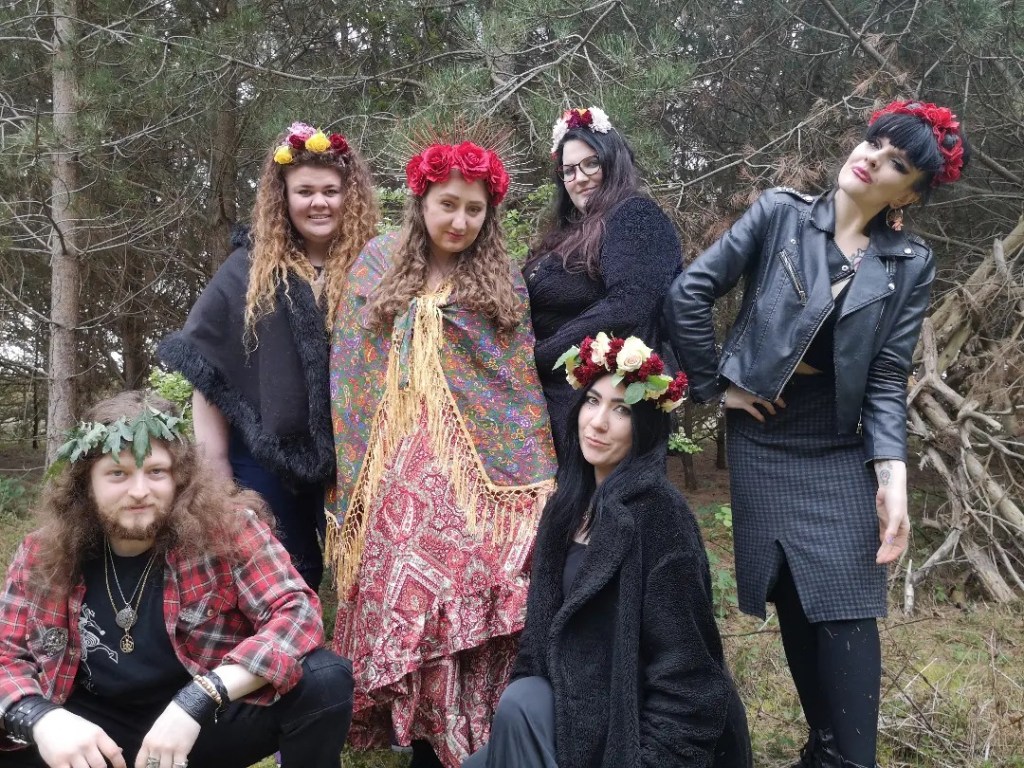
Last month in my moot, I gave my talk about the Flower Bride and the King of the Land, which was my first time giving a full talk on a pagan topic. Before that, we performed a small ritual in which I was the May Queen/Flower Bride & the embodiment of the Goddess, whereas the amazing Kev was our Green Man/Jack-in-the-Green/Oak King/God. I was so so nervous about that talk but everyone loved it and gave me such positive feedback. Interesting that based on our ages and genders we have Holly King, Oak King, Maiden, Mother & Crone here, as Jan remarked!

On May Day itself, which obviously is a bank holiday (another reason why Beltane is my favourite of the Wheel festivals!) I hosted a pagan gathering for the first time. We performed a simple ritual, I told the story of Rhiannon & Pwyll, exchanged gifts, made flower crowns, ate picnic food, sang songs, did some spellwork & just enjoyed each other’s company in a little grove we found right next to a hawthorne tree/May bush, which we didn’t even realise until we sat down. It was genuinely one of the best days I’ve had so far this year and I’m so grateful to everyone who came. I almost cancelled so many times because I didn’t think anyone would come. I’m manifesting, praying & hoping for more of this in my life.

Before I finish off with a bibliography of reading I’ve done last month and prior to that relating to these topics, I want to leave you with two poems I’ve written about Beltane. One was written last year and partially inspired by my former muse, my ex boyfriend, who is no longer in my life, but I am still thankful for what he did for me and the way he showed me what requited, healthy love feels like, and I see no reason why I would have to discard the whole poem when its themes are universal. The other was written specifically with the theme of the Goddess choosing Her God/the May Queen choosing the May King in mind, and I read it aloud at both Beltane events mentioned above. In this latter one I really wanted to acknowledge the Lover archetype between Maiden and Mother, the archetype honored by the Glastonbury Avalonian tradition at Beltane.
Sound the trumpets, blow the horns!
She shall be a maiden no more.
Light the fires, call the dance! She meets her paramour.Dressed in crimson, dressed in white,
Their innocence, their love.
From their union comes the light,
The Firebird and the Dove.He is hers and she is his,
They leap over the flames.
Kiss me now, touch me there,
Begin the fun and games.She makes him king, he crowns her queen,
Sovereignty through desire.
The Lady and the Horned One’s love
Forged in Beltane’s fire.

She whose body is the land
And rules with a flower sceptre
Initiatrix-Queen of Kingship
Calls only he who is worthy
To join her in divine sovereignty
And as her hero kneels before her
She lays an antlered crown upon his head
And leads him to his throne
Then he, newly crowned Solar King
Her chosen Champion
Unmatched in power, passion and potency
Awakens her potential through his touch
And soon her belly will swell
And her blossoms will be transformed
Into the most succulent of fruits
But for now, tonight, it’s just them
Young and wild king and queen
And the roaring fires of Beltane
In which they stand in the liminality
Between Maiden and Mother
Between Youth and Father
We say Hail to the Summer
And to the Sovereign Lovers
As promised, here’s some reading if you want to learn more about the Flower Bride/Sovereignty Goddess and Her King.
- Blodeuwedd: Welsh Goddess of Seasonal Sovereignty by Jhenah Telyndru
- Rhannon: Divine Queen of the Celtic Britons by Jhenah Telyndru
- Flower Face: A Devotional Anthology in Honor of Blodeuwedd by Ninth Wave Press
- King Arthur & the Goddess of the Land by Caitlin Matthews
- Ladies of the Lake by Caitlin & John Matthews
- Once & Future Queen by Nicole Evelina
- Priestess of Avalon, Priestess of the Goddess by Kathy Jones

Sorry, one last thing, then I promise that’s it! Here is my Beltane playlist, featuring mostly pagan songs with a sprinkling of Taylor Swift, because it wouldn’t be a Rhianwen playlist without at least one Taylor Swift song (convert to paganism, Taylor, please, the Christian conspiracy theorists already all think you’re an actual witch!)
The actual/seasonal astrological date for Beltane is tomorrow, so regardless of when you celebrate I hope you all have/have had a wonderful Beltane/Calan Mai/May Day/Floralia etc. May your summer be full of love, sunshine, optimism & magic.
Rhianwen
 Idylls of the Queen