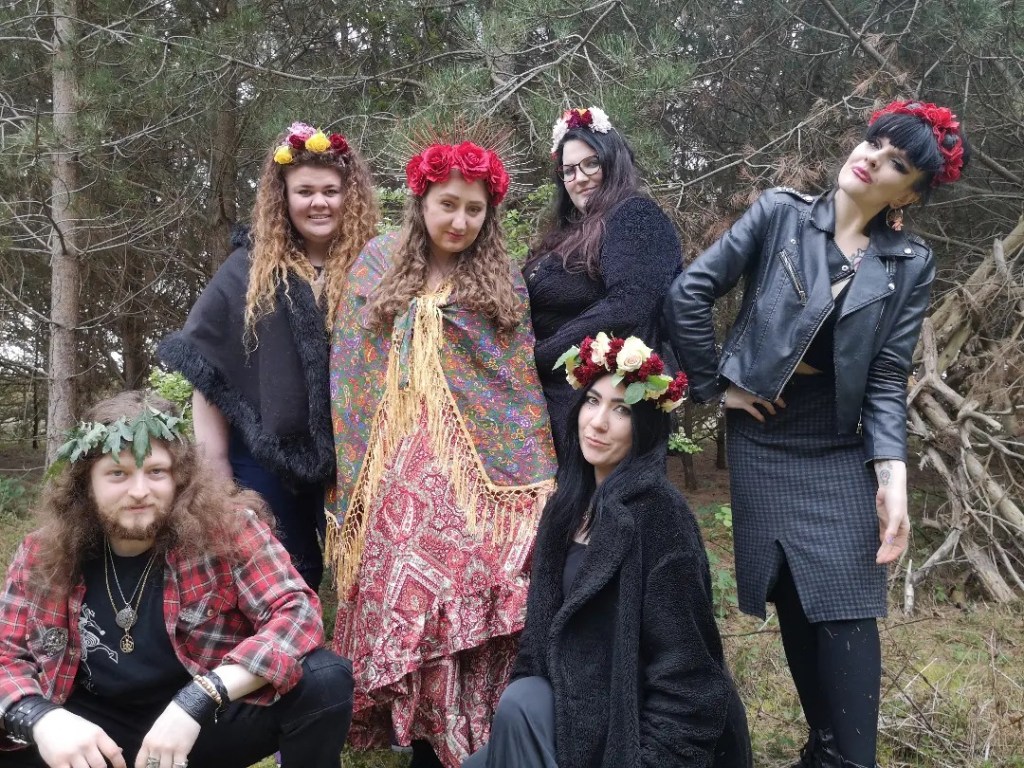
Beltane/Calan Mai: The Dove and the Sparrowhawk

Beltane/Calan Mai

Clover blooms in the fields
Spring breaks loose, the time is near
What would he do if he found us out?
Crescent moon, coast is clear
Spring breaks loose, but so does fear
He’s gonna burn this house to the ground

How’s one to know?
I’d live and die for moments that we stole
On begged and borrowed time
So tell me to run
Or dare to sit and watch what we’ll become
And drink my husband’s wine

Ivy by Taylor Swift

The Wheel of the Year turns once again to Beltane/Calan Mai, by far my favourite holiday and time of year. Last night, before laying my offerings, I sang songs to Gwenhwyfar and Rhiannon, and also acknowledged Olwen, Blodeuedd, Creiddylad as May Queens whose energy is strong this time of year.

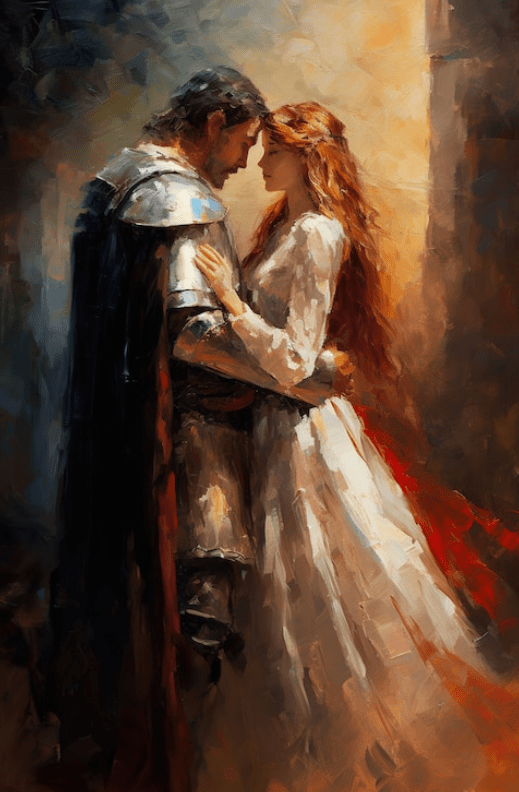
I also acknowledged these ladies’ consorts, particularly Edern/Ydern the Sparrowhawk Knight as Gwenhwyfar’s lover in the Otherworldly faery realms, and Arthur as her earthly consort.

Edern ap Nudd

But wait, who is Edern?

Edern/Ydern/Isdernus/Yder, known as the Sparrowhawk Knight is a lesser-known Arthurian knight who appears in both antagonist and heroic roles in roughly equal measure, but in most of these stories he always ends up reconciled with Arthur. In the ‘Romance of Yder’, it is Arthur who is antagonistic, being depicted as a selfish and borderline-tyrannical king, and Ydern is depicted as a young, courageous, noble but untested young man desperate to prove himself. He is also a son of Nudd, like Gwyn. Nudd is likely identical with the proto-Brythonic god Nodens. Gwyn is an Otherworldly faerie figure, Lord of the Wild Hunt, which would likely make his brother Edern more-than-human too.

But here’s where it gets interesting. In a cathedral in Italy, Arthur and Edern (as Isdernus) are depicted rescuing Guinevere from a tower, in a motif that parallels the later abduction of Guinevere by Melwas and then Maleagant, in which she is rescued by Lancelot. In an early version of Tristan and Isolde, there is an allusion to Edern being a lover of Guinevere. In the ‘Romance of Yder’, his lover is a ‘Guenloie’, who is likely a split-off version of Guinevere created to keep two traditions alive: Guinevere as the wife of Arthur, and Guinevere as the lover of Edern, without upsetting Christian morality and monogamy norms. In the Modena relief, Edern/Isdernus is not wearing armor, unlike the other knights, which could point to his Otherworldly faery origins, and the fact that in courtly love romances, knights were often depicted as vulnerable before their ladies.
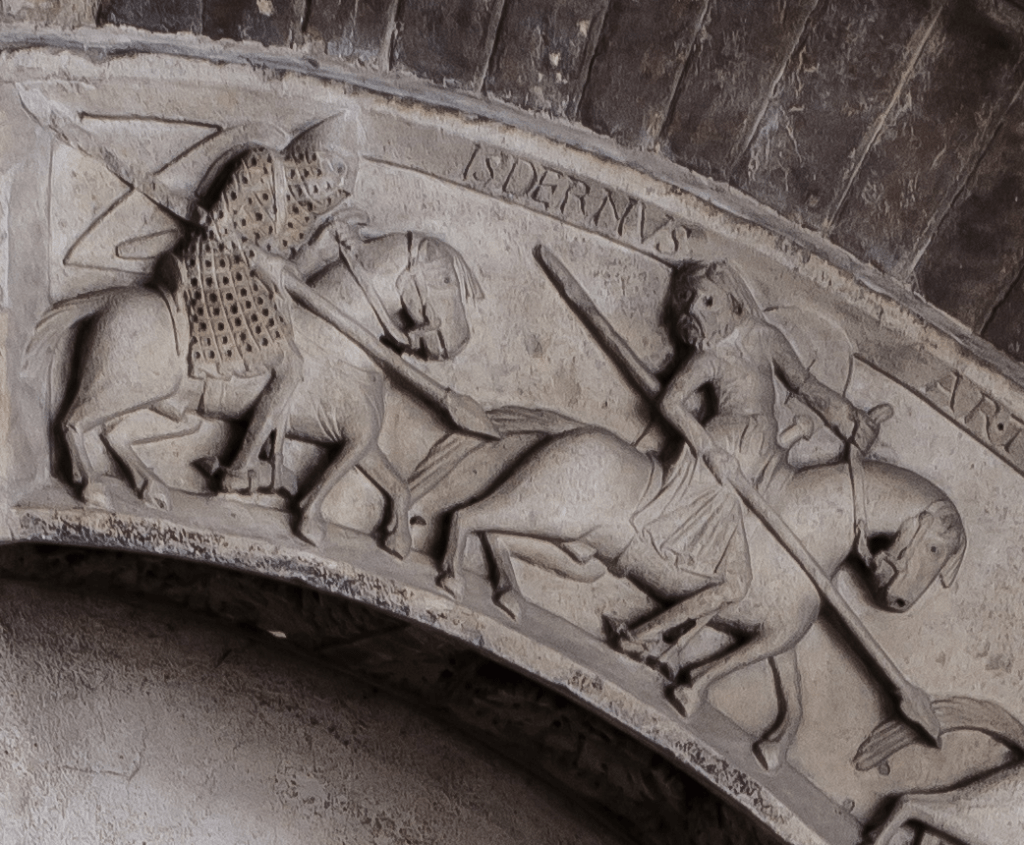
The evidence, to me, seems to suggest that Edern was ‘the original Lancelot’, serving as Gwenhwyfar’s original protector and lover. At first this conclusion was mostly academic and based on research, but I was experiencing such a strong sense of intuition that this was the truth Gwenhwyfar was pushing me to find. Last night, on the eve of Beltane, I had a dream in which she confirmed this for me. I couldn’t believe it. On Beltane! How fitting and magical. I have jokingly said that this discovery has been ‘my Da Vinci Code’ and dubbed it ‘The Modena Code’.

Constructing A Unique Mythognosis

As I have discussed prior, the ‘Gwen’ in Gwenhwyfar’s name means something like white, holy, or blessed. The ‘Hwyfar’ means something like phantom, enchantress, or fairy. In Culhwch and Olwen, Arthur lists Gwenhwyfar among his most prized possessions, many of whom seem to, based on their names, possess magical and otherworldly characteristics. Considering his raid on the Otherworld in Preiddeu Annwfn, is it possible Gwenhwyfar was one of his spoils? A faerie maiden of the Otherworld taken from her home to legitimise the Sovereignty of a mortal king?

Considering the story in the Italian cathedral is parallel to the story of Guinevere’s abduction by Melwas who is identified with Gwyn ap Nudd, an Otherworldly faery king associated with Glastonbury and Avalon, here is the brief shape of my UPG around this whole love… diamond? Square? Please keep in mind I am not presenting this as The Truth, just mine, based on a blend of research and intuition, plus Gwenhwyfar’s messages to me herself.

  1. Gwenhwyfar is a Queen or perhaps a Princess of the Otherworld.
  2. Faerie Lords/Kings/Princes Gwyn (who later becomes Melwas, Mardoc and Maleagant) and Edern (who later becomes Ydern, Yder, Isdernus and somewhat Lancelot), brothers, are in love with her. The former represents winter and death, the latter represents summer and life, like several other Celtic love triangles including the one from Culhwch and Olwen in which Gwyn is also involved.
  3. But there is a third contender in the battle for Gwenhwyfar’s here, too. Arthur, King of the Britons. Perhaps he loves her, perhaps he seeks her hand in marriage to legitimise his sovereignty and claim to the throne. I have mostly positive feelings around Arthur, but I’m aware he is still mostly seen as a Christian king with his own agenda, although he may have earlier origins as a pagan bear god. He finds Gwenhwyfar in the Otherworld and consensually or not, the two end up married. Perhaps this was done to forge an alliance between the Otherworld and the mortal world, as several knights and ladies who seem to have Otherwordly origins end up becoming loyal to Arthur, not just Gwenhwyfar and Edern.
  4. Edern joins Arthur’s Knights of the Round Table in order to stay close to Gwenhwyfar and protect her even in this new, dense, material world of men and a foreign religion.
  5. Years go by, Gwenhwyfar beside Arthur as his queen consort, Edern watching from the sidelines. Edern comes in to relative conflict with Arthur a few times, but always ends up remaining loyal to him. Gwenhwyfar learns to appreciate Arthur and believes him to be a good king trying to do right by his people and understands her role in protecting Albion by staying by his side and embodying Sovereignty Herself.
  6. Gwyn, rightfully annoyed a Christian king is treating a divine faerie goddess as his own possession to legitimise his sovereignty, kidnaps her and takes her back to his Glass Tower in Avalon/Glastonbury. Gwenhwyfar may or may not have complied.
  7. Arthur, Edern and the other knights show up to get Gwenhwyfar back.
  8. Gwenhwyfar is returned to Arthur, but her and Edern remain as lovers in secret, much like how she is written with Lancelot.
  9. Eventually this is revealed. Arthur is destroyed and his sovereignty is lost as he no longer has the favour of the Sovereignty goddess, in the form of his wife, Gwenhwyfar.
  10. The stories are written down by monks and scholars, and carved into cathedral walls. Gwyn becomes Melwas/Maleagant/Mardoc/Mordred, Gwenhwyfar becomes Guinevere, Winlogee and Guenloie, Edern becomes Yder, Ydern, Isdernus and… Lancelot.
  11. Edern is canonised as a Christian saint, like many other Celtic deities and Otherworldly/faery figures.

A Note on Totemic Animals

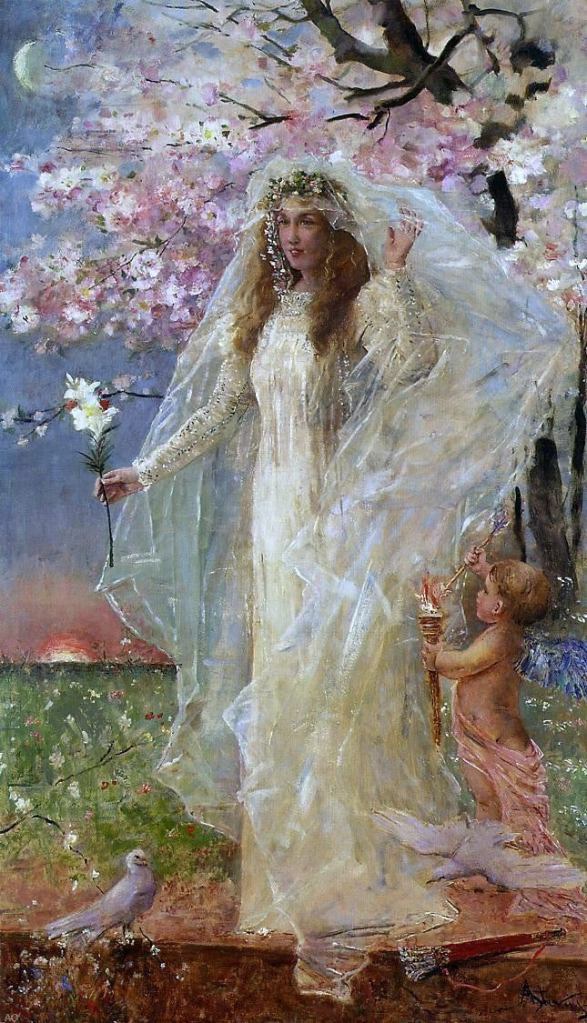
Many Celtic deities are associated with birds, be it birds in general or specific ones. Rhiannon has her Adar Rhiannon, whom I see as songbirds; sometimes robins, sometimes blackbirds, sometimes three different coloured birds whose species I cannot quite place. Cliodhna, the Irish goddess, has similar magical birds. Brigid has a swan. The Morrigan, Morgan le Fay, Bran and Gwyn ap Nudd are all associated with crows and ravens. Bran’s sister Branwen has both the white raven and the starling. Blodeuwedd is of course the owl. Lleu is a majestic eagle. Edern is known as ‘the Sparrowhawk Knight’, and I believe that to be his totemic bird. Gwenhwyfar, though it may be UPG, I associate with a white dove, a classical and Near-Eastern symbol of the love goddess, and Guinevere is syncretically linked to Aphrodite/Venus. She is sometimes depicted with a dove in art. Having just Googled ‘Guinevere and doves’, it turns out doves are actually associated with her in a Grimm brothers tale of Guinevere and Arthur.
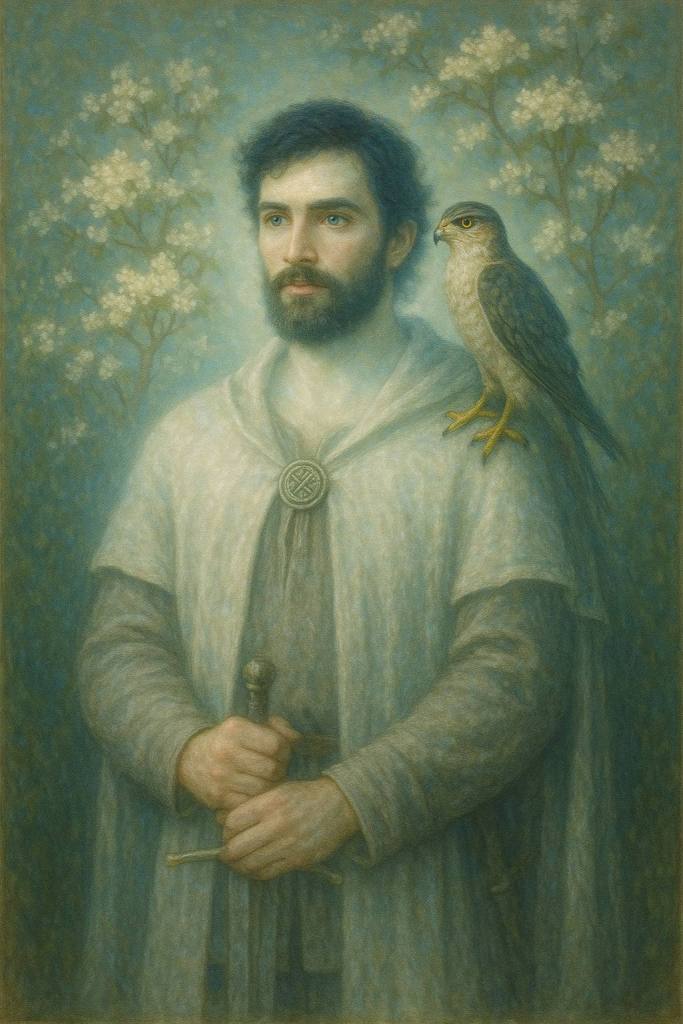
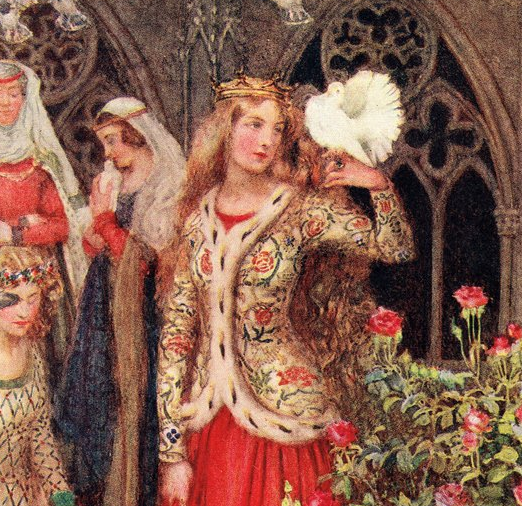
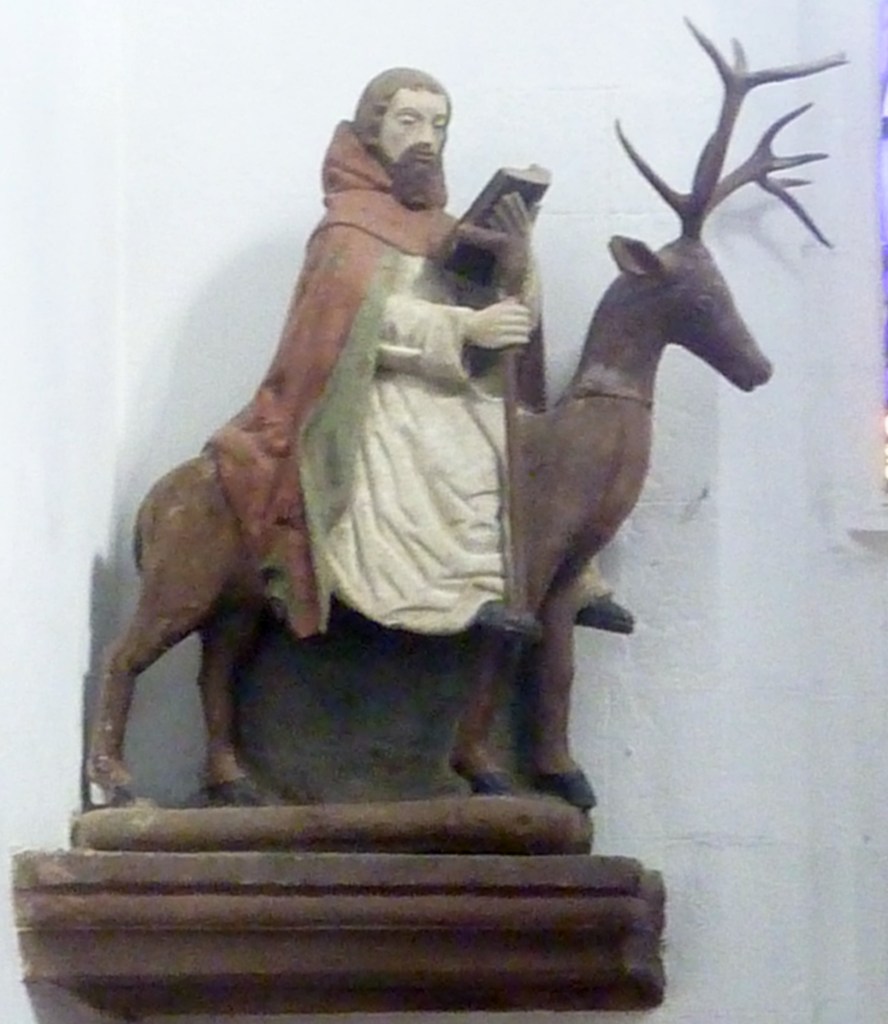
In his saint/monk form, Edern is depicted riding a stag, an obvious symbol of the Celtic Divine Masculine that can symbolise death and rebirth due to their shedding and regrowing of their antlers.
In Praise of Guinevere

Navigating the world of UPG vs attested sources can be confusing. I would never want people to end up stumbling upon this personal blog entry annoyed at me for trying to preach that my UPG is The Truth, but I’m certainly not the only one who believes Edern to be Gwenhwyfar’s true love, even if the specifics may be unique to me.

But as a Sovereignty Goddess and a figure associated with Venus, Gwenhwyfar’s love is not bound by Christian morality. She bestows it upon who she sees fit, for reasons I cannot begin to truly comprehend. Regardless of whether her lover is Edern, Lancelot, Arthur, Melwas, Mordred, multiple of these, or she has no consort at all, she remains my Lady, Venus of Albion, Sovereign and complete in herself with or without a consort. I can only implore you, if you are called to worship and work with Gwenhwyfar, to spend time with her, pray to her, and do your own research to figure out who you should honour as her consort(s). She is a most loving, warm but firm goddess who, just like she does with the knights in service to her, shows me how to become a better version of myself. She embodies the paradox of the Lady of Love who both loves you as you already are, and wants you to rise to meet her.
Beltane Blessings

This morning, I awoke early to go and collect morning dew from a local hawthorn tree. When I got there and found her bone dry, I instead just spent some time with her before heading back home to instead dab my face with dew from our own garden. Feeling refreshed, I called in the Wheel of Rhiannon and blessed and consecrated several pieces of jewellery to, Rhiannon, Gwenhwyfar and one to Venus. After that, I recorded a journey meditation for my Beltane gathering this coming Monday, for meeting your faery guide and Gwenhwyfar, which I can share if anyone wants it.

I intend to spend the rest of the day meditating on these themes, sacred union, and enjoying the beautiful golden May sun on my skin. Gwenhwyfar reunites with Edern, and the light half of the year returns. Sunday I am going to a Beltane event with my beloved who is a complete newbie to anything pagan related- breaking him in should be fun! I’ve told him to think of it as like church, but with more whooping, dancing, moving, sensuality, and acknowledgement that all of creation is sacred. On Monday I am hosting my third annual Beltane gathering with my friends- which I think will be the best one yet.

On May 12th, the next full moon- the ‘Flower Moon’, I will conduct a small ceremony in praise of Guinevere. I am currently constructing a system of lunar workings in which for each full moon in the 13 month year, I worship and work with a different Celtic goddess. The Flower Moon corresponds with Guinevere, and next will be Rhiannon.

Blessed Beltane, one and all!
Sources:
https://clasmerdin.blogspot.com/2011/05/modena-archivolt.html
https://clasmerdin.blogspot.com/2011/05/white-winter-king.html
https://clasmerdin.blogspot.com/2011/05/white-phantom.html
https://clasmerdin.blogspot.com/2011/07/isle-of-glass.html
https://clasmerdin.blogspot.com/2011/07/isle-of-glass-2.html
https://www.maryjones.us/jce/edern.html
https://nightbringer.se/the-legend-of-king-arthur/arthurian-characters/y-arthurian-characters/yder-the-son-of-nut/
https://api.pageplace.de/preview/DT0400.9780231879439_A39320851/preview-9780231879439_A39320851.pdf
https://druidry.org/wp-content/uploads/2023/01/Guinevere-as-Venus-revised.pdf
https://aegtte.weebly.com/de-bruidsjurk-van-guinevere-guineveres-bridal-gown.html
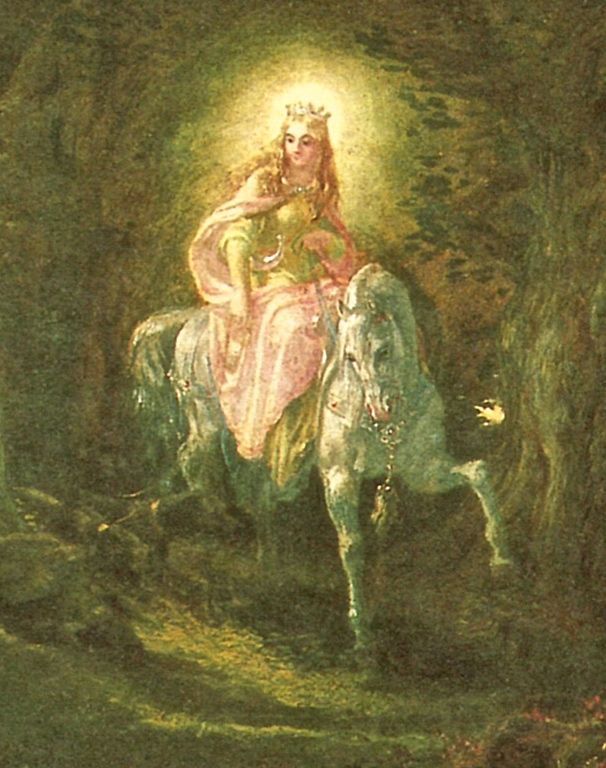
The Faery Lover & the Manic Pixie Dream Girl Trope

It’s been a hot minute, but I have a notes app list of ideas to write blog posts about! So I’m hoping to get back into the swing of things.

It always seems to be this time of year I get the urge to post on my blog. I think it’s because Beltane is the summation and epitome of everything my ‘path’ celebrates: sexuality, vitality, Celtic storytelling, sacred union, love, the faery world, the Sovereignty Goddess. Beltane is the festival in which we celebrate the marriage between the archetypal Celtic Queen and King. Of course, this marriage is the metaphysical basis for all the seasons, and the sovereignty goddess is the central axis upon which the festivals spin around, but if I had to choose one Celtic holiday to sum up the ‘Celtic Hieros Gamos’ it would be Beltane. I have made a number of posts referencing these ideas now, which you can find if you scroll back through my blog.

The Faery Queen and her Human Consort

As a Priestess of Rhiannon in training, one of the main Sovereignty stories I’m thinking about this particular Beltane is the story of Rhiannon and Pwyll from the first branch of the Mabinogi. Most of you reading this will already be familiar with the story, but if not, I recommend reading or watching a summary of it first. This story will feature heavily in the latter part of the post.

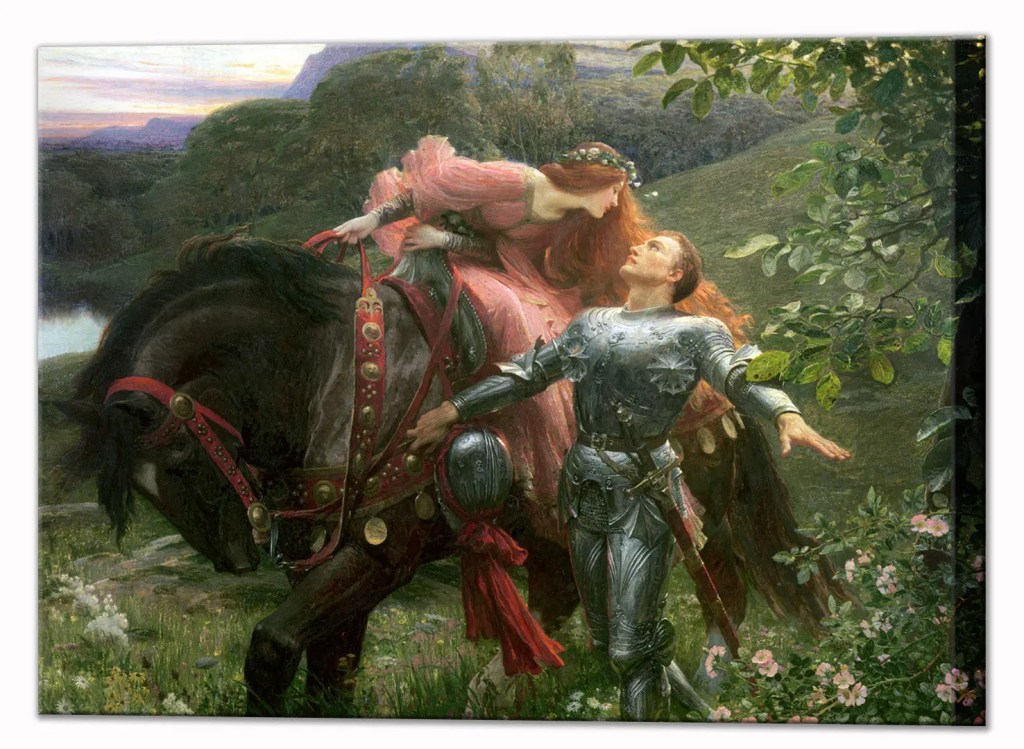
Rhiannon’s story is only one story in our collective Celtic consciousness about the ‘Faery Lover’ or ‘Faery Bride’- a mystical woman, arguably a goddess, who comes out of the mists or the waters or some other liminal faery gateway to take a human man as her lover. Quite the far cry from the timid medieval princess being married off to a stranger for the benefit of her father’s worldly kingdom, the Faery Lover often has agency, and chooses her lover for herself. In many of the stories, she only chooses a man who is already in right-relationship with the land and the world of Faery, and through her divine sexuality that anoints and empowers, he becomes a king. There are different versions of the Faery Lover/Queen/Bride motif, however- sometimes, the Faery Bride does not have much say in the matter, but usually when she is married off against her will, or is mistreated by her human husband, tragedy befalls the man or his kingdom. The Faery Queen/the Sovereignty Goddess will not accept marriage or sexual union with a man she doesn’t choose without putting up a fight. Sometimes, she is the hinge in a love triangle between two men who represent the polarities of Winter/Summer, Old/Young or the Otherworld/This World, and betrays one for the other to represent the changing of the seasons or the ruling order of the realm. Sometimes, she presents her human lover with trials or challenges, which represent the man’s initiation into kingly, divine masculinity. We see this in stories of Courtly Love, where the Lady, such as Guinevere, represents the Faery Lover/Queen. We also see this with Morgan le Fay, who is usually presented as an adversary to Arthur’s knights rather than a lover to most of them, but nevertheless falls into the archetype of the Faery Queen ‘cruelly’ presenting the knight (male initiate) with trials, which ultimately make him into a better, stronger man.

The Manic Pixie Dream Girl

The ‘Manic Pixie Dream Girl’ trope, is a phrase that describes a pattern in (mostly modern) storytelling. In MPDG stories, we begin with a normal, average Joe, ‘everyman’ type of guy, often with a mundane office job that takes up the majority of his time. He goes home to his apartment every evening, watches the news, eats dinner, and goes to sleep, and then repeats this every day hereafter apart from on the weekends where he does some equally mundane ‘normie’ leisure activity. His life is fine, he may be slightly depressed, but he’s otherwise ‘just getting on with it’. Until one day, he meets this woman. She is larger-than-life, quirky, interesting, bohemian, devil-may-care, eccentric, mischievous, philosophical, ‘different’. She enlivens his world in a way he hasn’t experienced since he was a child. Sounds romantic, right? Except often, the MPDG has no goals or desires of her own. She exists to ‘enlighten’ the male protagonist, to be projected upon in his quest to bring whimsy and magic back into his life, and that’s it. Some writers play with deconstructions of the trope, in which the MPDG may actually be mentally ill (‘manic’ in a literal sense) and thus deeply troubled (Effy from Skins, Alaska from Looking For Alaska), or they show that the male protagonist was only using her in his quest for self-discovery and abandons her when he has absorbed enough of her sparkle. He may also try to make her ‘normal’ by the end of the story once he no longer needs her to be her faery-esque self, both in critical deconstructions of the trope or uncritically in media utilising the trope itself (typically older media). We see this archetypal pattern play out in real life, too. Tropes are just media versions of archetypes, and archetypes define our lived reality.

If you ask me, the Manic Pixie Dream Girl can be seen in two ways that are interconnected: 1) A modern version of the ‘Faery Lover’ archetype, and 2) Man’s subconscious desire for sacred union with the Divine Feminine, or Goddess. The MPDG shows him there is another way to live, another way to view the world. His world is black and white before he finds Her, who fills it with vibrant colour. She is his initiator into the ways of the Divine Feminine.

Human Women Aren’t Goddesses

Now, I don’t actually think this is inherently a bad thing at all. I actually think it’s beautiful that women can help men enter sacred union with the Goddess. Women represent the portal between this world and the Otherworld, through our wombs that can be seen as portals. This is why I think stories of a free, lively woman brightening up a man’s life can be a representation of something both real and healthy: the way feminine power can be a true blessing to men. The problem lies wherein the man forgets that his woman is not actually the Goddess, but a human woman. Yes, she has the Goddess within her, and he recognises that. She becomes a mirror to him, and in seeing Goddess within her, he finds God within himself. He realises there is more to this world than his 9-4 office job, the pub and watching the evening news. But she is not actually the Goddess, and both parties must remember that. I truly dislike the new age spirituality trend of human women being called ‘goddesses’. I find it both blasphemous hubris, but also dangerous to a woman’s spiritual journey, especially if she is having this projected on to her by a male partner who expects her to be the perfect image of the infallible, shining Venus, with no ‘human baggage’. And in the oldest stories, Venus isn’t always the radiant, exalted Queen of Heaven. She also finds herself on her hands and knees, in the Underworld, stripped of all her power. Men raised in a patriarchal society (which is most of them) often have a much easier time accepting the light feminine than the dark. The woman’s partner who is projecting his desire for the Goddess onto her may not accept this cthonic aspect of her inner Venus, especially if he has not integrated his own shadow. The idea that projecting an image of Venus/the Goddess onto human women can be contrary to women’s liberation is also present in criticisms of Courtly Love, wherein the idealised Lady was seen as functionally identical to Venus or the Virgin Mary. Whilst Courtly Love certainly did uplift the status of women in my opinion, it is valid to claim it is not identical to the aims of today’s feminism. Feminism needs to allow room for women to make mistakes, to be human. In order not to fall into this idealisation/pedestal pitfall, it may be helpful for a man to meet and integrate his own inner feminine first before becoming the lover of an archetypal ‘Faery Woman’, or to already have a relationship with the Goddess without the need for a female partner to be a perfect reflection of Her for him. Just like how it is helpful for women to learn to ‘rescue themselves’ without needing their Prince Charming to do it for them. This doesn’t mean a woman cannot love the structure and safety provided by the Divine Masculinity in her male partner, or that a man cannot love the magic and radiance provided by the Divine Femininity in his female partner, but that in order to avoid falling into projecting an unrealistic ideal onto your partner, you must find it in yourself, or in the actual Divine, first.

Another problem that might occur when a ‘Normie’ Man falls for a Faery Woman that her way of living and viewing the world may not always serve him and his lifestyle. What happens if he wants her to prioritise a corporate job and make more money, but she would rather work fewer hours in order to honour her feminine cycles and need for rest? What happens if he wants her to be more ‘normal’ before his friends and family, but she refuses to hide her true self? What happens if their parenting styles clash because she wants to homeschool their children in a wild and holistic way and he’d rather them go to a traditional school? The man may unconsciously believe that the ‘Otherworldly Faery Goddess’ nature of his partner may be nice in the bedroom, or when he needs a break from the slog of his 9-5, but not in the ‘real world’. The very qualities he once loved about her now become something he comes to dislike. The man may let modern society’s patriarchal norms colour his perceptions of his ‘Faery Goddess’, and he may come to see her ‘Faery Goddesss’ traits as ridiculous, uncivilised or unhinged, where he once saw those same traits as the missing puzzle piece in his life. He tries to ‘tame’ her.

Rhiannon and Pwyll

In the first branch of the Mabinogi, before Pwyll even meets the otherworldly faery goddess/queen Rhiannon, he goes on an initiation through the Otherworld as a favor to Arawn, the king of Annwn (sometimes seen as interchangeable with Gwyn ap Nudd). Rhiannon, presumably hearing of this brave and adventurous man in her own faery world, comes to earth to seek him out to be her husband, despite being betrothed to another man. By being already initiated in the ways of Faery, Pwyll impresses Rhiannon, and the two end up marrying. But despite his Otherworld initiation, they do not live Happily Ever After. When Rhiannon is struggling to conceive a child, Pwyll’s court and people began to turn on her. Finally, she gives birth to a beautiful, healthy baby boy and is in their good graces again. But when their baby disappears from Rhiannon’s bedside in the middle of the night, Rhiannon’s cowardly handmaidens, fearing they’ll be blamed, smear their sleeping mistress with puppy blood, and accuse Rhiannon of killing her own son. Rhiannon doesn’t fight back, and takes the blame, in what I personally perceive to be an act of compassion and grace for her handmaidens not unlike Jesus dying on the cross for the sins of the world, as well as perhaps resignation that she wouldn’t be believed even if she defended herself and denied wrongdoing. While it doesn’t say this in the text, I imagine Pwyll’s court and people would’ve had an easy time accepting Rhiannon’s guilt because they likely already viewed her as ‘other’. She came out of the worlds of Faery. She is different, potentially dangerous, to these human tribes who have already at this point began shifting into true patriarchy, which views the feminine and the Faery realms as something to fear. Sound familiar? Like I said earlier, a man can turn on his MPDG or Faery Lover once other people’s thoughts and opinions get into his head. Rhiannon’s Otherworldly nature, that Pwyll once adored about her, is now something to be feared- Nature and powerful women something to be feared, as was quickly becoming a core axiom of the new patriarchal order that was falling out of harmony with the subtle, mystical, and arguably feminine Otherworld.

In punishment for the crime of infanticide she did not commit, Rhiannon is sentenced to play the role of her mare for years, offering to carry visitors to Pwyll’s palace on her back. The mare, once a symbol of her power and sovereignty, has now become a symbol of her shame and humiliation, just like her Faery nature has now become something to be feared and reviled.

Later on, finally, Rhiannon is vindicated. A peasant couple found her baby in their stable, and have been raising him for years. He is strong, healthy and unharmed. The kingdom rejoices, and so does Pwyll, but he never so much as offers her an apology in the story. Rhiannon names her son Pryderi, meaning ‘anxiety’, to represent the years she spent mourning for him and fearing that he is dead.

After Pwyll presumably dies, Pryderi arranges a marriage between his mother and Manawydan fab Llyr, who is often interpreted as the god of the sea. You can take this as a patriarchal act of a woman needing to have a husband to be provided for, and her son handing her over to her new ‘master’, but you can also take it, as I tend to do, as it being Rhiannon’s choice. As I mentioned earlier, many ‘Faerie Bride’ stories feature a love triangle between her and two men representing the polarities of Dark/Light, Old/Young or Mystical Otherworld/Ordered Civilisation. While Pwyll had made his Otherworld journey and at one point was in alignment with the Otherworld, he arguably fell out of alignment with it when he humiliated Rhiannon in favour of the anxieties of the ‘civilised’ world against the so-called ‘chaotic, dangerous’ Otherworldly faerie woman/goddess. Manawydan, as a sea god, very much represents the forces of the Otherworld, and thus Rhiannon taking him as her husband may represent a sort of ‘homecoming’ for her, as the sea was often thought to be associated with the Otherworld, or the portal through which one enters it. Horses, too, in some of the Celtic and other Indo-European thought seem to have been associated with the sea. Manawydan’s Irish cognate Manannán rode a magical horse named Enbarr, whose name means ‘froth’, bringing the image of the horse-like appearance of the frothy white waves. Rhiannon’s white mare has also been interpreted as one of these oceanic horses, too.

Compare the above to the other Faerie Bride love triangles, in many of which the Faery Bride ends up choosing to be with the ‘Otherworldly’ man, and you could argue that these stories serve as a warning to the real life human men who choose to be with a ‘Faery’-esque, ‘Manic Pixie Dream Girl’-esque woman. If you don’t respect her Faery ways, if you try to shame her, tame her, and can’t accept her for who shame is, she may leave you for a man who can.

Reflections on Beltane: The Goddess of Sovereignty & Feminine Power

It is the first day of May, and for the first time this year, we’ve had our first *properly* warm weather in my neck of the woods. Couldn’t be more fitting.

It’s the time of year where you look out the window and see bird couples cosying up to each other like a newlywed couple on their honeymoon. Despite the start of winter being labelled ‘cuffing season’ where people try to couple up to seek companionship and warmth in the cold months, it is this time of the year that is most aligned with romantic love and sexuality. Traditionally, young couples would go into the woods together on May Eve to make love and come back with flowers.

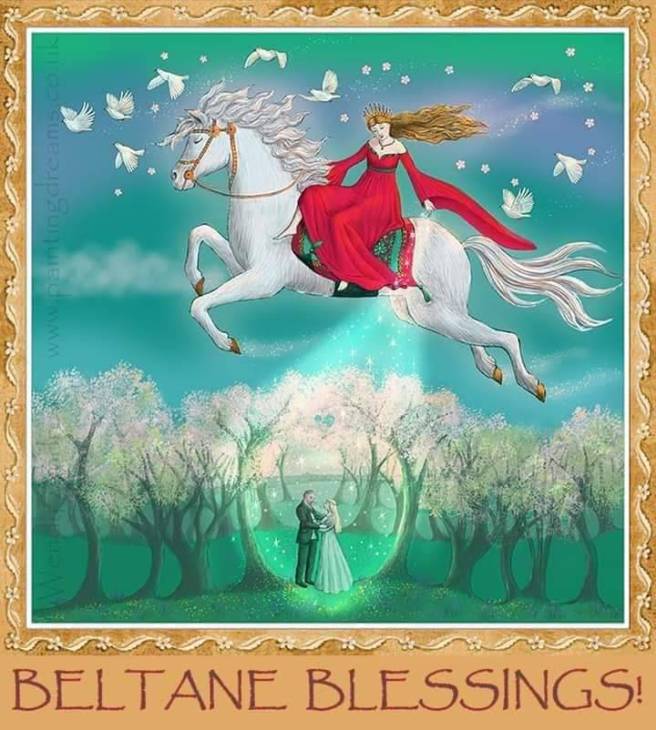
Art Credit

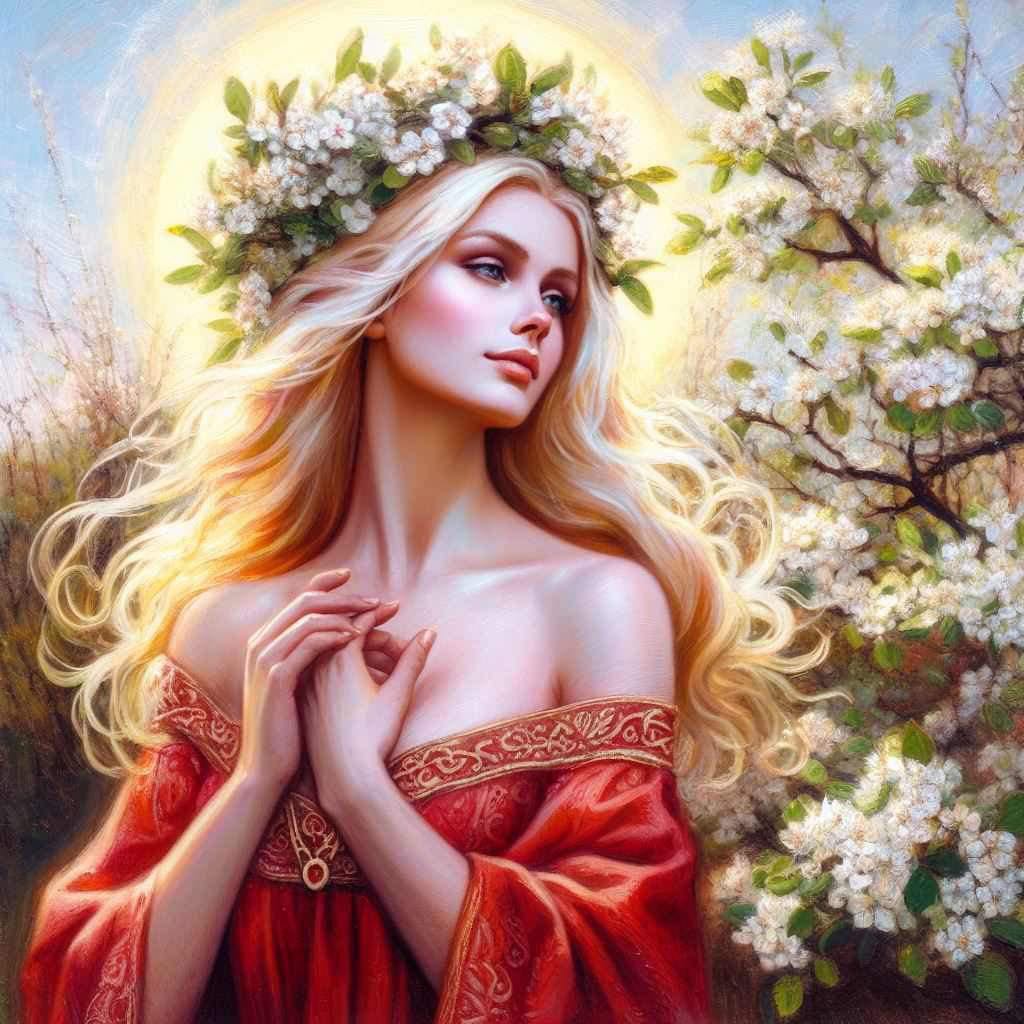
In some of the modern pagan religions who take their inspiration from ancestral Celtic myth and lore, this is the time we acknowledge the marriage of the Sovereignty Goddess, Goddess in the aspect of Lover-Queen, and the divinely anointed King. The Goddess chooses the King who is right for the land, making him Her chosen Lover, Champion and Protector. He is an absolutely necessary part in fulfilling and executing Her visions. To quote Caitlín Matthews in her illuminating Mabinogi companion King Arthur & the Goddess of the Land:

The king’s union with the land, the Goddess of Sovereignty, is a very special one characterised by an exchange of energies and powers: the king swears to uphold his land and people and to be true to them, while Sovereignty gives him otherwordly gifts enabling him to keep his oath. At its base, the Celtic concept of Sovereignty is related to the Middle Eastern concept of wisdom as Sophia, who consorts with kings as the creative and wisdom-bestowing mystic woman appearing in the form of either an angelic presence or an earthly woman. Solomon and Sheba are the prime example of this king-Sophia paradigm. In British symbolism, Arthur and one of Sovereignty’s representatives, such as Gwenhwyfar, exemplify the similar king’s paradigm.

This dynamic is hotly debated. I have read some hardcore reconstructionists and feminists alike caution against romanticising it too much as they believe it is nothing more than a patriarchal construct in which patriarchal monarchy is validated through claiming the Goddess gives them the right to conquer a land. And sure, we can’t know for sure that it wasn’t that, but we can’t know for sure that it was, either. To me, this seems very obviously an example of a time where patriarchal civilisation/order cracks and underlays the matriarchal, dare I say gynocentric foundations it is based upon. The masculine may rule in the outer realms, with our society being patriarchal for much of history, but the feminine rules the inner realms. In fact, many Celtic tribes were matrilineal, and while it was men who were the regnant rulers, the right to rule, the literal ‘divine right of kings’, was passed through the female line, meaning the king’s nephew through his sister, not his son, would inherit the crown (which potentially is what the struggle between Arthur and Mordred is referencing). To quote Caitlín Matthews once again from the same book:

Sovereignty is not merely a passive archetype, some kind of negative cypher whose sole purpose is to empower kings and heroes. As a goddess and through her human representatives she exists in her own right and actively promotes, obstructs, or dismisses her chosen candidates. She and her elect continually modify and develop their relationship; as the essential quality of the land personified, Sovereignty has the right to change her mind and frequently does so. Even Arthur himself is not exempt from her strictures.

And…

Throughout the course of our study of the relationship between Sovereignty and her champion, we note that the Goddess is not submissive, mild and biddable; rather, she is a powerful force armed with subtle skills and deep wisdom.

I’ve talked the ear off anyone who will listen to me ramble about this topic but there has been an obsession in the new age spirituality community (and its branch-off- the polarity dating coach scene) for a while to exalt ‘feminine submission’ and to push the narrative that the true ‘nature of the divine feminine’ is to submit to a powerful man. I’m aware that some people’s definition of ‘submission’ is different from my own, but following the dictionary definition, that term does not refer to most divine feminine figures I am aware of. New age spirituality is often just evangelical Christianity cosplaying as paganism or esoterica and I’m getting quite sick of it. It’s no reason why so many of them end up reverting back to Christianity (which I have no problem with in and of itself) and immediately start denouncing their previous path as demonic and evil. There is a very clear pipeline, and the misogyny found in both movements is very much the same. Whether this has been a feature of the new age movement from the beginning or has been a subtle takeover from the ‘alpha male’ dating coach bros, I don’t know, but I’m tempted to say it’s a combination of both, perhaps. But ‘divine feminine’ does NOT mean ‘divinely ordained Abrahamic patriarchal gender roles’, it means the power of the Goddess, that lives in everyone and everything, though women are the most direct embodiment of Her power on earth. We ourselves are not goddesses (Caitlín has recently written about this on her Substack– I highly recommend subscribing or grabbing the free trial so you can read it and its follow-up posts yourself) but we certainly are Her hands upon the earth, and if the Goddess herself is not submissive, why would we be?

Certainly there is a time and a place to let a man lead, make decisions, etc. Many women in the modern day feel burned out. Women are overtaking men in many areas of public life, but as a result of this they feel overworked and exhausted. Many feel the need to compete with men in the workforce to ‘prove’ they can ‘do everything a man can’- and that’s no good either. Your work ethic should come from you, not some desire to prove a point and it should not come at the expense of your emotional, mental, physical and spiritual wellbeing. Furthermore, many women in the dating scene, myself included, have expressed frustration with male passivity at the moment. Men are too frightened to initiate anything with women they’re attracted to and refuse to lead in anything. Just look at the comments in any video of Travis Kelce and Taylor Swift interacting to see how much many women, even feminist/liberal ones, find it attractive when a man is able to lead, be protective and masculine. But this doesn’t make every women at the receiving end of this inherently ‘submissive’. She leads in her own way, through setting the emotional, spiritual, sexual and romantic tone of the relationship. Through being the divine power source of masculine executive action. She plays the role of the Sovereignty Goddess. She is leading in the subtle, otherworldly, divine realms.

I have seen it said that the role of femininity is to support, amplify and nurture the masculine’s vision and power, but as a Goddess-worshipping Celtic pagan I can’t help but laugh at this because whilst it may be true in the sense of Abrahamic-traditionalist relationship structures, it is ignoring that this is mirrored in many pagan traditions where the role of the masculine is to support, protect and execute the visions and power of the feminine. It really depends on which angle you’re approaching it from and in which sense you’re actually talking about.

That’s not to say there aren’t times when the Goddess appears passive and submissive in these stories, but it is usually against Her will. In the fourth branch of the Mabinogion, Blodeuedd is created as the perfect, biddable, pliable, submissive wife for Lleu Llaw Gyffes. It is not until Lleu is away and she falls in love with the hunter Gronw Pebyr that she breaks free from this spell, initiated into decisive feminine sexuality that allows her to choose who she’ll love- and she chooses Gronw. Some pagan scholars have interpreted this as a seasonal allegory. The Sovereignty Goddess switches between a King representing Summer/Order/Light and a King representing Winter/Chaos/Darkness in order to hold the seasons in balance. I have talked about this here this time last year. There is a misinterpretation that the Winter King/Summer King narrative was invented by Robert Graves, but he only created a modern framework for a very old pattern in Celtic mythology. We see this same thing with Creiddylad as she is kidnapped by Gwyn Ap Nudd when she is due to be wed with Gwythyr. Gwenhwyfar, also, in many early Arthurian stories, is abducted by men in a similar fashion. Interestingly enough, with both of these stories there have been interpretations that these ‘abductions’ are actually rescue missions- the man that represents the Otherworld rescuing an Otherworldly faerie woman from her Christian captors and taking her back home. When the French got a hold of Arthuriana, they create Lancelot, and the abduction becomes a consensual love story. Lancelot is associated with the Lady of the Lake, and thus represents the Otherwordly Champion aspect of the divine masculine to Arthur’s Solar Hero.

Other goddesses/figures I consider to embody this Sovereignty Goddess (both in the Celtic tradition and otherwise) archetype are:

  • Olwen
  • Elen Luyddog
  • Rhiannon
  • Modron
  • Morgan le Fay
  • Elaine of Corbenic
  • Macha
  • Áine
  • Isolde
  • Mary Magdalene
  • Sophia
  • Inanna
  • Helen of Troy
  • Isis

And many more.

I am currently reading a book on courtly love- a medieval literary genre that influenced gender roles in the medieval court. Because of courtly love, women went from being seen as temptresses and the embodiment of evil, to the driving force behind all great masculine action, mediatrices between God and man, embodiments of Venus, and yes, the Sovereignty Goddess. Women hold the Power of Love, which transforms and initiates the masculine, as seen in the Heroes Journey. After all, what does a man getting on one knee to propose represent if not this? This ontological view throws a wrench in the submissive woman and ancillary femininity paradigm. In the courtly love dynamic, the feminine is the centre, the masculine is the protective rim that moves around her. I’ve talked about similar ideas to this in other posts. My path is extremely Goddess focused, but that does not mean I reject divine masculinity. Without the direction and executive powers of the masculine, the raw creative power of the Goddess would have nowhere to go. He carries out Her mission. In spiritual matters, the divine feminine leads, and so my spiritual path is divine feminine focused. In the physical, every day realm, I want a man who can step into his divine masculinity to lead in the physical. It’s not inaccurate to say neither of us are submitting to the other but actually I’d say we both are submitting to each other. And, of course, even if we are more feminine or more masculine we should each seek to integrate our animus/anima and incorporate aspects of both in order to lead the most fulfilled lives and not rely entirely on the opposite sex to embody all of the other traits for us (still working on this myself).

Ultimately, for me, Beltane is a celebration of all of this, and the most important festival in my personal observation of the Wheel of the Year. For most pagans it seems to be Samhain, for me it’s Beltane. I named my blog Idylls of the Queen for a reason, a play on Tennyson’s Idylls of the King. There is a whole feminine realm to Arthuriana that has gone over a lot of people’s heads until very recently, thanks to the work of the Matthews’, Dion Fortune, pioneers of the Avalonian branch of the Goddess movement, and many others, and much of it concerns this idea of the divine feminine as the true power driving the events of the stories: NOT the Christian god. In order to acknowledge divine feminine power, we need to look beyond the material, the exoteric, the obvious. We need to pull back the veil, go beneath the surface, read between the lines.

The Devil isn’t in the details, the Goddess is.

Further study:

  • Blodeuwedd: Welsh Goddess of Seasonal Sovereignty by Jhenah Telyndru
  • Rhiannon: Divine Queen of the Celtic Britons by Jhenah Telyndru
  • Ladies of the Lake by Caitlín and John Matthews
  • Courtly Love: The Path of Sexual Initiation by Jean Markale
  • Priestess of Avalon, Priestess of the Goddess by Kathy Jones

Olwen: May Queen and Solar Goddess of Love

I know I said I was done with the Beltane/Calan Mai/May Day posts but we’re still in Beltane season until the solstice so I lied. And I have a couple more ideas for Beltane related posts. So there.

One of the Beltane/May Queen goddesses I’ve not really talked about is Olwen of the White Track. She is much more obscure and not as widely acknowledged in Brythonic polytheism/the Avalonian based traditions as her similar sister-goddesses Gwenhwyfar, Blodeuedd, Rhiannon etc. (Creiddylad, Yseult etc too but they’re also quite obscure). 

artist unknown

In the main text in which she appears, Culhwch and Olwen, she does not appear much in the story because obviously it’s a tale of Manly Knights doing Manly Knight Things, but she is the reason they headed off on their adventure to begin with, as in order to marry her, Culhwch has to go on an epic quest which will prove his worthiness to her father, Ysbaddaden (whose name refers to the hawthorne tree, an obvious link to Beltane), who will die if she marries. Many believe him to represent the old Winter King who does not want to give up his throne, with Olwen as the Flower Bride waiting to be set free from this overprotective paternal figure- one of the oldest examples of stories about fathers who believe no man to be good enough for their daughter, perhaps. This leaves Culhwch as the young, untested Summer Lord who needs the hand of the Flower Bride to begin his reign as Summer King. 

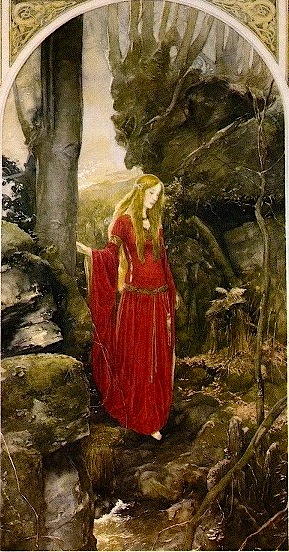
But what makes Olwen so different from the other Flower Brides (other than it being her father and her potential lover who she is the hinge in the love triangle between and not two lovers) is, to me, she seems to have more agency. We do not hear things from her point of view, but she seems to actually be attracted to Culhwch. Culhwch asks for her hand, and she simply says her father won’t allow her to marry, not that she doesn’t want to. Red, to the Welsh Celts, was not, as far as we know, associated with sexuality as it is today, but represented the Otherworld (along with white). When we think of most of the Flower Brides, who many associate with the Maiden aspect of the Goddess, we think of them as wearing white. But Olwen, she wears red. From a contemporary comparative mythology and symbolism perspective, this to me indicates she is ready to become sexually active and enter in to the Lover stage of her life, the transitory period between Maiden and Mother. In the Avalonian tradition of Glastonbury Goddess Temple, Maiden, Mother, Crone is stretched to Maiden, Lover, Mother, Crone, with the Lover archetype representing Beltane (the Maiden instead represents Imbolc, the Mother at Lammas, and the Crone at Samhain). Olwen isn’t a passive figure who has little control over her fate like Creiddylad, or forced in to a marriage she didn’t consent to like Blodeuedd, or married for political reasons like Guinevere/Gwenhwyfar. She seems to actually want to marry, and it’s simply her father holding her back. Not to say that we cannot interpret the aforementioned goddesses as having agency too (the latter two definitely express agency in choosing who to love later on in their stories), but I feel like with Olwen there’s less reclamation that needs to be done. As well as her signature red gown, she is described as wearing many rings upon her fingers, and a necklace of red gold and jewels. She is fully aware of her beauty and sexuality, as opposed to a white-robed, demure, innocent maiden. It’s UPG and modern comparative mythology, sure, but I feel like Olwen is, probably along with Gwenhwyfar, the Flower Bride who is the most aware of her role as passionate Lover. Her red gown such as those worn in depictions of sensual Irish goddesses Áine and Medb, and jewellery worn by the likes of the Nordic love goddess Freya and Mesopotamian love goddess Inanna, tell her father “I’m not a little girl any more, dad.” I think about the way the Glastonbury Avalon tradition depicts Rhiannon, and that’s very close to how I view Olwen. I wonder if parts of Olwen’s energies are being channeled in these more modern depictions of Rhiannon as Lover Goddess. 

Rhiannon altar at Glastonbury Goddess Temple or House

Her name is said to mean ‘white track’. Where she steps, tiny flowers bloom below her feet. Like Brigid, and Ostara/Eostre, she arises from the underworld out of slumber to awaken the land. Today, while I was walking through a local green space to feed the birds, there were thousands of daisies. One of the best things about this time of year is the little wildflowers that cover the grass. There were so many daisies that I could smell them in the air as I walked. I imagined myself as Olwen, awakening the land with my footsteps.

There is some etymological research to suggest her name means ‘Golden Wheel’, in contrast to the Silver Wheel of Arianrhod, which may make her a sun goddess, due to the fact that the word ‘olwyn’ is believed to have meant Wheel, though I’m unsure where the ‘golden’ part come from. As a spring/summer goddess, she certainly is aligned with solar energies. Arianrhod doesn’t have as clear of a connection to the moon as people may think (though she certainly does with the stars), but as I’ve said in the past, modern interpretations of the domains of these deities aren’t invalid just because we can’t find indisputable proof for them. The silver wheel in Arianrhod’s name, if indeed ‘Rhod’ does mean wheel, I suppose could be due to her association with the Corona Borealis. That being said, I see no reason why modern pagans shouldn’t be able to associate Arianrhod with the moon. Moving back to Olwen, I get annoyed by the New Age and Wiccan idea that all goddesses are lunar and all gods are solar, when the Celtic pantheons and other European pantheons have no shortage of solar goddesses and in the Nordic tradition, the sun is female and the moon is male. One theory as to why there are more sun goddesses and moon gods the more north you get is that in warmer climates, the daytime sun is viewed as a harsh and aggressive force, associated with masculine energy, whereas the night is cool and gentle, associated with feminine energy. Whereas in more Northern climates, the nights are bitter and hard, whereas the warmth of the sun is benevolent and loving. I’ve always been drawn to solar goddesses, and Olwen is no exception. 

In another story, Einion and Olwen, a young shepherd travels to the Otherworld, wins her heart, and the two marry and have a son named Taliesin (likely different to *that* Taliesin.) Olwen exercises plenty of agency in this tale, falling in love with Einion and wanting to marry him rather than him just pursuing her which is often the case in these stories. She has two sisters, pointing to a triple goddess, like Gwenhwyfar in the Welsh Triads, the three Brigids etc. 

By Judith Shaw from her Celtic Goddess Oracle Card deck

I have read her described as being the keeper of the Apple Orchard of the Otherworld, a role that is often given to the god Afallach, his daughter Modron, Morgan le Fay, and various sovereignty goddesses associated with the Otherworld. Given Olwen fits nicely in to this archetypal ‘family’ of Otherworld deities, and her associations with the colour red and love, I can accept this correspondence on the grounds of syncretism and comparative mythology, although I would like to find the source for it and the direct justification. Honestly, a lot of these sovereignty, love, spring and Otherworld goddesses are so similar that it can be hard to discern where one ends and one begins.

We can interpret Olwen as triple-aspected: when she is with her father during winter, she is the Lady of the Underworld. She then leaves with her lover to the upper world to bring about Spring, making her almost like a reverse Persephone. She is also a solar goddess, giving her heavenly connections. As such, she can be seen as Lady of the Underworld, Lady of the Earth, and Lady of the Heavens, just like Ostara/Eostre.

Olwen by Alan Lee

The theme for the 2019 Glastonbury Goddess Conference was ‘Sun Lover’, a combination of the solar goddess & lover goddess archetypes. I cannot think of a better candidate for this than Olwen other than maybe Áine, who is an Irish goddess and therefore not as much of an ideal fit for an Avalonian tradition, but still relevant. I believe Áine was honoured as I read the little Sun Lover book published after the conference, but did not recall any mention of Olwen, which is a shame. I would love to see this powerful, beautiful, sensual, loving Goddess honoured more among those of us who gravitate towards Welsh traditions and the more neopagan, sacred feminine focused Avalonian traditions, especially at Beltane/Calan Mai, which is her time of year.

If you wanted to build an altar for Olwen, at Beltane or any time of year, here are some things you could include:

  • Small white wildflowers, especially trefoils
  • Gold rings and necklaces
  • Solar imagery and crystals associated with the sun
  • Red altar cloth, red candles
  • Rubies
  • Broom flowers
  • Red roses
  • Hawthorne flowers
  • A printed off painting of her, or a drawing you’ve done yourself
  • Makeup

I believe Olwen encourages women to embrace their beauty and sexuality, inflames the passion between lovers, and encourages women to be active participants in our own love lives. However, the fact that Culhwch had to perform thirteen impossible tasks to be able to marry her shows that we should have high standards for who we choose as our lovers, and we can invoke our inner masculine, our inner father, to hold that boundary for us if we feel we cannot do it through our feminine. She also tells us that ‘vanity’ is not a sin and its okay to want to dress up, wear makeup and jewellery to feel sexy and confident. When I put on my red dresses with matching signature red lipstick and gold jewellery, I instantly feel a boost of confidence and sexual, feminine power: Olwen’s influence. She also does not need to wait for a lover to awaken her sexuality, she seems capable of doing it herself, though she awaits her king to have someone to share it with. Therefore, she reminds me that I am capable of embodying the Lover Goddess and embracing my sensuality and sexuality whilst single, awaiting my king or queen to share it with.

Hail to the triple-aspected Lady of the Underworld, Lady of the Earth, and Lady of Heaven. Hail to the May Queen and Her King. Hail to the Summer!

~ Rhianwen

Beltane: The Coronation of the Queen & King of the Land

Beltane, or, as I’ve been calling it more often since I’ve adapted a more firmly Welsh/Brythonic influenced path (I have just applied to join the Sisterhood of Avalon), Calan Mai, is my favourite festival in the Wheel of the Year. Everything about this festival sings to my soul. I’ve always loved May. The transition from the beginning of April to the end of April is so stark. The days are much longer, the trees are approaching their leafy fullness, and every patch of grass is alive with daisies, dandelions, bluebells, forget-me-nots and more (in my neck of the woods, your local wildflowers may be different). In the UK, we have two bank holiday Mondays this month, too, with an extra one this year due to the king’s coronation (which, regardless of your thoughts on the monarchy, the day off is very nice, and metaphysically May is the best month they could’ve picked for a coronation).

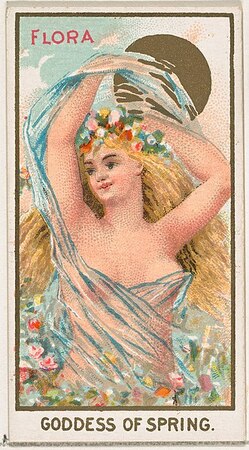
Beltane is celebrated slightly differently across different pagan paths, but there are some shared themes: fertility, the sun, summertime, light, fire. Historically, cattle would be driven between two bonfires to purify them. People would wash their faces with the morning dew to bring them beauty and a youthful appearance throughout the year. Hawthorne branches would be gathered and homes decorated with wildflowers. When the Romans conquered Britain, the festival was syncretised with Floralia, the feast day of Flora, the Roman goddess of flowers, and young women would weave flower crowns in her honour.

In my practice and Wheel observance, which is inspired by the various Avalonian traditions and Brythonic/Welsh mythology, Beltane/Calan Mai is where we honour the Sovereignty Goddess in Her Maiden guise of the Flower Bride, known by many names such as Gwenhwyfar/Guinevere, Olwen, Blodeuwedd, Creiddylad, Bláthnat, Iseult & more.

I’ve began to explain the Flower Bride deific to those unfamiliar with these stories by dubbing her a ‘Welsh Persephone figure’. Stories of the Flower Bride usually involve a love triangle, and she is always associated with spring time/summer time, and flowers; the Goddess that every May Queen embodies as well as the goddess Flora.

Like all Sovereignty goddesses, a man cannot step in to Kingship or more broadly speaking any sort of true power or leadership unless he is married to Her. If we are to take Her consort as being a god as well as a mortal king in these stories, which is fair to do because we know many deities were demoted to mortals in the Christianisation of the Welsh tradition, it is fair to say that while She is always a Goddess, He ascends to the rank of a God through Her, anointed and awakened through sacred sexuality. The phrase ‘men must become, women just are’ may have sexist connotations, but when applied metaphysically to divine masculinity and femininity, there is basis for it in some of our mythology. To me, this is because, if you imagine a wheel, the divine feminine is at the center at the divine masculine is the protective, moving rim, but there are many different perspectives on this.

In some Flower Bride stories, she is kidnapped and passed from one man to another and seems to have little agency, leading some to perceive these stories as sexist. I completely understand that, but something to consider is that we don’t have to perceive it that way if we don’t want to! There is no metaphysical, spiritual or nature-based reason why we have to imagine the Flower Bride being forcefully passed between two men, OR as an unfaithful woman of loose morals committing adultery, when we can instead cut away all the baggage and get to the metaphysical HEART and thesis of the story, which is “Seasons and Kings come and pass, but the Goddess is forever.” Her two lovers usually fill these two archetypes: Otherworldly Champion, associated with Winter, (sometimes known as the Holly King), and Solar Hero, associated with summer (sometimes known as the Oak King). Who she begins the story with and who she ends up with depends on the story. In Blodeuwedd’s story, she begins married to the Solar Hero, and falls in love with the Otherwordly Champion. In Olwen’s story, while not her lover, her father can be seen as analogous to the old Otherworldly King, and the young, untested Solar Hero has to win her hand. Gwenhwyfar/Guinevere, throughout Arthuriana, is constantly being kidnapped by various Otherworldly/dark figures who obviously represent the Winter King, or betraying Arthur for the young Lancelot who is, interestingly enough, both more of a young/youthful Summer figure, and also an Otherworldly Champion seeing as he is raised by the Lady of the Lake. In Creiddylad’s story, where she begins betrothed to the Solar Hero and is kidnapped by Gwyn Ap Nudd who is absolutely an Otherwordly Underworld king, the story is open ended because she returns to her father’s house and the two men must fight over her every May Day. Whichever man steals away (either by consensually wooing her or by kidnap) the Flower Bride can give us a clue about whether or not the story is about the dark half of the year giving way to the light half, or the light half giving way to the dark half. However, since myths are supposed to be read not as literal events taking place within the realm of time and space (unlike the Abrahamic stories which we’re supposed to take as factual events happening in linear time), but eternal, out-of-this-world events that play out on the World Stage (the Plemora in Platonism), all of the stories can be read as a metaphor for Seasonal Sovereignty and when the story ‘ends’, it begins again and she returns to her original lover, and the story repeats itself. Another thing to consider is that some scholars believe that when the Flower Bride is seemingly ‘kidnapped’ by these mystical/otherworldly figures such as Gwyn ap Nudd kidnapping Creiddylad or Melwas (who is potentially Gwyn in disguise) kidnapping Gwenhwyfar, what is actually happening is that he was her original lover first- the Flower Bride was kidnapped initially by the Solar Hero and the Otherwordly Champion is merely taking her home where she belongs. Considering Flower Brides are very clearly otherworldly in origin, this holds up. The most interesting example of this, to me is a lesser-known story in which Edern ap Nudd, another son of the clearly otherworldly Nudd/Nodens and brother of Gwyn ap Nudd, who in one story is adversarial towards Gwenhwyfar, is her lover who seduces her away from Arthur. Perhaps the Otherworldly figure was truly the good guy in these stories and him being demonised as a ‘kidnapper’ is simply a case of ‘history is written by the victors’ since the Solar Hero is much more in alignment with Christian ideals as opposed to pagan, faery ones.

In other Sovereignty stories, where She takes forms other than Flower Bride, She is the golden-robed Apple Queen of the Otherworld who reveals Herself to worthy men who would be Her King. I see this as a more mature form of the Flower Bride. While the Flower Bride can be viewed as Spring/Early Summer Maiden, the Apple Queen is the Late Summer/Early Autumn Mother, fully authoritative and at the height of Her power. Sometimes she is a Winter Crone, who is turned in to a beautiful maiden again by the kiss (or more) of a worthy knight, representing either winter becoming summer again or simply the fact that the land must be brought back in to balance by choosing a rightful king. Sometimes she takes an adversarial form, such as Morgan le Fay, where she appears on the surface to be actively trying to hinder the heroes but from a pagan perspective we can understand Her as testing them to ensure they are up to the job of ruling the land that is Hers, especially given the fact that She represents the old pagan order and in the Christianised Arthurian stories, they represent the new Christian order. Given that they are essentially bringing great change upon the land, why would She not do what she can to ensure those of the new order can respect the natural laws of Sovereignty and do right by Her people?

While Beltane is usually a celebration of the Flower Bride aspect of Sovereignty, I consider Rhiannon to represent more of the Golden Queen/Apple Queen aspect, placing her period of rule more firmly in the later days of summer. However, she is celebrated at this time of year, too, in the Avalonian tradition practiced by Glastonbury Goddess Temple and its priestesses and priests. I do think, as a sovereignty goddess, it makes a lot of sense to celebrate her at Beltane too. Rhiannon of the Glastonbury Avalonian traditions seems to embody aspects of various goddesses of love and sexuality, placing Her in a red gown (like that worn by Olwen), and is seen in a similar way to other sovereignty goddesses such as Aine and Medb. She also seems to have more obviously Venusian elements, acknowledging the Celtic connection between mares and the sea, and the fact that in the third branch of the Mabinogion she marries Manawydan, often thought to be a Welsh version of Manannán mac Lir, an Irish sea god. This modern view of Rhiannon is very much that of a love and femininity goddess in the vein of Aphrodite, Ishtar and Mary Magdalene, and while the Celtic tradition doesn’t really have deities with such clearly defined domains, I can very much understand why Rhiannon has taken on that mantle, and believe other Sovereignty Goddesses such as Gwenhwyfar to also be love goddesses (To quote Caitlin & John Matthews in their book Ladies of the Lake: “In a tradition that does not go in for Classical goddesses of love, Guinevere is virtually the British Venus.” I recommend this video for further exploration of this, in fact, her whole channel is excellent, and so is her blog which you can find over at White Rose of Avalon. Demelza Fox of Rockstar Priestess also references Rhiannon as a love goddess here at 7:09 onwards.

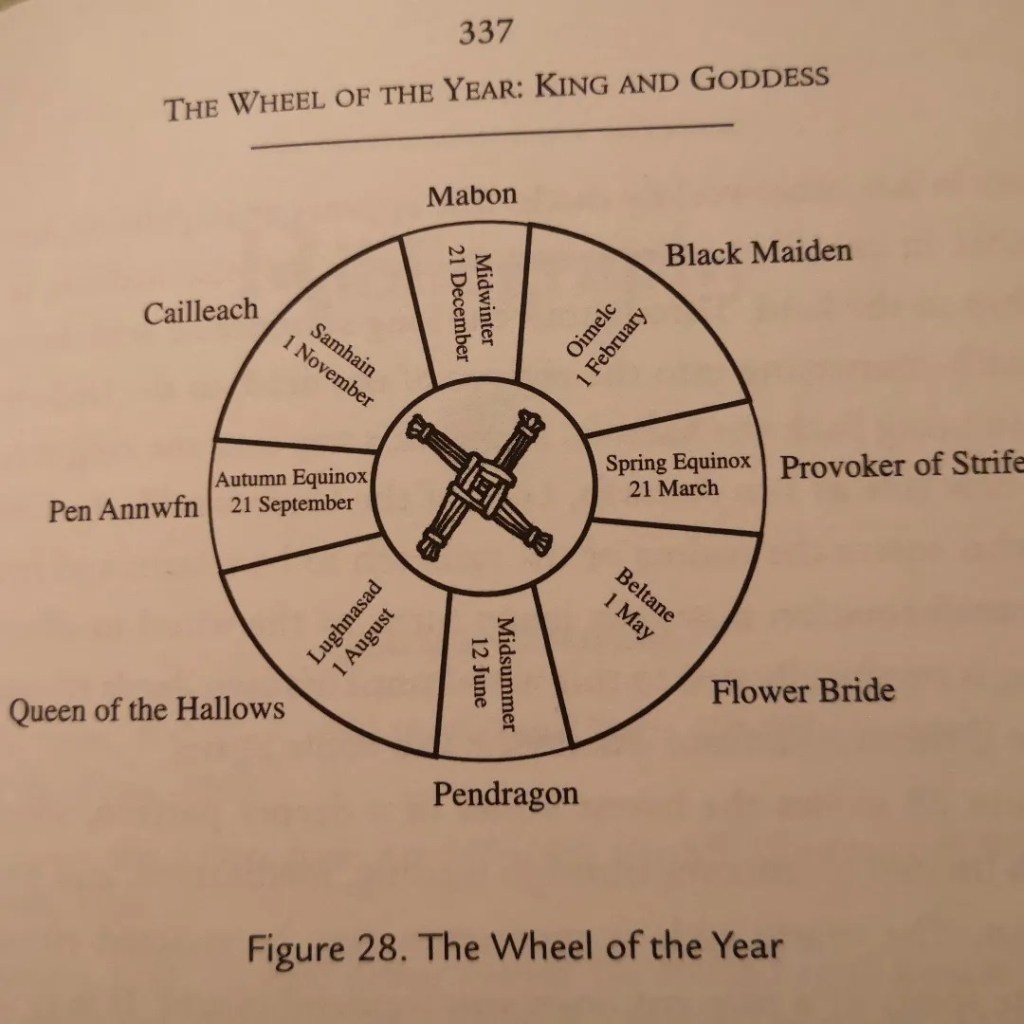
A priestess I know and admire said the other day that being single during the Beltane period is almost like being single during Valentine’s Day and she’s so right, it really is. Celebrating sacred sexuality, union, the sacred marriage/hieros gamos and all of those things when you’re single feels a bit weird. Especially because it was this time last year that I entered my first proper relationship and now I’m back to square one. But I truly love this topic, and am celebrating fertility and the union of masculine and feminine within myself and in the earth around me. Considering I’ve had such a complicated relationship with the topics of love and sexuality, though I am not the kind of woman who most obviously embodies this type of energy at first glance, I feel very much in alignment with the Lover archetype of the Goddess, and when I’m financially better off and can afford the costs of travel & accommodation I very much intend to do the Priestess of Rhiannon sacred sexuality training one day. While I do not currently worship the masculine God, I do acknowledge him in his archetype of King of the Land, in both his Otherwordly Champion and Solar Hero guises. For deeper exploration of this, check out Caitlin Matthews’ ‘King Arthur and the Goddess of the Land’. I may not be devoted to the pagan God but He is a part of my life, and I credit Him with healing many of my issues with the masculine and allowing me to feel safe enough to enter in to my first relationship with a man last year. He does not force Himself in to my life or my practice as He knows this isn’t what I need right now. Instead, he is a presence that holds me, protects me and asks for nothing in return, and perhaps one day I will devote myself to Him as fully as I do with the Goddess. Below is the King & Goddess Wheel of the Year from King Arthur & the Goddess of the Land, which I am incorporating in to my usual Wheel observance as a way to acknowledge the journey of the Sovereign King.

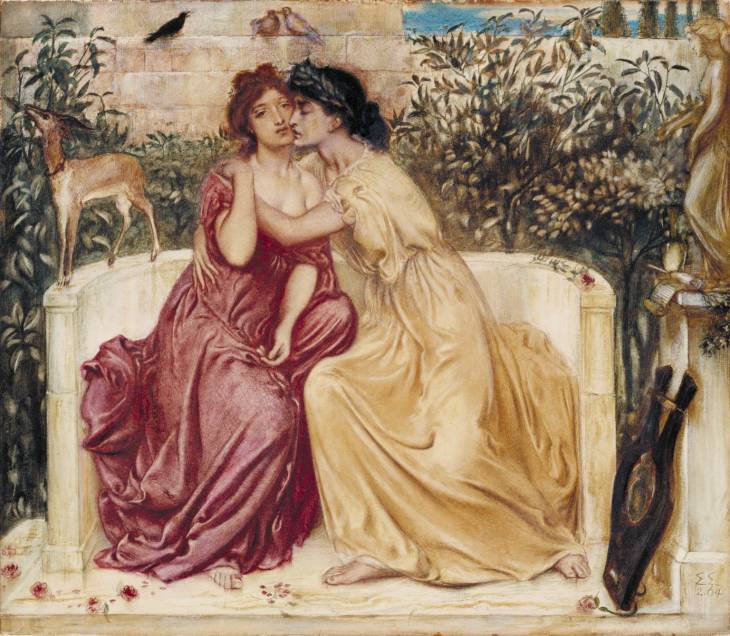
Sexuality is something I don’t think our culture has ever been able to ‘get right’. The pendulum never settles nicely in the middle. Instead, the ideal woman is either a chaste Madonna or a wild Whore with no sexual boundaries. Sex before marriage makes you tainted and impure (especially if you’re a woman) or it’s a requirement to be as sexually open as possible if you want to find a partner and those who don’t are shamed as prudes. Either the only acceptable way to have sex is a married, heterosexual couple doing missionary once a month with the lights off until the man finishes and the woman lies there unsatisfied OR all kinks and fetishes, even the most dangerous and degrading ones, are seen as utterly exempt from criticism and teenage girls end up hospitalized trying to do things their boyfriends have seen in hardcore porn. Either we’re never allowed to talk about or acknowledge sex or we can scarcely turn on our televisions without seeing pornography. I believe Sacred Sexuality is the cure for this, the one view of sexuality we’ve never truly tried in our culture, either demonising sex or forcing it down everyone’s throats to the point where it looses all its meaning. But our bodies are holy and pleasure is our birthright. Sacred sexuality occurs when we truly treat sex with the reverence it deserves, as a spiritual sacrament, and you see the God or the Goddess in your partner. In heterosexual relationships, this comes in the form of union of opposites, Chalice/Grail and Blade/Wand, Goddess and God, Queen and King. At a time when gender relations are so rife with tension and an almost sibling rivalry type of energy, when women, deeply hurt by misogyny, declare men are useless trash who don’t need to exist and men declare that women should submit and be led by men, I believe union between the masculine & the feminine are needed now more than ever, not as competitors battling for dominance, neither one submitting to or domineering over the other, but two equally valuable and potent forces that stand side by side. But homosexual relationships are no less sacred; metaphysically they can be explained as Source returning to Source, and there are various pagan traditions that celebrate gay love, though on the surface I can see why it may seem like all this talk of union between masculine & feminine at Beltane means gay love is less worthy. I want to assure you that as a bisexual woman and someone who thought I was a lesbian for many years, that’s not the case. For lesbians, I suggest looking in to the Dianic tradition and to Artemisian and Sapphic sexual mysteries, and to gay men I point you towards the Feri tradition, which I believe deeply celebrates love between men.

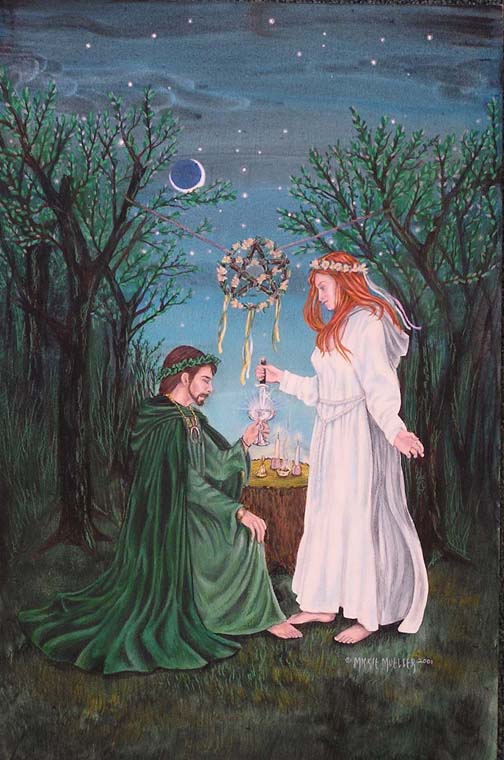
Last month in my moot, I gave my talk about the Flower Bride and the King of the Land, which was my first time giving a full talk on a pagan topic. Before that, we performed a small ritual in which I was the May Queen/Flower Bride & the embodiment of the Goddess, whereas the amazing Kev was our Green Man/Jack-in-the-Green/Oak King/God. I was so so nervous about that talk but everyone loved it and gave me such positive feedback. Interesting that based on our ages and genders we have Holly King, Oak King, Maiden, Mother & Crone here, as Jan remarked!

On May Day itself, which obviously is a bank holiday (another reason why Beltane is my favourite of the Wheel festivals!) I hosted a pagan gathering for the first time. We performed a simple ritual, I told the story of Rhiannon & Pwyll, exchanged gifts, made flower crowns, ate picnic food, sang songs, did some spellwork & just enjoyed each other’s company in a little grove we found right next to a hawthorne tree/May bush, which we didn’t even realise until we sat down. It was genuinely one of the best days I’ve had so far this year and I’m so grateful to everyone who came. I almost cancelled so many times because I didn’t think anyone would come. I’m manifesting, praying & hoping for more of this in my life.

Before I finish off with a bibliography of reading I’ve done last month and prior to that relating to these topics, I want to leave you with two poems I’ve written about Beltane. One was written last year and partially inspired by my former muse, my ex boyfriend, who is no longer in my life, but I am still thankful for what he did for me and the way he showed me what requited, healthy love feels like, and I see no reason why I would have to discard the whole poem when its themes are universal. The other was written specifically with the theme of the Goddess choosing Her God/the May Queen choosing the May King in mind, and I read it aloud at both Beltane events mentioned above. In this latter one I really wanted to acknowledge the Lover archetype between Maiden and Mother, the archetype honored by the Glastonbury Avalonian tradition at Beltane.

Sound the trumpets, blow the horns!
She shall be a maiden no more.
Light the fires, call the dance! She meets her paramour.

Dressed in crimson, dressed in white,
Their innocence, their love.
From their union comes the light,
The Firebird and the Dove.

He is hers and she is his,
They leap over the flames.
Kiss me now, touch me there,
Begin the fun and games.

She makes him king, he crowns her queen,
Sovereignty through desire.
The Lady and the Horned One’s love
Forged in Beltane’s fire.

She whose body is the land
And rules with a flower sceptre
Initiatrix-Queen of Kingship
Calls only he who is worthy
To join her in divine sovereignty
And as her hero kneels before her
She lays an antlered crown upon his head
And leads him to his throne

Then he, newly crowned Solar King
Her chosen Champion
Unmatched in power, passion and potency
Awakens her potential through his touch
And soon her belly will swell
And her blossoms will be transformed
Into the most succulent of fruits

But for now, tonight, it’s just them
Young and wild king and queen
And the roaring fires of Beltane
In which they stand in the liminality
Between Maiden and Mother
Between Youth and Father
We say Hail to the Summer
And to the Sovereign Lovers

As promised, here’s some reading if you want to learn more about the Flower Bride/Sovereignty Goddess and Her King.

  • Blodeuwedd: Welsh Goddess of Seasonal Sovereignty by Jhenah Telyndru
  • Rhannon: Divine Queen of the Celtic Britons by Jhenah Telyndru
  • Flower Face: A Devotional Anthology in Honor of Blodeuwedd by Ninth Wave Press
  • King Arthur & the Goddess of the Land by Caitlin Matthews
  • Ladies of the Lake by Caitlin & John Matthews
  • Once & Future Queen by Nicole Evelina
  • Priestess of Avalon, Priestess of the Goddess by Kathy Jones

Sorry, one last thing, then I promise that’s it! Here is my Beltane playlist, featuring mostly pagan songs with a sprinkling of Taylor Swift, because it wouldn’t be a Rhianwen playlist without at least one Taylor Swift song (convert to paganism, Taylor, please, the Christian conspiracy theorists already all think you’re an actual witch!)

The actual/seasonal astrological date for Beltane is tomorrow, so regardless of when you celebrate I hope you all have/have had a wonderful Beltane/Calan Mai/May Day/Floralia etc. May your summer be full of love, sunshine, optimism & magic.

Rhianwen