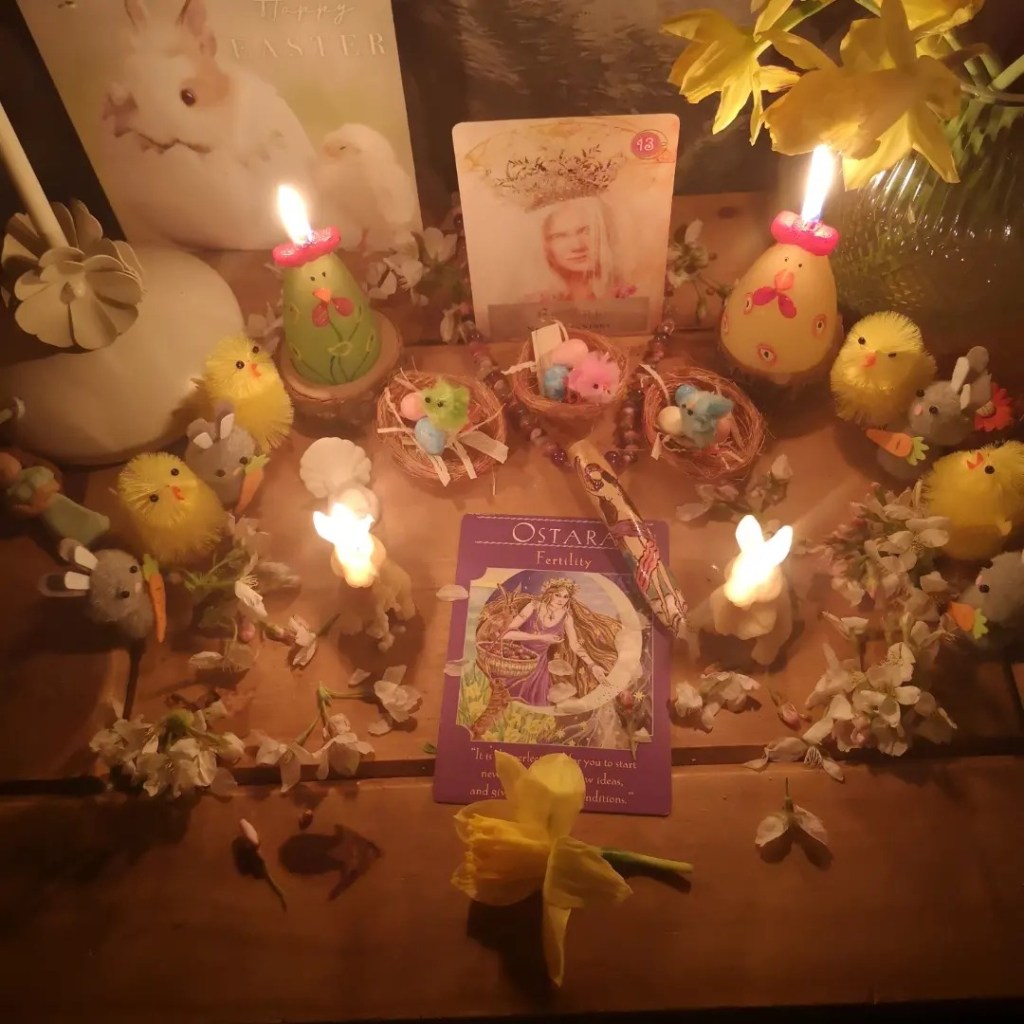
So, last week, we who follow the modern Celtic-Anglo-Germanic Wheel of the Year with its equinoxes, solstices and four Celtic cross quarterly festivals celebrated Ostara last week. Ostara has always been one of my favourites in the Wheel, and when I was a Christian I always loved Easter. Every year when we were little, my mum would make us these Easter bonnets for school, with daffodils and chicks and pastel eggs all over them. I love the aesthetics and imagery of this time of year, and how we finally emerge fully from the Descent period, ready to climb up the mountain of Summer that reaches its peak at Summer Solstice.
My mood has been up and down. I think I truly believed that by the time spring rolled around I’d be over my breakup and be going on dates, ideally with the same person with view to exclusivity. Instead, my love life is still nonexistent despite my best efforts at using dating apps and websites, speed dating, joining new social groups to meet like-minded people, etc. Last year, it seemed like everything in my life was so perfectly aligned with the seasons, especially my love life, in which I went on a first date around Ostara with the man who would end up becoming my first love, and then the two of us made things official around Beltane, and so on. While I still have a bit of time to recreate that pattern, I don’t want to set my hopes too high because unfortunately, life doesn’t always follow the reliable, ordered patterns of Nature, especially not when other people are involved. So, I’m doing everything I can to find happiness and contentment without the need for another partner. The fear I have is that while it’s okay that I’m single now, I’m vastly approaching my thirties and am terrified of the drop in my fertility that will accelerate each year from now on.
But I’m trying not to think about it (not easy) and just focus on the wonderful, magical experiences I’ll get to have this spring and summer by myself and with friends. At this point my approach is just ‘fake it until you make it’ and pray that eventually, all the things I’m doing to try and trick my brain in to being happy will eventually work. For some reason every time spring rolls around, my social life tends to take off. I have a few concerts, parties and things coming up, and of course, I’m excited about my annual visits to our little women’s gathering in Wales and my yearly pilgrimage to Glastonbury-Avalon, my spiritual home.
I wanted to talk a little about how I understand Ostara, because there’s a lot of conflicting information out there around it. Following on from that I wanted to do some comparative analysis to the story and character archetypes in the story of Sleeping Beauty. There are many deities associated with this time of year, but I’m going to choose a handful of ones that are relevant to my practice and understanding of spiritual metaphysics.
Astrological New Year
The Spring Equinox is the astrological new year, when the Sun enters Aries, celebrated in Babylon as the day light emerges from the darkness as the warrior god Marduk defeats the Creatrix dragon goddess, Tiamat, and reforms the world. Some believe this to represent the defeat of the matriarchal order by the patriarchal order, some believe it to represent us learning how to make sense out of nature via agriculture and scientific progress, other believe its a mix of the two. As a Mother Goddess worshipper, I’m not a fan of this story and the understanding it has given so many that the Mother Goddess is a malevolent force of chaos that must be conquered and dominated (cough Jordan Peterson cough) but in terms of its connection to the astrological new year, I thought it was worth mentioning.
Dying & Resurrecting Son-Gods
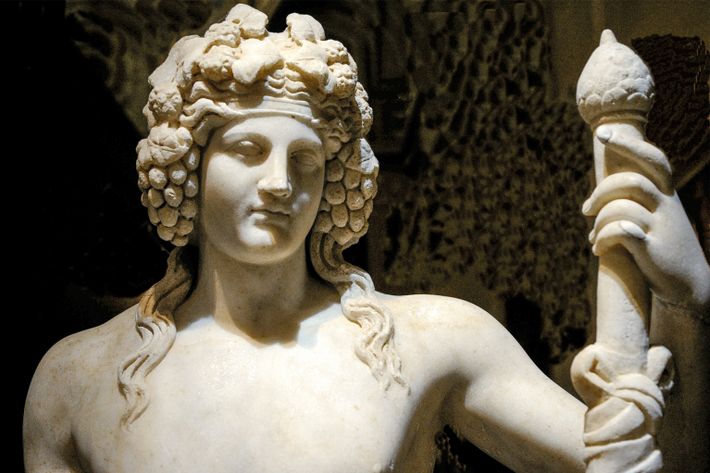
One of the main motifs we see is the resurrection of the god of vegetation, the King of the Land. This is one of two ‘Son God’ variants we tend to see across the world. He is the Son, Lover, or sometimes both of the Earth Goddess. The other one is associated with the sun, and is often reborn (sometimes, but not always, as a baby) on Winter Solstice. Examples of this include Mithras, Sol Invictus, etc. The former ‘Son God’ is more rooted in the Earth than the sun, and his body is linked with the vegetation itself. This god tends to be reborn on Spring Equinox. Examples of this include Attis, Osiris, Dionysus, etc. I prefer this version of the archetype over the latter because I don’t like this earth feminine/solar masculine split we see fairly often in new age spaces, just doesn’t feel right within my soul. Whether it be the Vegetation God or the Sun God, it’s not hard to see parallels between this and the birth, death and resurrection of Jesus Christ, leading many to speculate that there may be a link. It is possible that this theme of death and rebirth is simply an eternal truth that is so instinctual that we have told the same story over and over again, rather than Christians simply taking the idea from earlier pagan mystery cults. One thing to keep in mind is in both of these myths, the Goddess is the unchanging, primordial force. The Sun arises from the Earth when it comes over the horizon, or from the darkness (most spiritual systems believe darkness came before light). The Vegetation, which is constantly grown and then reaped and replanted, arises from the Earth, the ever-present soil. This does not make the Son subservient to the Mother, He grows to be Her equal in all things and is just as necessary as She is to the Cosmic Order, but it is a humbling reminder to all of patriarchy’s most ardent defenders that all life comes from the Divine Feminine. Perhaps that is why Abrahamic tradition subverts this, and to this day, those religions are the only ones to do so, as far as I know. Even patriarchal pagan religions knew that the masculine arises from the primordial feminine.
The Divine Daughter

While there is no official date given for the return of Kore/Persephone to her mother Demeter in the myth, it is fair to assume it is Spring Equinox. I always felt like Dionysus and Persephone were parallels, and while the Orphic tradition mainly worshiped Dionysus’ resurrection, I believe they honoured Persephone’s emergence from the Underworld, too. While Inanna-Ishtar is not related to this time of year (despite viral misinformation claiming so), I feel like many people within the Goddess tradition, syncretists, comparative mythologists etc intrinsically understand Inanna, Persephone, and similar goddesses who descend in to hell and then return to be the parallel Divine Daughter archetype to the Divine Son mentioned above. Whereas the Son dies and is reborn, the Daughter descends and ascends (much like Venus, the Morning Star). Some researchers claim that the Mother-Daughter/Maid Dyad is older yet than the Mother-Son Dyad, and that the Demeter and Persephone story is merely one of the few Mother-Daughter myths that carried through to patriarchal Hellenic religion from an older, more matriarchal belief system (potentially from Crete). Unfortunately I do not have any citations for you at this moment but it’s something I’ve seen mentioned a few times in books. For years I was part of a tradition called Filianism in which this Dyad (as well as the feminine trinity of Mother, Daughter and Absolute Deity, similar to Maiden-Mother-Crone) was the core focus of the mythos and metaphysics. Eastre (Ostara) was the day in which the Daughter (known as Inanna, Anna, Jana, or Kore) is resurrected by the love of the Mother (Marya, Mari) and reigns as Princess of the World, ready to be crowned Queen of Heaven at Exaltia (Beltane). While I have moved away from this tradition for a couple of different reasons, their syncretic approach to this Divine Daughter archetype truly moves me, because I believe Her erasure in our traditions to be such a missed opportunity. If Patriarchy seeks to separate the Son from the Mother, it DEFINITELY seeks to separate the Daughter from the Mother, and as women, reconnecting to our Mother-Line and female ancestresses is so important to our goal in relighting the flame of the divine feminine in the modern world.

The Light of the Dawn

I did mention this in some detail in my Imbolc post, but it is actually more relevant here than it was there. One of the oldest goddesses whose worship, correspondences etc we know about is the Dawn Goddess. Usually the Daughter of the Sky Father, she awoken the world from its slumber at morning, and was also associated with spring. Like I said in my Imbolc post, if the year was a day, Spring Equinox would be the glorious dawn when the sky is ablaze with glorious gradients of pink, lavender, orange and blue. While the sun is usually considered masculine in modern Neopagan syncretism, many syncretists would be hard pressed to argue that the dawn doesn’t bring to mind a beautiful solar maiden. She has many names across the Indo-European sphere: Eos, Thesan, Mater Matuta, Prende, Ataegina, Aurora, Ausrine, Ushas, some even theorize a link to Aphrodite, but for our purposes, as this is holiday in a Wheel of holidays based on syncretised Celtic and Germanic roots, we are focusing her under the name of Ostara (Germanic) or Eostre (Anglo-Saxon), beautiful spring maiden who loves all things fresh, innocent, and new. It is frustrating to see misinformation on two opposite sides of the spectrum that claims She is either definitely a modern, new age invention, or that the Christians stole absolutely everything from Ostara/Eostre which also isn’t true. Or worse, the belief that somehow Easter derives from Ishtar. The facts: We know beyond a shadow of doubt that Hewsos, the Dawn Goddess, had several variations as the Indo Europeans conquered various territories and bought their gods with them. It stands to reason that Eostre and Ostara would be linguistically connected with these, and while Bede was the only one to mention Her, there’s little reason to suspect he was lying, and it would in fact be counteractive to his Christian agenda to do so. This is by far one of the best articles about this topic I’ve read.
While many bad faith so-called ‘feminist’ interpretations of the fairytale Sleeping Beauty have been written over the years about how it tells the story of a man sexually assaulting an unconscious woman, the story is arguably a parable for the return of spring. The Divine Daughter is born to the King and Queen. The wicked fairy represents the Queen of Winter, of the Unseelie Court. The royal family attempted to shut her out of their homes, but they can not deny her for long. As much as they like to deny it, they are not too civilized and protected that Winter won’t come to them (compare to the Green Knight disturbing the festivities at King Arthur’s New Year’s Eve party). The baby is cursed by the Queen of Winter to die upon reaching the full stature of maidenhood. The curse is altered by three good fairies of the Summer Seelie Court, who ensure that she does not die but is simply in a slumber but can be awoken if she receives true love’s kiss- representing that due to divine providence, the very natural order of things, winter will always come to pass. She grows up fair, graceful and good, and meets a young man with whom she falls instantly in love with (I don’t want to hear your yapping about how unrealistic it is- it’s a fairy story!). Soon after this her curse catches up to her and she dies upon pricking her finger on the spindle of a spinning wheel. But her prince, as promised by the fairies, is able to awaken her with a kiss. Now, I can hear the ‘UM ACTUALLYs’ about to tell me that she was actually raped by the prince, but that version of the tale belongs to a version called Sun, Moon and Talia by Giambattista Basile and is not, as far as we know, present in every version of the earliest oral tradition. There are many, many versions of these fairy stories and trying to say one way or another which is ‘the true one’ is a waste of time, but there’s no evidence Basile’s version represents the ‘original story’ as many pseudo-intellectuals claim. Now, there is still room for some feminist analysis here- why is the solar Daughter principle made in to a passive Earth allegory in Her story instead of awakening the land in Her golden chariot as She actually does in Nature and mythology, for instance? But, overall, it’s not something I worry about because I’m just happy that, once again, the Goddess hides in plain sight in our fairytales and folklore. Plus, technically it was the good fairies that saved her, not the prince, seeing as they made the prince’s rescue mission possible to begin with! Just like how the prince is credited for saving Cinderella when, if anyone did, it was her Fairy Godmother (the Crone who initiates the Maiden, allowing her to step in to her power).
I don’t think it’s a coincidence that Disney chose to name their version of Sleeping Beauty ‘Aurora’, a name of the Dawn Goddess (although perhaps this name was found in an earlier version of the story- I’m unsure). Even her dress has variants in both pink and soft blue, reflecting the colours of the sky at dawn.

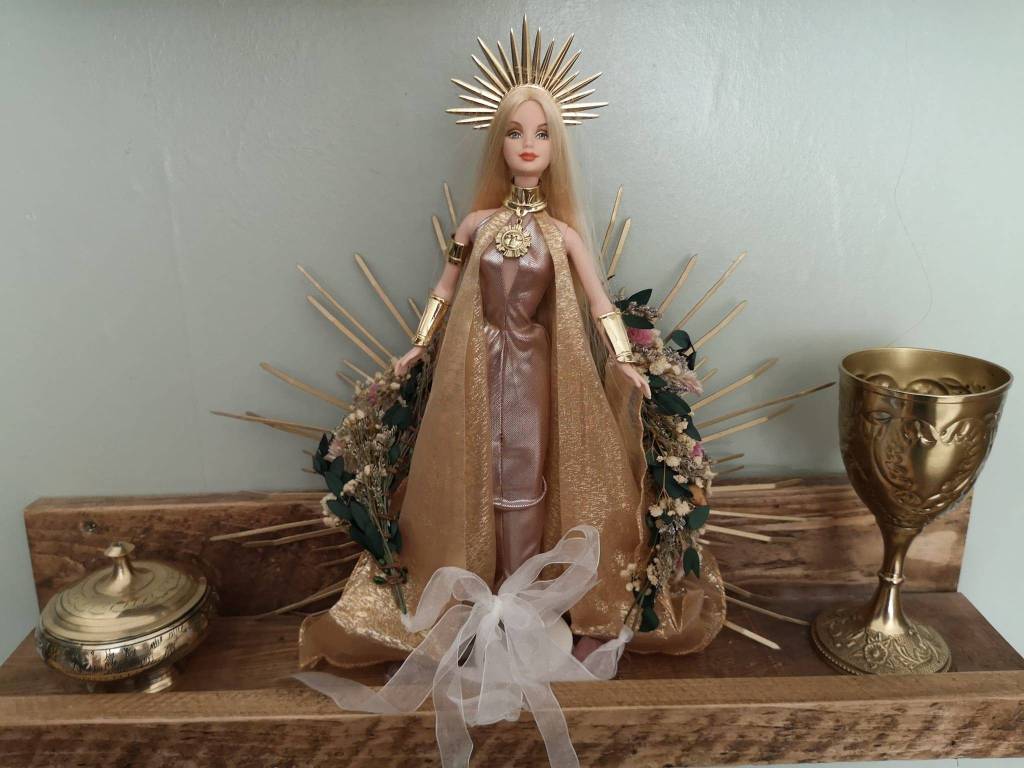
I have experienced the Dawn Goddess so strongly for years. Since I was a little girl obsessed with Greek mythology, in fact, and came across a picture of Eos with her ruddy wings and hair and fell in love. She became somewhat an imaginary friend of mine and it’s crazy to me that two decades later She is still such a massive part of my life. I have this Barbie, Morning Sun Barbie, who very clearly represents this Auroran Goddess archetype and sits on one of my shelves. I do not consider this an altar and I do not use the doll for worship purposes but I have to admit I do smile at her, blow her a kiss or simply touch the hem of her gown before I leave the house sometimes.
Lastly, here’s a link to my Ostara playlist. I want to make these for every Wheel festival from now onward.
Things still kind of suck for me right now, and maybe they do for you, too. But we don’t know what’s around the corner. Life comes at you fast and can change at any minute. Congratulations on getting through the winter, and I wish you nothing but happiness and joy as we begin our ascent to the Summer Solstice. Love you all.
~ Rhianwen
 Idylls of the Queen