I know I’ve abandoned this blog, and I can’t say for sure that I’m ‘back’, but I am going to try to post on here at least once a month going forward.
For the last 3 weeks or so I’ve not been in a great mood, ranging from just kind of low to completely emotionally distraught to feeling just numb inside. I deactivated Facebook, stopped replying to inboxes and have spent a lot of time just enjoying my own company and resting, experiencing an inner winter even as spring is blooming.
Today is the spring equinox, with the fixed modern pagan observance of Ostara happening tomorrow on the 21st. Walking to and from work this week has been lovely. Monday in particular had beautiful weather and I decided to walk to work instead of getting the bus, but regretted wearing a jumper, leggings, long boots and my winter coat when I could’ve at the very least gotten away with my denim jacket instead of the coat. It’s that awkward time of year where you never know how to dress.
I always really notice a palpable energy shift this time of year. I don’t just mean because the weather is different and because the earth looks different, but it feels almost like in late March we’ve stepped into a slightly different version of the world. It’s not something that can be described logically with words, but something you just feel with your body & soul. In the Celtic traditions, liminal spaces are seen as extremely magically potent. The shift from winter into spring and the shift from summer into autumn are, to me, the most magically potent times of year because they are extremely liminal. The shifts from autumn to winter and spring to summer are noticeable too, but not almost as much.
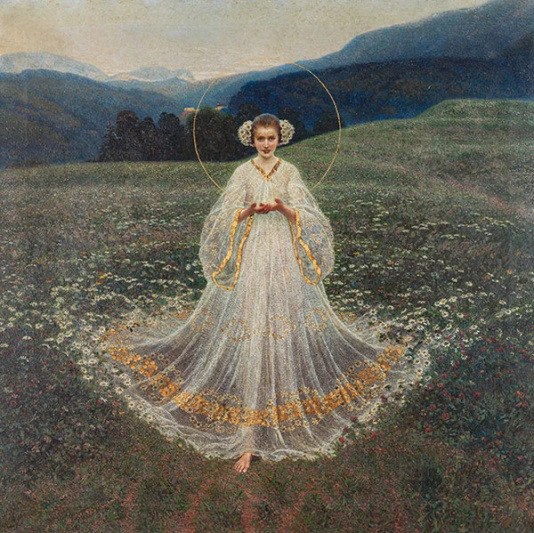
Many of the trees are covered in lovely, delicate pink blossoms. The Earth Goddess wears the mantle of the Spring Maiden. Women’s mystery traditions such as Dianic Witchcraft and the Glastonbury Avalon tradition observe the seasons as the Goddess ageing, dying and being reborn, and work with the uncanny resembles that has to the cycles in human women’s own lives, be that on a macro level (birth to death), or a micro level (our menstrual cycles). Other Neopagans view the Goddess as ageless and it is instead it is Her son or lover who goes through this process. Some see it as both. In the Filianic tradition which I used to be a part of and still somewhat align with, as Neoplatonists it is believed that the cycles of the earth reflect eternal truths and metaphysical events that take place outside of matter, time and space. In Filianism, the Spring Equinox and the days leading up to it are observed as the death and rebirth of God the Daughter, the World Soul who mediates the light of the Divine Mother to us here on earth.
Goddesses who embody the archetype of the young spring maiden (who I typically see as a teenager of about sixteen years old) include Ostara/Eostre (who, regardless of whether or not she was an invention by the monk Bede or actually worshipped, certainly is a goddess who is worshipped and adored today so it doesn’t matter. I also personally do believe she was really worshipped, and an obvious descendant of the H₂éwsōs lineage of Indo-European dawn goddesses), and Kore/Persephone. You could broaden this to include Brigid, though I’m specifically talking about goddesses often associated with this time of year and Brigid is obviously more associated with Imbolc. Similarly, you could broaden this category to include the May Queen goddesses such as Flora, Olwen, Gwenhwyfar, Creiddylad and Blodeuedd, though in terms of women’s mysteries archetypes I see them as embodying the Lover archetype which I see as a woman in her twenties, and they are obviously more associated with Beltane.
The element and cardinal direction associated with the season of Spring will differ depending on your tradition. In the Glastonbury Avalon tradition, it is associated with the cardinal direction East and the element of Fire. In Filianism, it is also associated with the cardinal direction East but instead of Fire, the element of Water. I can see arguments for both of these. On the one hand, the sun rises in the East and Spring is associated with the rising of the sun, which is a huge ball of fire. Fertilising heat quickens and awakens the land from slumber. On the other hand, it also makes sense for Summer to be associated with Fire instead, leaving Water for Spring. In many parts of Europe, especially here in the UK, Spring (especially March and early April) still tends to be very wet (although this is changing due to global warming).
But related to the idea that spring is the season of water, I wanted to explore a quote I read about the Spring Maiden recently, and relate it back to my life and personal journey at the moment.
“Ostara is usually experienced as a young maiden – as Ember Cooke writes, ”…old enough to bear children, but not a mother.“ She is wreathed in flowers or new greenery, and often dances. She is often joyous, but can just as easily turn suddenly solemn, like the spring weather that can quickly turn to rain. Like Spring itself, she is capricious, innocent and knowing by turns. Hail to the Maiden of Spring, the dawning of the year! Bring freshness into all our lives.”
I have been feeling so upset with myself for not feeling all positive and perky now that spring is here. But just as I was able to partially heal my fear of getting older by observing that many of the most fecund, passionate, lusty beautiful gifts of the Goddess of Love and Beauty don’t occur until mid summer (roses) to late summer and early autumn (apples), once again Nature teaches me that to embody the Spring Maiden isn’t always to be a smiling, dancing, positive sweetheart. Patriarchal modes of being and thinking love femininity when it’s all pretty pink blossoms and giggles and a soft touch, yet they shame our emotional expression, complexities and depth. This is why it’s incredibly important to recognise when men say they want feminine women if they want feminine women in their fullness, or feminine women who are only feminine when it benefits them. The Spring Maiden archetype is one of two feminine archetypes that patriarchy has accepted the most, as well as the abundant Summer Mother, but even these archetypes have aspects that patriarchal men who don’t actually like femininity (even if they insist they do) are threatened by.
Water is the element of emotion, and so if we believe spring to be the season of Water, that means accepting the Spring Maiden for all these She is, not just the easy-to-appreciate pleasant parts, and for all that we are, too. And so, it’s okay that I’m struggling right now. My rain-clouds are just as beautiful as my blossoms.
The Spring Maiden is identical to the Dawn Maiden. Dawn and Spring symbolise hope, renewal, and indomitable innocence and optimism that refuse to be crushed by the cruelty of the world. Sadness only becomes all-consuming once you abandon the spirit within you that believes KNOWS things can get better. I might be lonely and hurting over my dating prospects right now in a world that seems to be abandoning virtue, monogamy, marriage and family, but I refuse to believe that all men are like that and that chivalry and romance are completely dead, no matter how many voices tell me they are. On a much more important note I look at what’s going on in Palestine at the moment and while it’s incredibly tempting to just lose yourself to despair, I see beautiful smiling, laughing children in refugee camps, and I remember that if they can keep their innocence and hope alive, I have to, too. For them, for myself, and for the world. Evil only wins once we lose hope that it can be defeated. “We’ll cry tonight, but in the morning we are new // Stand in the sun, we’ll dry your eyes.” – Arise, Flyleaf.
It’s been a long time since I’ve made a long-form blog post, opting mainly to stick to my Instagram @idyllsofthequeen to make shorter form posts about thoughts I’ve been having.
However, today, I was working out, and I had the strongest urge to talk about this. I initially did think about squeezing it all in to an Instagram post but I have too much to say.
SPOILER ALERT FOR THE BARBIE MOVIE. If you haven’t seen it yet, and you’re planning to, maybe give this piece a wide berth until you have.
Last night, I went to see the Barbie movie, which I greatly enjoyed. It might actually be one of my new favourite movies. I was shocked by the jokes about the theorised origin of patriarchy. Ken remarks “apparently patriarchy is about men on horses”. Well, according to some scholars, such as Marija Gimbutas, that’s partially true, with the Indo-European ‘horse people’ conquering at least partially matriarchal societies. Someone did their research.
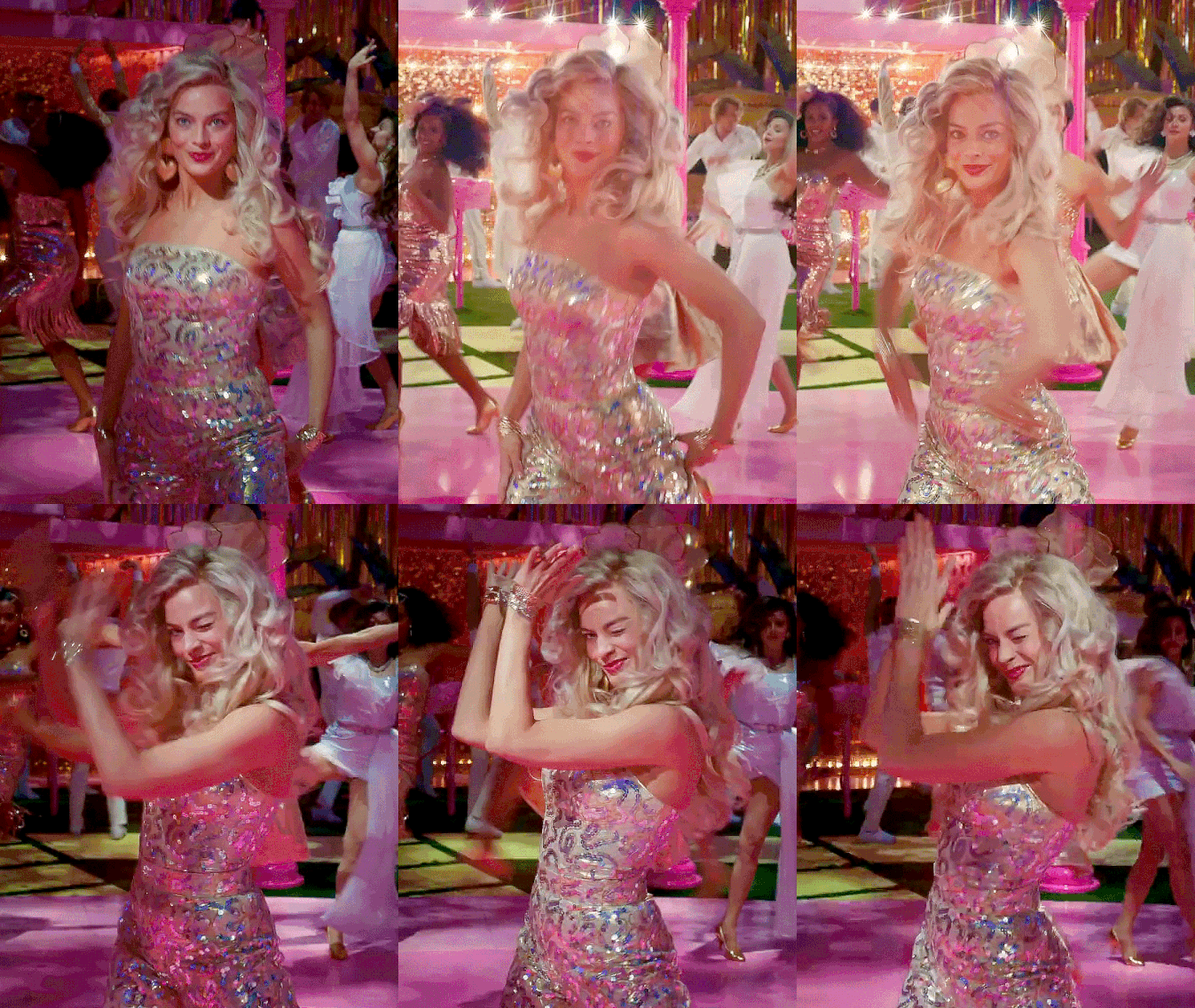
And I began thinking about Barbie. Barbie is one of the most archetypical ‘feminine’ figures in our modern consciousness and pop culture. But she is also, what has been coined in modern verbiage, both with admiration and distain, a ‘girlboss’. She is an ambitious woman who can be anyone she wants, from a mermaid princess to a world famous popstar to the leader of the free world. Like Elle Woods after her, she defies the idea that feminine women are incapable of leadership, that our feminine power, our wide-eyed, beautiful way of viewing the world is only good when it’s kept barefoot and pregnant in a kitchen. In the Barbie world, the powerful Barbies do not view each other as competition. They are sisters who celebrate each other’s successes. Each Barbie has her own domain. Stereotypical Barbie (Margot Robbie) doesn’t view herself as superior to any other Barbie, neither does President Barbie (Issa Rae). This is one of the things I love about women’s circles and feminist goddess spirituality. We all take turns to ‘lead’. There are no superior high priestesses lording (ladying?) over everyone else (I do believe there is room for the title of high priestess for our crones/matriarchs, women who have been practicing and studying for decades, but that’s a conversation for another day). The feminine is communal. Each Barbie is a leader in her own right. As the Barbie world is unapologetically matriarchal (a plot point which has been the subject of much controversy from people who don’t understand the point being made) the Ken’s exist, as women have done for much of our society (and still do depending on who you ask- this is a hotly debated topic which I have complicated feelings on) as accessories and helpers to the women in their lives. They’re not mean to the Kens though and they do not treat them anywhere near as badly as the way women have been treated under patriarchy, they just mostly ignore them and treat them as incompetent, not as interesting as the Barbies, and don’t want to be around them all the time, prioritising time with other Barbies, giving the society a very Amazonian, Artemisian feel to it (I’ll come back to this later).
I am so grateful to Barbie for promoting the idea that women don’t just have to be mothers and housewives. While Barbie isn’t the best feminist rolemodel (which the movie comments on a great deal and pulls no punches in pointing out the drawbacks of presenting perfect, stunningly attractive, materially powerful women who never need any help with anything as the ‘ideal women’), neither is the matriarchal universe she inhabits in the movie which treats the Kens as disposable and ancillary the perfect society (which- this was the point that seems to have been lost on people- the point wasn’t that this is the ideal universe), it was truly revolutionary at the time to present the idea that women were capable of hard work and success and making their dreams come true outside of the home to little girls who before then and only had baby dolls to play with.
Now, here’s where I’m conflicted. Because for a couple of years now, I have been deeply sympathetic to the ‘tradwife/tradfem’ movement. I have joked that I ‘skirt the line between tradfem and feminist’ (although really I just think what I want and don’t care if people want to label it feminist or not). I think there is SO much dignity and power in the ‘domestic’ world. While most self-identified ‘tradwives’ strongly disavow feminism, I think it can be deeply feminist to say “I reject the patriarchal-capitalist ‘girlboss feminist’ notion that in order to have value in this world I must be rich, famous, high-earning, have power over others. I see power in the simple things in life, such as the ancient feminine arts of hearthcraft.” Patriarchal society historically has not only kept women out of the ‘public’ sphere, it has also made the ‘private’ sphere ancillary and secondary, just as women are ‘helpmeets’ to men in the patriarchal world, existing to hold space for men to shine, to assist them and cater to their every sexual and domestic need. My issue with ‘tradwives/tradfems’ is that instead of saying “Our society should elevate the feminine/domestic sphere to equal to that of the masculine/public sphere rather than treating it as secondary”, most of them instead have resigned to “I am happy to be kept in the secondary sphere, I am happy to be submissive, I am happy to be viewed as a helpmeet and the secondary person in both my relationship and the Natural Order”. I think this is because it’s the only framework they have in lieu of deeper examination- and perhaps capitalist feminist worldviews such as the Barbie worldview are also playing in to the idea that the domestic sphere has less dignity than the public sphere. Controversial feminist-heretic Louise Perry has written about this here. There needs to be space in feminism for not only women who are independent and career driven, but also women who prioritise their families, their homes, who don’t necessarily want to go to university and climb ladders and be ‘powerful’ in that sense. The quote “Well behaved women seldom make history” was actually talking about this very thing. It’s typically misinterpreted by modern liberal feminists, but it actually means we should applaud and thank our female ancestors who contributed massively to society throughout the ages just by nourishing their families, running homes and tending the hearth- the actual centre of society.
While it’s a deeply controversial book and I certainly do not agree with all of the ideas expressed within, for a deeper explanation of this train of thought I recommend reading the book The Feminine Universe by Miss Alice Lucy Trent, a matriarchal-traditionalist manifesto which presents the idea that a) true traditionalism is actually matriarchal and b) modern feminism is patriarchal because it, like all of modernity and secularism, has destroyed the spiritual centre of society: the home and the feminine. In the chapter ‘The Three Gunas of History’, the author pushes back against the misconception that the ‘passive’ feminine is submissive or subordinate to the ‘active’ masculine, and states rather that ‘masculine’ dynamic, moving spiritual energy is actually submitting to ‘feminine’, still, passive spiritual energy:
A typical comment of the modern mind upon ‘matriarchy’ is to say that it must only have been patriarchy the other way round. But such is very far from being the case. As we shall see in a later chapter, femininity has very definitive characteristics that are part of the metaphysical nature of things. To say, for example, that if men are considered the active, forceful, even violent sex under patriarchy, women must have been considered the same way under matriarchy, is founded on a complete misunderstanding of the nature of femininity, both in its metaphysical essence and in its biological reflection on earth.
In ‘matriarchal’ or, we had rather say, a feminine society, women as the leading and most revered sex are revered precisely for their feminine qualities, which do not change whether in feminine or masculine societies. They are always the ‘passive’ sex in the sense of being the one less oriented to outward activity, and in this, in feminine societies, they are assimilated to the Principle itself, which causes motion without itself moving. This is not to say that women did nothing, either in feminine or patriarchal societies, but that, symbolically, the the qualities of serenity, peace, and contemplation are considered superior to dynamic outward activity. Or rather, the latter is said to depend upon and be always subordinate to the former.
This, indeed, is understood even in patriarchal societies, where, for example, in the Hindu Tantrik tradition the male principle (the god or deva) is considered to be the superior and therefore the serene, unmoving principle, while is female counterpart (or shakti) is his outward activity or energy. This is rather curious according to most later patriarchal thinking about the nature of femininity, just as it was to matriarchal thinking. But the reversal was necessary in order to preserve metaphysical truth and patriarchal doctrine at the same time. In Tibet, which remains closer to the original matriarchal tradition (polyandry was until recently practiced there), the position is reversed- that is to say, normal- and the serene Deity is female while her shakti or outward energy is male. Similarly, in Tibet, in the case of he complementary principles of Wisdom and Method- representing the Essential or Spiritual principle and the substantial or material respectively- Wisdom is female and Method male.
The Feminine Universe by Miss Alice Lucy Trent
Okay, now. Here’s the thing. I no longer align with Trent’s, or the Filianic/Madrian/Feminine Essentialist philosophies for the most part for several reasons. And I do not believe the masculine principle is subservient to the feminine one in any meaningful way, I believe they both serve each other. But the above paragraph makes much more sense to me than the highly confused and inconsistent mishmash of Abrahamic, Taoist, Buddhist and Hindu ideas from new age ‘divine masculine and feminine polarity’ gurus that are all over the internet nowadays. We’re told masculinity is the active principle and that the feminine is passive. Okay, sure. This comes from both Eastern and Western metaphysics. But they’ll then use this to justify female submission, stating that women should be feminine (passive) and submit to a masculine man (active). I disagree with this reasoning based on the fact that I agree with the above quote, letting a man actively do things for you so you can ‘rest in your feminine’ (a commonly used phrase in the polarity spaces) doesn’t necessarily imply submission (if a wife asks her husband to drive her somewhere and he does so because he loves her and he views it as his role to serve her in that way, in a typically masculine role, who is really ‘submitting’ to who in this scenario? Is she ‘submitting’ by being the passenger [passive] even though she’s the one effectively being chauffeured? To expand this idea even further, is a powerful politician or member of a royal family submitting to their chauffeur or bodyguard?). But then they’ll also use Hindu language, in which the masculine (Shiva) is passive/still and the feminine (Shakti) is active/dynamic, to propagate their ideas about femininity and masculinity. Basically, they want masculinity and the male God to be the central, still, eternal, unmoving, original principle, ‘Source’, to which femininity, earth energy, the moving/changing/dynamic Goddess, is dependent on, but they also want masculinity to be seen as active and dynamic and creative whilst femininity is seen as passive and something that doesn’t do much in the world so that they can justify the dogma of feminine submission and discouraging women from having identities and jobs outside of the home as well as justifying the idea, as seen in places like Aristotelian philosophy, that the male/masculine is the creative principle and the female/feminine is the passive soil that receives the male seed (which has now been entirely scientifically debunked, by the way). You can’t have it both ways. At least the feminine essentialist metaphysics as quoted above are consistent: the original principle, ‘Source’, is feminine and ‘Activity’ is masculine, which, as the quote points out, is also a feature of Tibetan Buddhist metaphyiscs. The divine masculine arises from the divine feminine to be a protector and a builder for Her. This is similar to Western occultism and duotheistic neopaganism, such as Wicca, in which the Earth Mother/Lunar Mother is primordial and gives birth to the Solar Son. Despite the codification of this in to a system of organised metaphysics being a thing from the previous century or so, though, this is based on various ideas such as Isis and Horus, Modron and Mabon, and various other Divine Mother/Divine Son dyads. Even an inscription on the altar of Salerno Cathedral reads “Darkness preceded Light and She is Mother”, lending further justification for the Western occultist idea of masculine Light arising from feminine Darkness. I believe various theosophists taught this. Thought Blavatsky may not have specifically said that darkness was feminine and light was masculine, she believed that light was temporary and the Absolute, aka the Void, Darkness from which we all come, was our true Source. Darkness is typically associated with the feminine (womb, encompassing) and light (phallic, penetrating) with the masculine. The difference, though, between this and many other forefathers and foremothers of what would become the Western occult tradition, is that here light, not darkness, is associated with Matter. From misogynistic Greek philosophers onward, the polarities were always as follows: Light/dark, Spirit/matter, Masculine/feminine, with the latter being inferior to the former (hence my deliberate capitalization). But if you ask me, it makes infinitely more sense that we may associate light as temporary matter rather than darkness, our point of origin, the Cosmic Womb from which we all arise and will return (this is not to say I view matter as evil, I’m not Gnostic, and I absolutely see the reasoning for linking matter with the feminine when we consider Mother Earth).
Celiticists Caitlin and John Matthews, in their book Ladies of the Lake which seeks to decode the myths of the Arthurian women, says this, which in turn cites renowned mother of Western occultism, Dion Fortune:
But let us first take the accusation that the Arthurian women are there to empower men. To be sure, it is the knights who go out on quest and adventure and the women who stay home, save for a few exceptions. The women, however, seem to be remnants of an earlier regime. They appear to be priestesses and empowerers in a specific sense. They bring healing, insight, challenge and difficulty as well as empowerment. Indeed, sometimes they cause disempowerment, as Morgan and Nimue do. All of the Arthurian knights are empowered by women, and some by faery or otherwordly women: Gawain by Ragnell, Percival by the Nine Witches of Gloucester and Lancelot by the Lady of the Lake herself.
There is a great deal of objection in feminist circles to this mythic trend of women empowering men, wherever it is found. However, to pretend otherwise is to change the mythic function of men and women. It was the esotericist Dion Fortune who coined an aphorism which we should all take to heart: ‘That which is latent on the outer is potent in the inner; and that which is potent in the outer is latent in the inner.’
She further glosses this cryptic statement in the following way: women’s natures are latent in the everyday world and potent in the inner realms, while men’s natures are potent in the everyday world and latent in the inner realms. This statement does not take in to account the circuitry of gay or bisexual people, which will sometimes differ radically from this model, but works as an excellent rule of thumb for everyone else. It explains a lot that we have attempted to grapple with in terms of gendural roles and functions. Women are often perceived to be passive in the realms of everyday life and powerful in the magical realms: the many metaphors of women as dangerous, as witches and as enchantresses are scattered throughout world cultures. Men, on the other hand, seem to have their primacy in the everyday world, but be less happy int heir relations with the inner worlds of magic, the psyche or the imagination. This statement is not a fixed law but a general rule which has many exceptions. Dion Fortune’s writing derived from practical and ethical magical experience, an experience which is not commonly shared by many men or women today, because our society has jettisoned its spiritual and psychic values.
We are currently acknowledged to be living within a ‘patriarchal’ culture wherein the inner world of imagination, art, magic and the psyche plays little or no part. It is so negligible that there are few social structures wherein such practices are considered ‘respectable’ modes of life. However, the patriarchal world cannot live without the inspiration which the matriarchal world can supply. Women tend to power-house male personalities and institutions without a second thought. They give give the necessary moisture to what may be an essentially dry idea. This analogy also works the other way: the instinctive and often unrealized nature of women needs the pragmatism of men. Too much Yin and not enough Yang leaves projects floating aimlessly about.
This is not to say that women are aimless and only men have direction. We also utilize the internal dynamo within each of us to supply this need. A woman may conceive an idea from a dream, but draw on her practical abilities to project and manifest it, just as a man may draw on his imagination to fuel a project he wishes to promote.
Ladies of the Lake by Caitlin & John Matthews
While the above may not be necessarily in line with much of mainstream feminism, which has spent decades understandably pushing back on the philosophical idea that women only exist as ‘muses’ that inspire male dynamo, it is mostly in line with the feminine essentialist philosophy as explained by Trent. I recently read the comment made by a masculine/feminine polarity proponent that ‘men lead on the physical plane, women lead on the spiritual plane’. Okay, if we amend this to be about masculine and feminine and not necessarily just men and women so we can say that women can use their masculine to lead physically and men can use their feminine to lead spiritually, I can understand this although I still think it may be slightly more nuanced than even that. But in order to believe this, you have to drop the idea pushed by many of the same people as the one who made the comment that women/the feminine ALWAYS submits and men/the masculine ALWAYS leads. I recently had this discussion with some dear sisters of mine from one of my divine feminine circles/gatherings. These women are excellent, effective, devoted, wise spiritual leaders even if they aren’t particularly interested in leadership in the mundane world so I couldn’t understand why they’d reduced the feminine to ALWAYS following and ALWAYS submitting. Even if I were to concede that its the masculine’s job to lead in the boring realm of muggle politics and commerce, why do some women have such a hard time, even in this feminine-dominated world of pagan and earth based spirituality, claiming the reverse? Because women have a hard time claiming power and leadership at all, as society has told us we’re domineering, emasculating bitches if we do so. Ideally I’d like to remove ‘submission’ and gendered leadership from the conversation entirely because there are women who do extremely well in the mundane world and men who do extremely well in the mystical world, but if we’re going to claim the feminine submits in one realm it is only fair and logical to say the masculine submits in the other. This has been an imbalance we’ve seen in Christianity and more broadly history since the Greeks in which we’re told the ‘outside world’ is a man’s domain and the home is the woman’s domain, but then for some reason the man still holds the title of ‘head of the household’ and the woman is expected to submit to her husband in her own supposed ‘domain’. Inconsistent. If the home is the feminine domain she is the leader of it, otherwise its a wholly illogical and inconsistent position to take. I wish the women who believe strongly in gendered domains and polarity could, at the very least, stand in their power and claim leadership over the domain that’s supposedly ‘theirs’. If men are supposed to ‘lead’ all the time do you really want him telling you what to do with your womb healing goddess retreats because you’re too much of a scatterbrained, illogical woman to run your own business? Hell no. I doubt it. Similarly, to bring me back to an earlier paragraph about tradwives, I wish those women would feel comfortable taking the reigns of the home and hearth rather than acting as if they’re just borrowing them from men.
But, to circle back around, where does this leave Barbie?
On the one hand, Barbie is an archetypal, emblematic avatar of femininity. On the other hand, she is certainly not passive- neither in the patriarchal sense of ‘submissive’, nor the more nuanced, non-patriarchal sense as espoused by Miss Alice Lucy Trent and Caitlin and John Matthews. She is active. She is ambitious. She has had almost every career you can think of. Does this make her a masculine figure? Well, I’d wager if I asked many of the people mentioned thus far in this article, they’d say yes, albeit in slightly different ways. The tradfems, tradmascs and the ‘divine tantric polarity teachers’ who tend to hold more conservative views about gender roles would say ‘Yes, Barbie is a masculine woman, and part of the feminist agenda to masculinise women and emasculate men’. The Madrian matriarchal traditionalists I have studied extensively would say ‘Barbie is beautiful and can at times be an example of traditional femininity when in her guise as Queen, but in her modern Pit guises is part of the same modern patriarchal paradigm which seeks to masculinise women and prioritise the masculine agora over the feminine hearth, therefore Barbie is a masculine figure in drag (and also not Traditional in other senses of the word)’. The more progressive types who teach that we all have masculine and feminine within us might say ‘Barbie is both feminine and masculine and teaches women that they can be both outwardly feminine but utilise their inner masculine to be successful political leaders, and this is a good thing’. If I had to align with any of these perspectives, it would be that last one, but I think, in my usual fashion, there is more to consider here.
If we are to consider the perspective of Caitlin Matthews, John Matthews and Dion Fortune that the feminine is more active than the masculine in the spiritual realms but less active than the masculine in the physical realm, this still works. As the movie points out when Barbie comes to the ‘real world’, everything here is turned on its head. Men are in most of the leadership positions whereas women tend to be disempowered (again, I know this is a highly debated topic and there are arguments I will consider that this is no longer the case in the modern Western world, but for the sake of argument lets go with this). In her realm, a realm which exists within the imagination (refer back to the Ladies of the Lake quote), women are leaders and men are helpmeets. So, the Barbies, being leaders on the inner realms, are still metaphysically ‘feminine’. Not to mention, the way the Barbie world functions is more feminine than masculine, with no competition or hierarchy between the Barbies, and plenty of time for parties and resting in between the hard work of being politicians, scientists, authors, doctors, what have you. It doesn’t abide by the same strict, hierarchical rules of Our World that are sometimes necessary in order to keep everything running smoothly and efficiently, it is more fun, playful, feminine. A young woman who dreams of succeeding in a male-dominated field may have to call on her inner masculine in the ‘real world’ to help her manifest her dream in to material reality as the Matthews’ quote says, but make no mistake, it was the feminine imaginative realm of Barbie, the World Soul, the Realm of all abstract Ideas (to get in to some Platonism), that gave her the dream to begin with. This, if you want, can be compared to Jungian ideas of animus/anima and the Yin/Yang of the Tao. Each lives within the Other.
But moving beyond even that, is there such a thing as the Active Feminine at all? It may be a rarer archetype, but I’d argue yes, using quotes from Jean Shinoda Bolen’s amazing Goddesses In Everywoman (which I believe every woman should read but ESPECIALLY women trying to navigate this femininity conversation especially), focusing on the Virgin Goddess section specifically.
The virgin goddess aspect is that part of a woman that is unowned by or “unpenetrated” by a man—that is untouched by her need for a man or need to be validated by him, that exists wholly separate from him, in her own right. When a woman is living out a virgin archetype, it means that a significant part of her is psychologically virginal, not that she is physically and literally virginal.
The term virgin means undefiled, pure, uncorrupted, unused, untilled, untouched and unworked on “by man,” as in virgin soil, virgin forest; or not previously processed, as in virgin wool. Virgin oil is oil made from the first pressing of olives or nuts, extracted without heat (metaphorically, untouched by the heat of emotion or passion). Virgin metal is what occurs in native form, and is unalloyed and unmixed, as in virgin gold.
Within a religious system and an historical period dominated by male gods, Artemis, Athena, and Hestia stand out as exceptions. They never married, never were overpowered, seduced, raped, or humiliated by male deities or mortals; They stayed “intact,” inviolate. In addition, only these three of all the gods, goddesses, and mortals were unmoved by the otherwise irresistible power of Aphrodite, the Goddess of Love, to inflame passion and stir erotic yearnings and romantic feelings. They were not moved by love, sexuality, or infatuation.
Goddesses In Everywoman by Jean Shinoda-Bolen
Sound familiar?
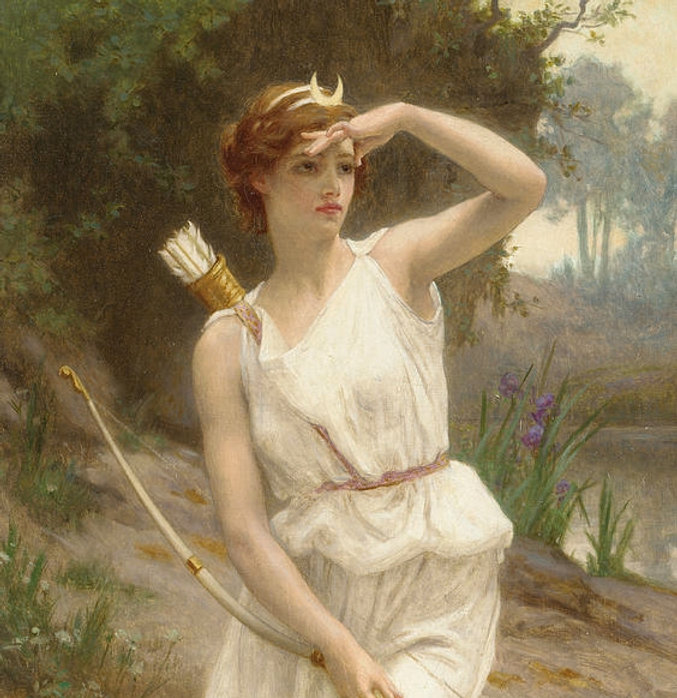
While Barbie does have a boyfriend in Ken, she is Complete In Herself. She is not motivated by romantic love and the feminine and sisterhood play much bigger roles in her life than her relationship with Ken, the same with all the Barbies. Ergo, I posit that the Barbies represent a modern incarnation of potentially the most ancient (according to some sources) part of the female psyche of all time: the Virgin. Like Artemis and her nymphs, Barbie would rather party with the girls all night than go on a romantic date with Ken.
I believe the healthiest women are able to balance multiple feminine archetypes. Most women in our world will not be celibate their entire lives. Most will desire romantic love and prioritise it at various times in their life, because romantic love and partnership, the creation of a family with a partner by your side to help you provide for that baby, is a normal thing to want. On a species level, a societal level, men and women do need each other. We both exist for a reason. But the Virgin Goddess archetype teaches us that we are complete without a romantic relationship with a man. We do not need to ‘meet our king’ to be ‘in our feminine’ and complete. Before our ancestors figured out the male role in reproduction, it’s fair to assume they may have conceptialised the Goddess as parthenogenic, self-conceiving, not half of a polarity that we often see today in many spiritual systems (outside wholly masculine ones like the Abrahamic monotheisms and wholly feminine/feminist ones like Madrianism/Deanism and the Dianic tradition, etc). At the end of the Barbie movie, the Kens have to learn that they can have their own independent identities outside of their relationships with the Barbies, mirroring the lesson women (moreso than men) have had to come to in the real world. There are some Christian scholars who theorise that the true ‘curse of Eve’ is that she will default to hyperfocusing on relationships at the expense of everything else, while men do the same with work. This is reflected in the world. How many women do we know who have lost themselves to love? Myself being one of them, and it’s a lesson I’m still learning- that as much as I’d love a husband, I am still complete in myself without one, and I do not need a man to save me before I can start properly living my life. I have my sisters. I have my family. I have the Goddess. I have Me. Men on the other hand often lose themselves in ambition, the pursuit of wealth and power. This is the curse of Eve and the curse of Adam. The wounded feminine and the wounded masculine.
“It is so simple, but never easy for you. By returning. By turning back to me. By giving up your ways of power and manipulation and just come back to me.” Jesus sounded like he was pleading. “Women, in general, will find it difficult to turn from a man and stop demanding that he meets their needs, provides security, and protects their identity, and return to me. Men, in general, find it very hard to turn from the works of their hands, their own quests for power and security and significance, and return to me.”
The Shack
Moving away from relationships and back on to the Barbies being active, ambitious women who are still ‘in their feminine’, let’s explore another quote from Goddesses In Everywoman.
Subjective feelings and dream figures help differentiate whether a woman’s active focus is associated with a masculine animus or with a feminine goddess pattern. For example, if a woman feels as if the assertive part of herself is something alien to who she is—that is, like a male in herself on whom she calls in difficult situations requiring her to “be tough” or “think like a man” (neither of which she feels “at home” doing)—then it is her animus that is rising to the occasion and helping her. Much like an auxiliary engine is called on when more power is needed, the animus is held in reserve. This reserve mode is especially true of women in whom Hestia, Hera, Demeter, Persephone, or Aphrodite are the strongest patterns.
But when Athena and Artemis are well-developed aspects of her personality, a woman may naturally be assertive, think well, know what she wants to achieve, or compete comfortably. These qualities, far from being alien, feel like inherent expressions of who she is as a woman, and not like the qualities of a masculine animus that does it “for her.”
When I was working out today, I felt myself becoming Epona, the horse goddess, and instead of running on my treadmill I was riding my horse incredibly fast through pre-Christian Europe. I do not feel like my desire to exercise, for instance, is me ‘connecting with my inner masculine’, although I completely understand why some women may feel like theirs is, and there’s nothing wrong with that at all. But for me, the feminine is that nuanced and multifaceted (like Barbie) that there is not always the need to call on my animus to help me step in to active, ‘doing’ power (though I did recently meet my inner masculine face-to-face whilst journeying, and I do still call on him sometimes). I say this as a woman who has been ‘resting in my feminine’ to the extent that it was actively hindering my life and progression in to competent adulthood for years. I am tired of waiting for a man to rescue me, and that includes my own ‘inner masculine’ when I feel strongly that, for the most part, I can stay in my ‘feminine energy’ and become a more active participant in the world. People have said a couple of times, when complimenting my intelligence, that this is my ‘inner masculine’. I find this to be somewhat offensive though I know they mean well. Feminine women can be scholarly, bookish, intelligent, academic, did Belle tell you people nothing?
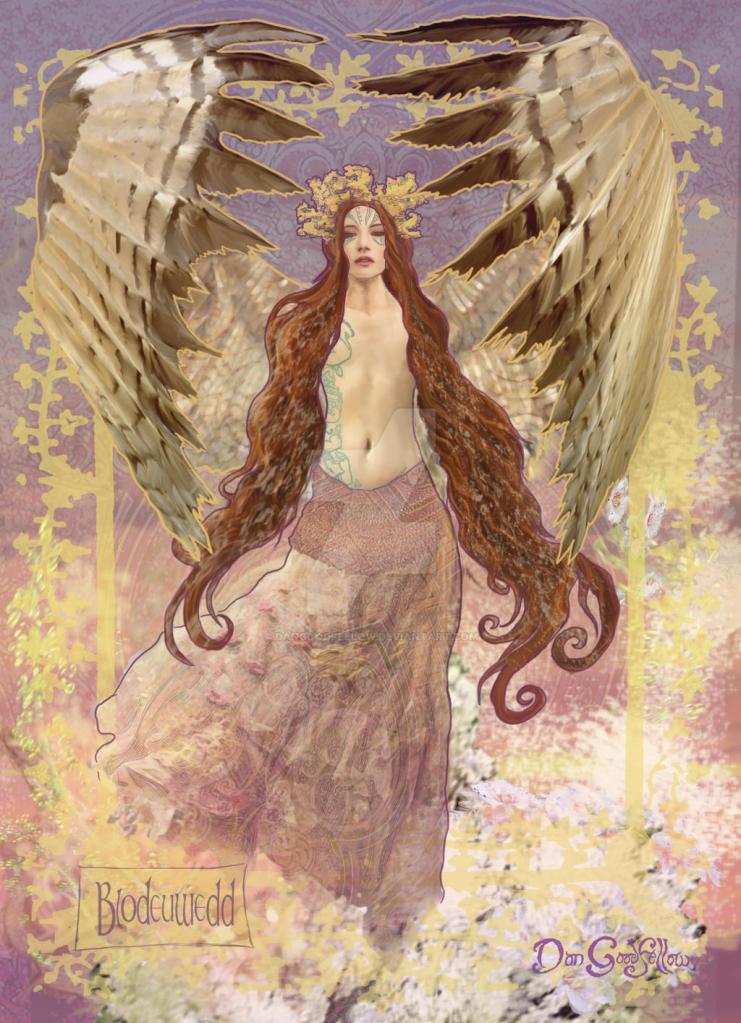
When I need to call upon my motivation, my inner dynamo or active strength, rather than calling on my inner masculine like most women I know do (and that is completely fine), I find it comes more naturally to me, and what I know to be true about the diversity of feminine archetypes, to call on my inner Huntress. I typically conceptualise this in the context of the goddess Artemis (as Goddesses In Everywoman does), but last weekend at our Welsh goddess retreat, we explored this archetype through Blodeuwedd, the demure flower maiden who finds her power to change her circumstances that she didn’t ask for and becomes the owl, the huntress of the night.
Grief and fear cannot rule you; let them be your faithful servants, protective of their mistress. Loss serves a huntress like fuel serves fire.
Mass Effect Andromeda
In conclusion: Our map of mythopoetic memory gives us so many different kinds of masculinity and femininity that I find it incredibly snore-worthy to just pick of archetype from each and label them as ‘the masculine and the feminine’ in their entirety. So no, women are not necessarily masculine when they have a job that they enjoy. But even if we do conceptualise ‘the feminine’ as ‘the passive principle’ when placed in a system of dualities, to view that as being synonymous with ‘the submissive principle’ is deeply flawed and unnuanced on a metaphysical and philosophical level (see: car metaphor).
I’m aware that this is probably the longest blog post I’ve ever written, and to be honest, I’ve only just scratched the surface. I am considering writing a book on this, because it’s something I’ve explored extensively over the past couple of years, and have came to some conclusions on that I feel pretty comfortable with. Not everyone will agree with me here on everything, that’s fine, but I’d at least like to open this conversation up a little more from what I consider to be a much more nuanced perspective than ‘masculine is active and dominant’ and ‘feminine is passive and submissive’.
O human mind, throughout your thinking process invoke the subtle sound of Kali, Kali, Kali. Why not ground your entire being in Her Holy Name, which dissolves all dangers arising from without and from within?
How can you forget, even for an instant, Her supremely precious Name? The mind that remembers the Mother experiences no fear when facing the terrible expanse of universal suffering.
Overcome with fervent love, this poet pleads: “O mind, how can you possibly forget the Mother? At the very center of your being sing ceaselessly the Name of Kali, for your life in the current of time is coming to an end.”
Ramprasad poem No. 21, translated by Lex Hixon, featured on the Shakti Bhajans album by Jai Ma Music.
I am writing this on my phone, stood under a bus shelter, because I wanted to get this out but will be busy tonight and will need to go straight to bed as soon as I get home.
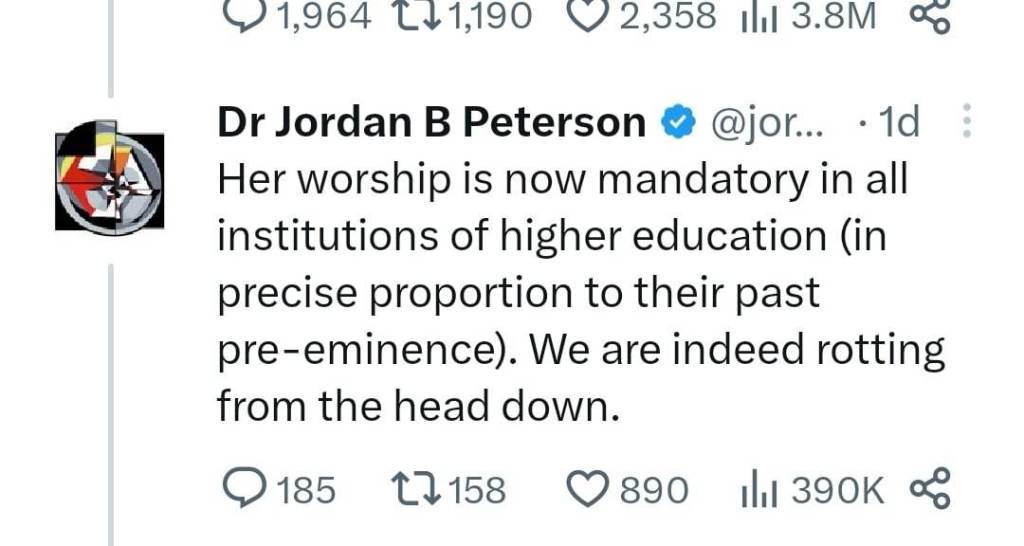
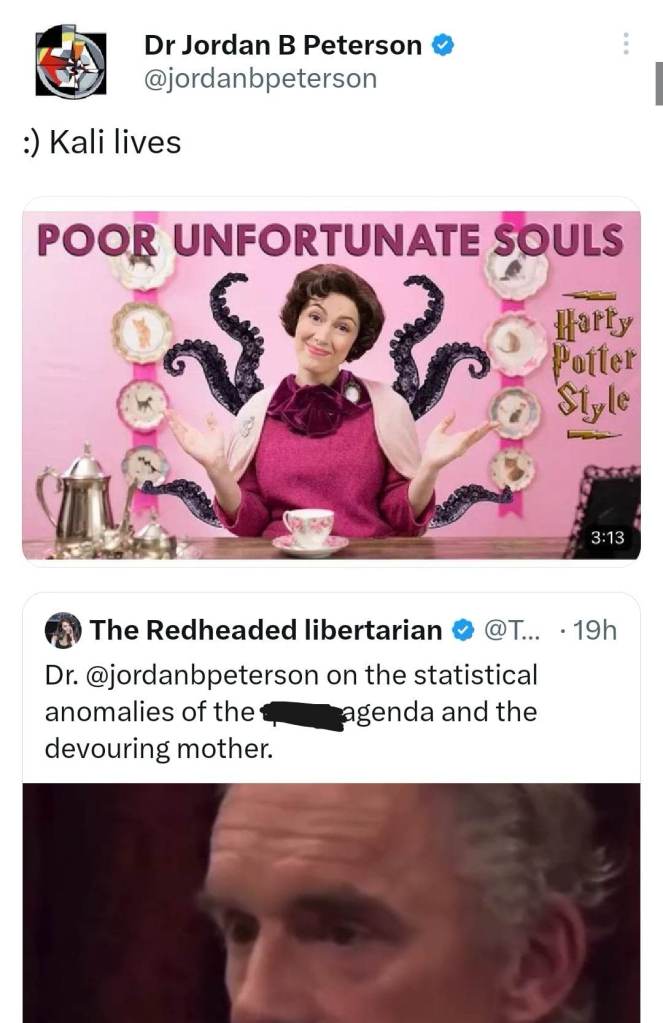
Jordan Peterson is having some sort of mental breakdown in which he thinks worshipers of Gaia, Pan, and now the Hindu goddess Kali are on some rampage to destroy the West. Most recently he made some downright genuinely offensive comments about the goddess Kali, for which he not only refused to apologise and admit his mistake, but doubled down upon when challenged on it by Hindus, the overwhelming majority of whom were very polite about it.
(Note: I’ve chosen to censor that bottom one because it uses what I perceive to be a homophobic slur, and it’s getting in to sociopolitical issues that I’m not at liberty to comment on right now).
I genuinely think this man is suffering from a form of spiritual psychosis and he’s seemed more… Troubled than usual since his coma and benzo addiction.
I’ve said a lot about my dislike for this man’s views and politics (especially around the feminine and the environment) but I also think there’s something to be said for how his earlier work has genuinely benefited a lot of young men’s lives. I don’t like to demonise people I disagree with and with some notable exceptions I can see the good in many different psychologists, theologians and philosophers whose work I personally don’t like. To be honest, while I’ve not read his books other than a flick through my ex’s copy, some of his earlier interviews and lectures have genuinely helped me adopt a stronger mindset and ‘get my act together’ so to speak. I think he spoke to a dadless generation and as someone with little to no masculine influence in my life, I get it. He is certainly a better role model for young men than some so-called ‘masculinity gurus’ that have risen (and fell) in recent years.
But this is ridiculous. Pagan gods and Hindu gods are not malevolent archetypes of chaos that want to attack Western values. On the contrary, Indo-European polytheism is the basis of Western civilization. Who are the last mainstream, far-practiced IE religion left on earth? Hindus. Whom I have so much respect for.
Even his most ardent defenders, if they have a shred of intellectual honesty, should admit that this is a bad look. No one is forcing college students to worship a Hindu goddess (and environmentalists aren’t forcing Christians to worship a Pan or Gaia).
He has also taken a very Christian-centric approach in which masculinity = order and femininity = chaos. Inasmuch as we can appreciate Chaos as a force of change, intuition, flow, power that cannot be dominated by any human, beauty, love, I have no problem with that, but you can’t apply it to religions where it does not fit. Kali Maa is not a force of chaos. Her name means ‘time’. She is a fierce defender of the divine order, slaying those demons who threaten her children. She is much more akin to Jesus or Our Lady Mary in Christianity than Lilith or Tiamat. And it is pretty clear to me that Peterson has a deep fear of what he perceives as ‘feminine chaos’, instead of an understanding that it is an equally necessary, equally-capable-of-good force as order is. You need a balance of order and chaos. Peterson is very influenced by the likes of Jung- and somewhat by Joseph Campbell, who spoke fondly of the Goddess, the Earth Mother, and so forth. Campbell never disparaged Her as a dangerous, chaotic, idolatrous force. There are those who have told me Peterson is not a Christian supremacist and is okay with pagan religions but at least now, that no longer seems to be the case. From what he has been saying lately, perhaps since his full conversion to Christianity (rather than dancing around the subject when asked about his religion like he did for years) it seems he is genuinely anti-pagan and anti-any religion that isn’t Abrahamic, or worships a single, transcendent, masculine-coded God. Many such people look at Kali’s frightening appearance and perceive her as a demon, or at least something she very much isn’t.
This is also why, as somewhat of a Jungian and comparative mythologist myself, we must be careful that we are not applying our own culturally Christian biases to deities whom they do not apply. Many goddesses from not just Hinduism but also IE paganism generally who appear to represent ‘chaos’ on the surface are actually acting in favour of the divine order. Let’s think about this metaphysically for a minute. Many goddess worshipers, Jungians etc agree that the feminine represents nature, matter, the changing seasons, the changing earth. Okay. Do the seasons just come whenever they want? Do you wake up one morning in January and find suddenly it is late summer and the apples are beginning to fall? Of course not. Nature is deeply ordered. I do not disparage those who, in an attempt to understand our complicated universe and the relationship between the divine feminine and the divine masculine, have came to the conclusion that chaos is feminine. I have friends who take this view. But even in Yin and Yang, which influences this Jungian chaos/order dichotomy, a seed of Yang lives in Yin and vice versa. Therefore, can we not concede that even if the Goddess represents chaos, she employs order to weave the patterns of the seasons?
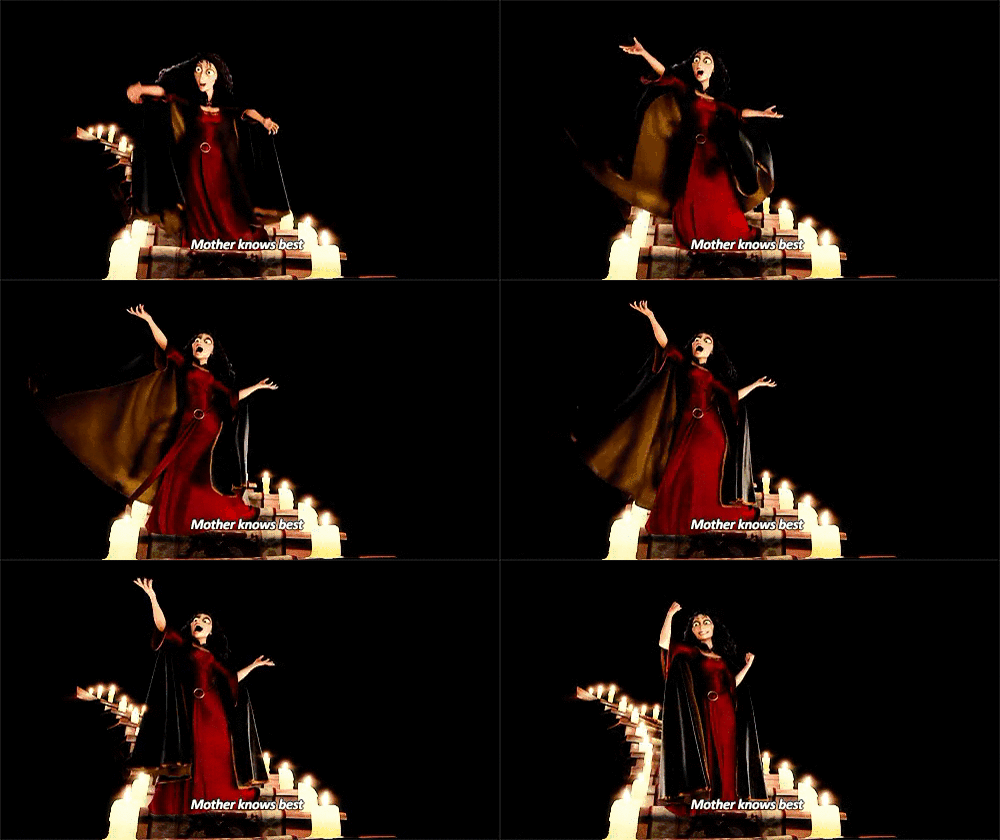
Kali does not come from the underworld. I assume he is conflating her with figures such as Hekate and Ereshkigal. All broadly fit under the banner of ‘dark goddess’ but there’s a lot of nuance that gets missed in these modern conversations about polytheism. Archetypes can be useful to understand how the gods influence our lives but they are not the be-all-and-end-all. The ‘Devouring Mother’ Peterson speaks of is a Jungian archetype that influences mothers who are overprotective of their children. It seeks to prevent children from reaching their fullest potential at its most benign by stifling their development (picture the mother who won’t let her son skateboard with the other boys in case he hurts himself) and at its most damaging it is abusive and narcissistic. I’ve certainly seen this archetype influence mothers I know (including one significant one who does not like her adult sons having serious girlfriends or making decisions without her approval). It can be understood in terms of figures like Mother Gothel from Rapunzel.
But Kali Maa is not an example of this archetype. As for ‘the Goddess’ in the sense that many modern Westerners use it, She is all, and can be said to contain this archetype within Her, but Christian, and culturally Christian patriarchal men like Peterson hyperfixate on archetypes such as this as if that’s all the Goddess is, implying She is a threat to Western values (when actually Her civilization arguably influenced much of ours). I’m also not sure how he came to the conclusion that the Devouring Mother is influencing academia but I’d genuinely be interested to know why he thinks this. Perhaps he’s saying she prevents professors from allowing students to reach their own conclusions on topics and instead wants them close to her ideas? I’ve heard that about academia before, but to be honest, while the series of tweets seems like mostly incoherent psychobabble to me (as do most of his tweets of late), it seems to be more that he’s associating her with leftist ideologies such as feminism. Which brings me to my final point.
While Paganism and especially goddess worship have became very politicized due to their association with environmentalism, equality and feminism, you don’t have to identify as a feminist or any political ideology to come to Her. Her worship transcends human bi-partisan issues. While I’m basically a leftist (and some spicy flavour of feminist, depending on who you ask) myself, I think it would be great if the Goddess could be separated from these issues and depoliticised. I know that’s not going to be a popular take and I understand the argument that the Goddess calls us to embrace ideas of equity, balance, empowerment of the oppressed, protection of the planet and so on. I very much agree, but people have different ideas on how to do that, so rather than saying, for example, ‘you have to identify as a feminist to worship the Goddess’ I’d prefer if we could say ‘the Goddess teaches us that women are of equal value to men and deserving of protection, dignity and respect’. Associating the Goddess (and paganism generally) too heavily with leftist politics also lends credence to the idea our religious views are not sincere and instead we’re just using them as political tools.
I would ask you all to go listen to what Hindus have to say on the topic of Kali rather than doing what many tend to do in the Western, Jungian-influenced Goddess movement and paying more attention to non-Hindu, culturally Christian sources on Her. I saw many well-worded, intelligent, beautiful responses in response to Peterson’s tweets from Hindus across the political spectrum.






 Idylls of the Queen