-
Kali: Holy Slayer of Demons or Chaotic Devouring Mother?

Kali by V. V. Tapar O human mind, throughout your thinking process invoke the subtle sound of Kali, Kali, Kali. Why not ground your entire being in Her Holy Name, which dissolves all dangers arising from without and from within?
How can you forget, even for an instant, Her supremely precious Name? The mind that remembers the Mother experiences no fear when facing the terrible expanse of universal suffering.
Overcome with fervent love, this poet pleads: “O mind, how can you possibly forget the Mother? At the very center of your being sing ceaselessly the Name of Kali, for your life in the current of time is coming to an end.”
Ramprasad poem No. 21, translated by Lex Hixon, featured on the Shakti Bhajans album by Jai Ma Music.I am writing this on my phone, stood under a bus shelter, because I wanted to get this out but will be busy tonight and will need to go straight to bed as soon as I get home.
Jordan Peterson is having some sort of mental breakdown in which he thinks worshipers of Gaia, Pan, and now the Hindu goddess Kali are on some rampage to destroy the West. Most recently he made some downright genuinely offensive comments about the goddess Kali, for which he not only refused to apologise and admit his mistake, but doubled down upon when challenged on it by Hindus, the overwhelming majority of whom were very polite about it.

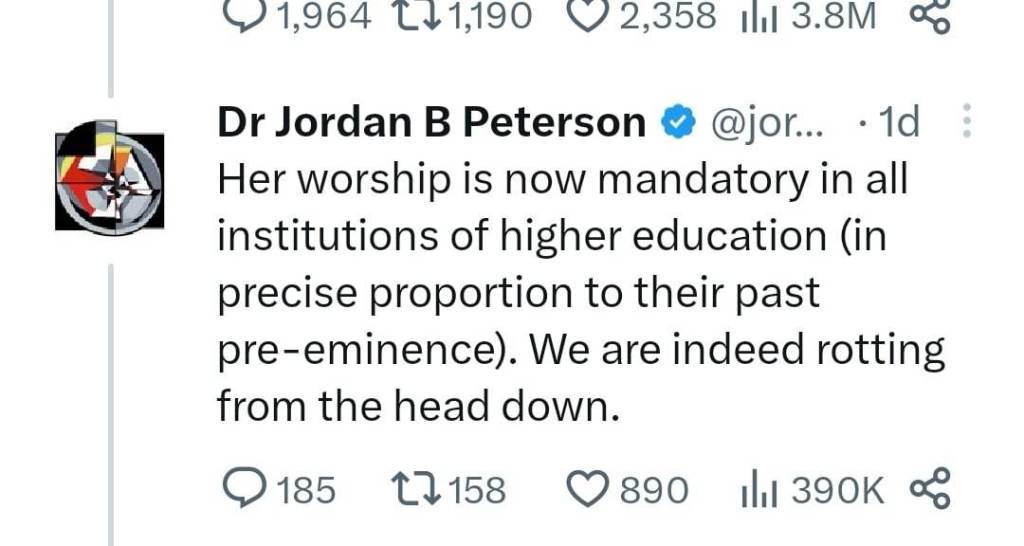
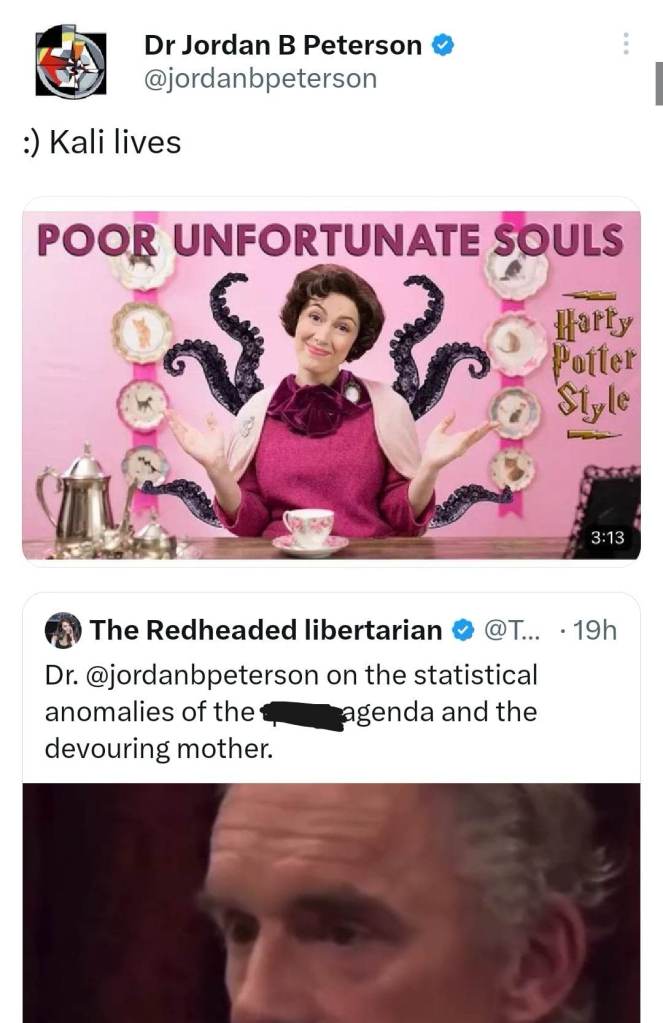
(Note: I’ve chosen to censor that bottom one because it uses what I perceive to be a homophobic slur, and it’s getting in to sociopolitical issues that I’m not at liberty to comment on right now). I genuinely think this man is suffering from a form of spiritual psychosis and he’s seemed more… Troubled than usual since his coma and benzo addiction.
I’ve said a lot about my dislike for this man’s views and politics (especially around the feminine and the environment) but I also think there’s something to be said for how his earlier work has genuinely benefited a lot of young men’s lives. I don’t like to demonise people I disagree with and with some notable exceptions I can see the good in many different psychologists, theologians and philosophers whose work I personally don’t like. To be honest, while I’ve not read his books other than a flick through my ex’s copy, some of his earlier interviews and lectures have genuinely helped me adopt a stronger mindset and ‘get my act together’ so to speak. I think he spoke to a dadless generation and as someone with little to no masculine influence in my life, I get it. He is certainly a better role model for young men than some so-called ‘masculinity gurus’ that have risen (and fell) in recent years.
But this is ridiculous. Pagan gods and Hindu gods are not malevolent archetypes of chaos that want to attack Western values. On the contrary, Indo-European polytheism is the basis of Western civilization. Who are the last mainstream, far-practiced IE religion left on earth? Hindus. Whom I have so much respect for.
Even his most ardent defenders, if they have a shred of intellectual honesty, should admit that this is a bad look. No one is forcing college students to worship a Hindu goddess (and environmentalists aren’t forcing Christians to worship a Pan or Gaia).
He has also taken a very Christian-centric approach in which masculinity = order and femininity = chaos. Inasmuch as we can appreciate Chaos as a force of change, intuition, flow, power that cannot be dominated by any human, beauty, love, I have no problem with that, but you can’t apply it to religions where it does not fit. Kali Maa is not a force of chaos. Her name means ‘time’. She is a fierce defender of the divine order, slaying those demons who threaten her children. She is much more akin to Jesus or Our Lady Mary in Christianity than Lilith or Tiamat. And it is pretty clear to me that Peterson has a deep fear of what he perceives as ‘feminine chaos’, instead of an understanding that it is an equally necessary, equally-capable-of-good force as order is. You need a balance of order and chaos. Peterson is very influenced by the likes of Jung- and somewhat by Joseph Campbell, who spoke fondly of the Goddess, the Earth Mother, and so forth. Campbell never disparaged Her as a dangerous, chaotic, idolatrous force. There are those who have told me Peterson is not a Christian supremacist and is okay with pagan religions but at least now, that no longer seems to be the case. From what he has been saying lately, perhaps since his full conversion to Christianity (rather than dancing around the subject when asked about his religion like he did for years) it seems he is genuinely anti-pagan and anti-any religion that isn’t Abrahamic, or worships a single, transcendent, masculine-coded God. Many such people look at Kali’s frightening appearance and perceive her as a demon, or at least something she very much isn’t.
This is also why, as somewhat of a Jungian and comparative mythologist myself, we must be careful that we are not applying our own culturally Christian biases to deities whom they do not apply. Many goddesses from not just Hinduism but also IE paganism generally who appear to represent ‘chaos’ on the surface are actually acting in favour of the divine order. Let’s think about this metaphysically for a minute. Many goddess worshipers, Jungians etc agree that the feminine represents nature, matter, the changing seasons, the changing earth. Okay. Do the seasons just come whenever they want? Do you wake up one morning in January and find suddenly it is late summer and the apples are beginning to fall? Of course not. Nature is deeply ordered. I do not disparage those who, in an attempt to understand our complicated universe and the relationship between the divine feminine and the divine masculine, have came to the conclusion that chaos is feminine. I have friends who take this view. But even in Yin and Yang, which influences this Jungian chaos/order dichotomy, a seed of Yang lives in Yin and vice versa. Therefore, can we not concede that even if the Goddess represents chaos, she employs order to weave the patterns of the seasons?
Kali does not come from the underworld. I assume he is conflating her with figures such as Hekate and Ereshkigal. All broadly fit under the banner of ‘dark goddess’ but there’s a lot of nuance that gets missed in these modern conversations about polytheism. Archetypes can be useful to understand how the gods influence our lives but they are not the be-all-and-end-all. The ‘Devouring Mother’ Peterson speaks of is a Jungian archetype that influences mothers who are overprotective of their children. It seeks to prevent children from reaching their fullest potential at its most benign by stifling their development (picture the mother who won’t let her son skateboard with the other boys in case he hurts himself) and at its most damaging it is abusive and narcissistic. I’ve certainly seen this archetype influence mothers I know (including one significant one who does not like her adult sons having serious girlfriends or making decisions without her approval). It can be understood in terms of figures like Mother Gothel from Rapunzel.
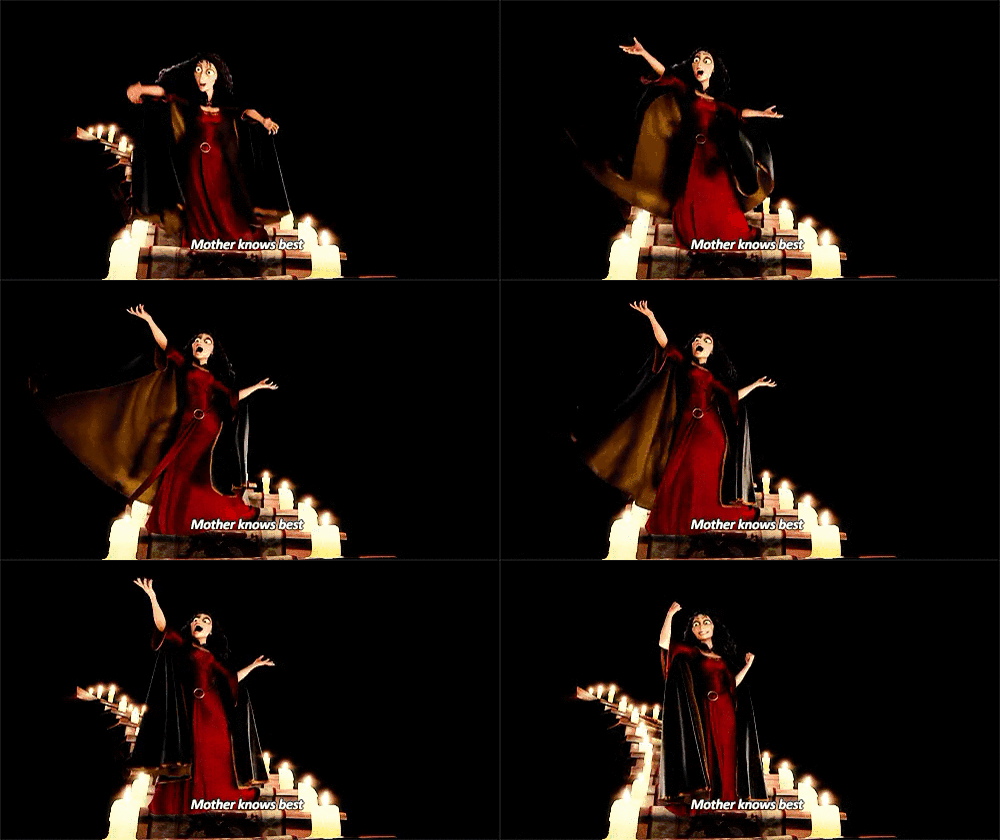
But Kali Maa is not an example of this archetype. As for ‘the Goddess’ in the sense that many modern Westerners use it, She is all, and can be said to contain this archetype within Her, but Christian, and culturally Christian patriarchal men like Peterson hyperfixate on archetypes such as this as if that’s all the Goddess is, implying She is a threat to Western values (when actually Her civilization arguably influenced much of ours). I’m also not sure how he came to the conclusion that the Devouring Mother is influencing academia but I’d genuinely be interested to know why he thinks this. Perhaps he’s saying she prevents professors from allowing students to reach their own conclusions on topics and instead wants them close to her ideas? I’ve heard that about academia before, but to be honest, while the series of tweets seems like mostly incoherent psychobabble to me (as do most of his tweets of late), it seems to be more that he’s associating her with leftist ideologies such as feminism. Which brings me to my final point.
While Paganism and especially goddess worship have became very politicized due to their association with environmentalism, equality and feminism, you don’t have to identify as a feminist or any political ideology to come to Her. Her worship transcends human bi-partisan issues. While I’m basically a leftist (and some spicy flavour of feminist, depending on who you ask) myself, I think it would be great if the Goddess could be separated from these issues and depoliticised. I know that’s not going to be a popular take and I understand the argument that the Goddess calls us to embrace ideas of equity, balance, empowerment of the oppressed, protection of the planet and so on. I very much agree, but people have different ideas on how to do that, so rather than saying, for example, ‘you have to identify as a feminist to worship the Goddess’ I’d prefer if we could say ‘the Goddess teaches us that women are of equal value to men and deserving of protection, dignity and respect’. Associating the Goddess (and paganism generally) too heavily with leftist politics also lends credence to the idea our religious views are not sincere and instead we’re just using them as political tools.
I would ask you all to go listen to what Hindus have to say on the topic of Kali rather than doing what many tend to do in the Western, Jungian-influenced Goddess movement and paying more attention to non-Hindu, culturally Christian sources on Her. I saw many well-worded, intelligent, beautiful responses in response to Peterson’s tweets from Hindus across the political spectrum.
Jai Maa.
~ Rhianwen
-
Imbolc: The Predawn of the Year
So, I know what you’re thinking. “Rhianwen/Erin, Imbolc was five days ago! You’re late!”
To which I would say, technically it depends which calendar you’re following, and secondly, I’ve been so busy! And in fact, I’m not even mad that I’m only getting this blog post out now, because today marks the official end of my Imbolc observance, so I didn’t want to make this post prematurely and have to make another one.
I had wanted to start a new blog for a while, but the depths of winter did not feel like the right time. After an amazing summer last year, as soon as we hit mid September I was called once again like many of us on the Venusian path are to descend like Inanna in to the depths of my own personal underworld after my relationship, which was still very much in the honeymoon period, ended abruptly, coldly and without any forewarning. I spent most of this winter lying in bed, dreaming, reading, journaling, just trying to process the pain I was experiencing. Trying to move through it with grace and beauty like Queen Rhiannon, but also wanting to howl and screech and grow claws and fangs like a werewolf and tear everything apart. That was absolutely not the time to be starting a new blog. But Imbolc? Couldn’t be more perfect.
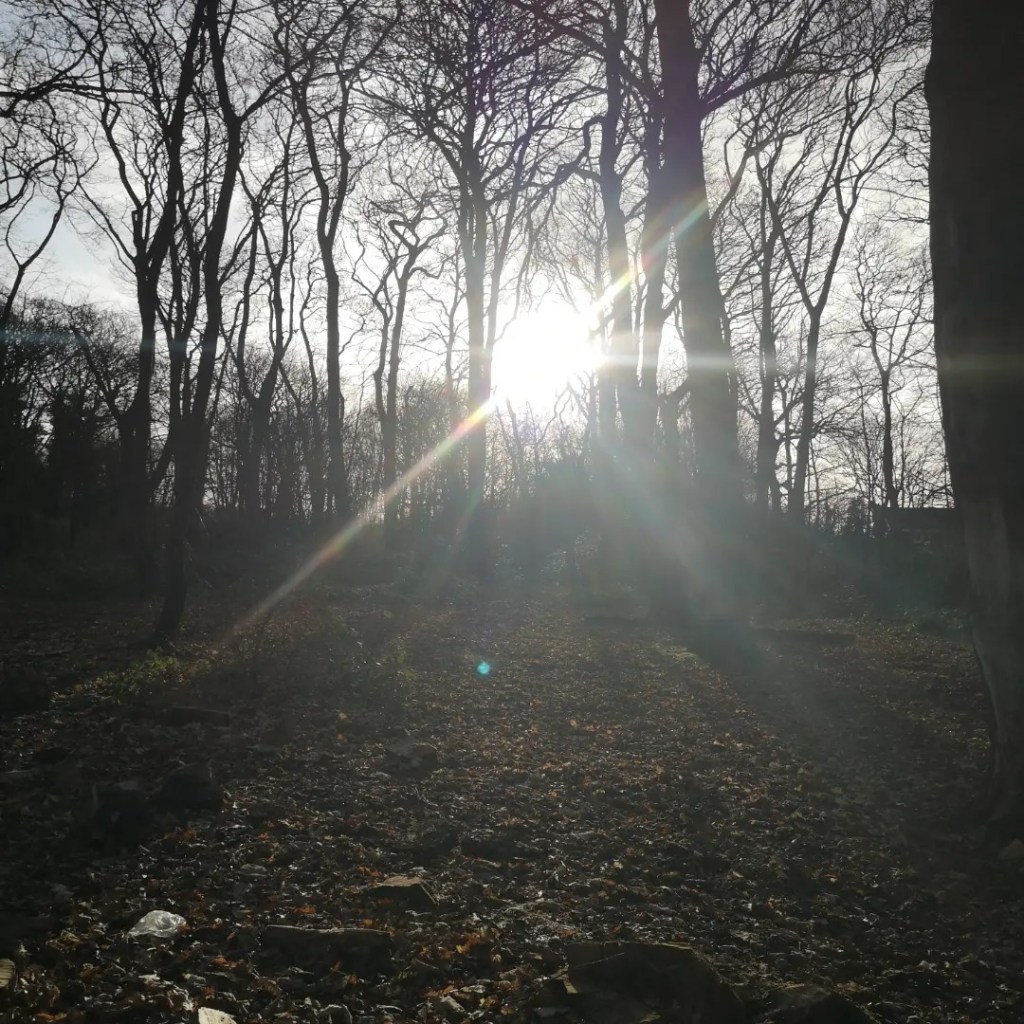
Whilst most contemporary Celtic-focused polytheists hold the Celtic new year to begin at Samhain, I cannot bring myself to resonate with that. For a while I have struggled to find the balance between my belief that spiritual cohesion and shared truths are important, but also not trying to force myself in to a paradigm that does not fit me. I needed the start of my year to be about newness, freshness, life, not descent and death. When I was a Filianist, we celebrated the new year at Spring Equinox (Eostre/Ostara). That always felt more fitting to me, and still does. In fact, I am torn between either Imbolc or Ostara as the new year in my personal wheel observance. I could be mistaken, but from what I understand, the Dianic tradition honours Imbolc as the New Year. Either way, I realised that if Ostara is the dawn, where we honor the Indo-European dawn/spring goddess and all Her cognates, Imbolc is the pre-dawn. When the sky is still navy blue, but you can see the sun’s light just slightly beginning to creep in, like this photo:

Brigid is, in one sense, a Dawn Goddess, much like the goddess Ostara/Eostre who is thought to be associated with Her (I will post more about this at Ostara itself). The IE Dawn Goddess (H₂éwsōs) is one of the oldest forms of Goddess we have concrete evidence for, up there with the Sky Father and Earth Mother. Brigid’s name is cognate with “the Sanskrit word Bṛhatī meaning “high”, an epithet of the Vedic Hindu dawn goddess Ushas. We know that Brigid’s name means ‘the High One’ or the ‘Exalted One’, and that early Hindu gods share some interesting similarities with Irish ones (see Danu, the same goddess name thousands of miles away from one another). Therefore, like Ushas, Eos, Aurora, Ausrine Eostre, Ostara, Thesan, Mater Matuta etc, Brigid may be related to H₂éwsōs, but her Dawn Goddess aspects seem less apparent than with those other goddesses and what survived Christianisation (through Her relegation to a Catholic Saint) the most were her other aspects, particularly those associated with healing.
She is ‘the goddess the poets adored’, and the spark of inspiration to begin new projects this time of year. But it is a gentle spark, and so in my desire to live in harmony with the cycles of nature I am trying to restrain myself from pushing myself too hard just yet when I am still feeling the dormancy of winter, and not yet fully out of my Descent period. That being said, I have started a new job, written the first chapter of my book, and started a course for work. Brigid’s energy has been the instigator in all of this. With Her wand, she gently awakens the land, and with that, all of us. It is a testament to how beloved this Goddess was that She not only survived Christianisation but remained one of the most beloved saints in Ireland, up there with St. Patrick. As of this year, St. Brigid’s day will be celebrated in Ireland as a bank holiday on February 6th. Like many saints, She is a bridge (fitting, given her name) between the Old Ways and the New. She was known not just in Ireland, but also in Scotland, England and Wales. In England, She was also known as Brigantia, the sovereignty/pastoral goddess of the Brigantes. Another fascinating thing is that while she has a consort and sons, She is the primary ‘character’ in her own Divine Drama, not just a mother of a divine son or wife of a divine father. We do not need to reclaim Brigid from patriarchy like we’ve had to do with some other goddesses. She always represented a sovereign matriarchal/matrifocal way of being, which is probably why she is one of the most primary goddesses of the feminist goddess movement.
I won’t dive too deeply in to Brigid’s mythology and correspondences outside of what I’ve already said. The point of me mentioning the Dawn Goddess aspects were because I feel as though it is an aspect of Her personality that is often overlooked, especially in an age when ‘the divine feminine’ is so strongly associated with the moon largely due to the influence of Wicca, the New Age movement and the desire to use comparative mythology to form a cohesive framework for a modern day pagan practice, also known as syncretism (which I do to some degree because I think it is somewhat necessary at times, but I find it sad it has erased the individuality of many of our native gods and goddesses in favor of fitting one binary formula). The other point was to show that while we’re not fully standing in the radiant, triumphant golden light of the dawn, her ‘cousin’ Eostre/Ostara right now, we’re almost there, and many of us may feel ourselves beginning to awaken once more. Brigid paves the way for Eostre to ride Her chariot across the sky. She is the light just beginning to rise above the horizon, the predawn. She is not the bright flowers and pink blossoms of spring, but the white snowdrop flowers that promise we are almost out of the cold, dark months.
As for how I’ve actually celebrated this beautiful festival and turning point in the wheel: I began celebrating and preparing for Imbolc last Sunday, where I went to the park, sang some songs, looked for materials to make a Brideog and a Brigid’s Cross with (I wasn’t sure what I was looking for and ended up leaving empty handed, so I decided to order some wheat stalks online instead) and looked for signs of the world awakening.
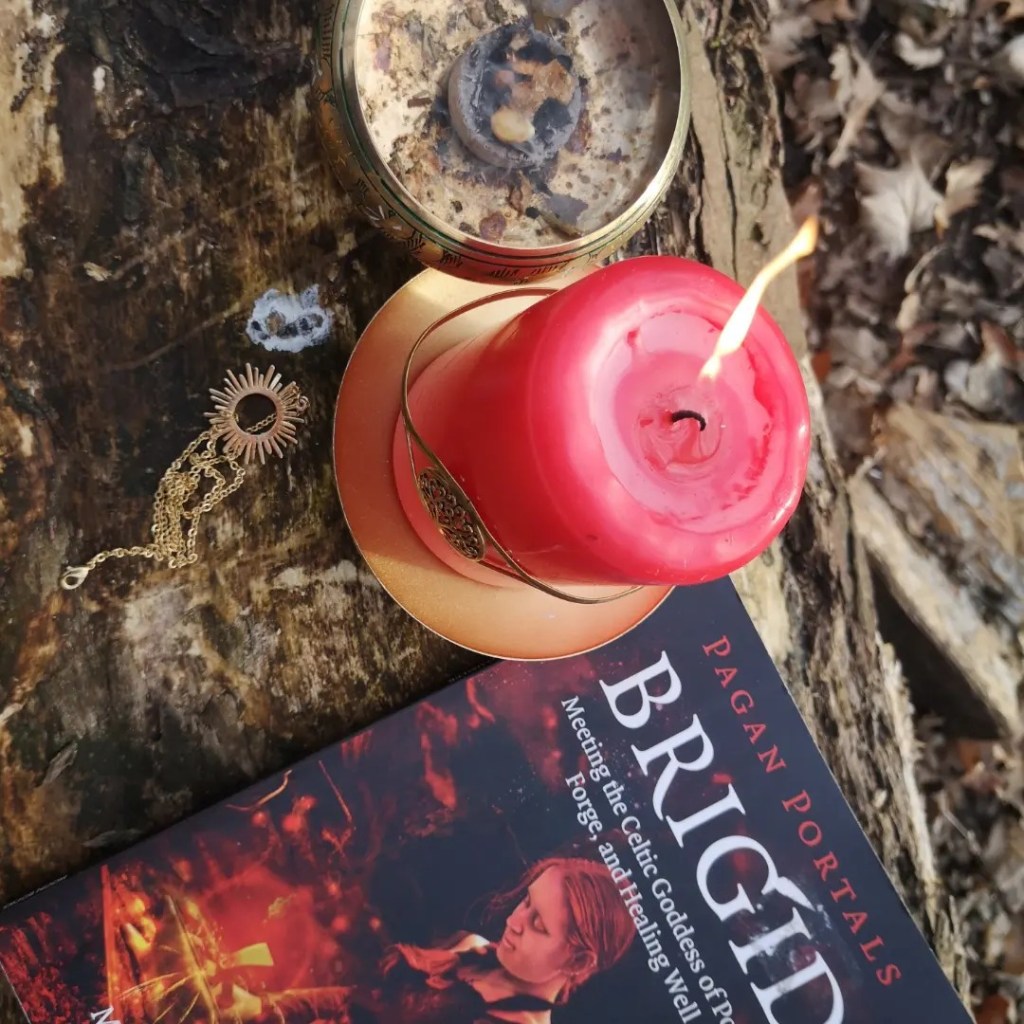

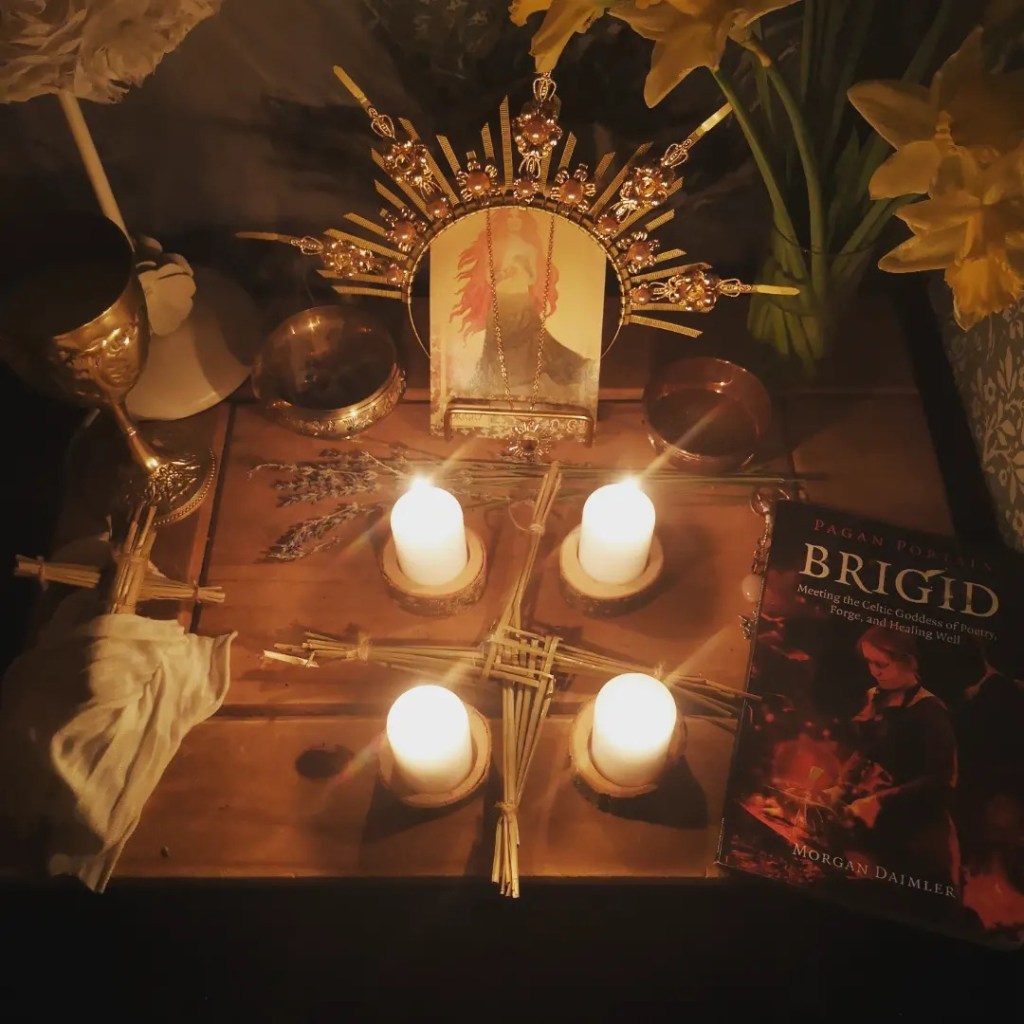
The night before Imbolc itself, after I got back from a different park, I made my Brigid’s Cross, my Brideog (‘little Brigid’ doll), set up my altar, took a cleansing bath, spent some time in prayer and set up a white-gold scarf for Her to bless on Her way by as She awakens the land. I did this last year and found it worked well with headaches and sore throats.


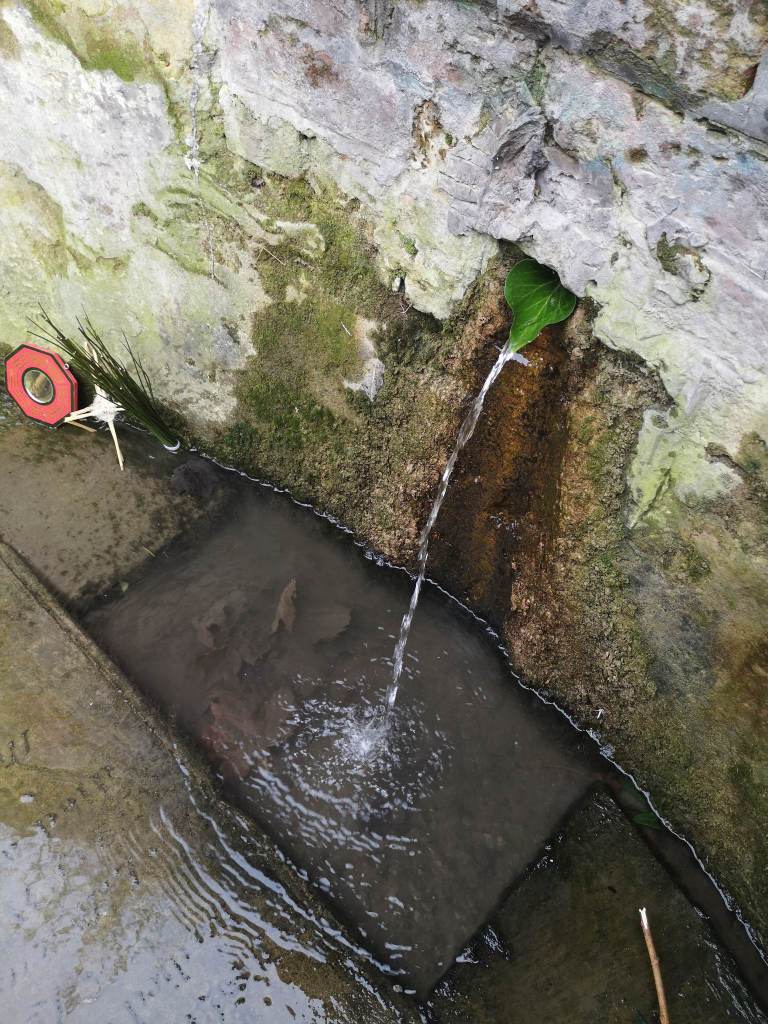
On Imbolc itself, I took part in a beautiful tour hosted by my city’s Irish society in honour of Brigid, where we were showed buildings and sites relevant to Her, and discussed Her many qualities. After this, we went to a spring sacred to Her in the Anglican cathedral gardens, where we all laid out our Brigid’s crosses, and held a sharing circle where we talked about what Brigid and Imbolc mean to us, read poetry and sang songs. I met some wonderful people and couldn’t have asked for a better day.

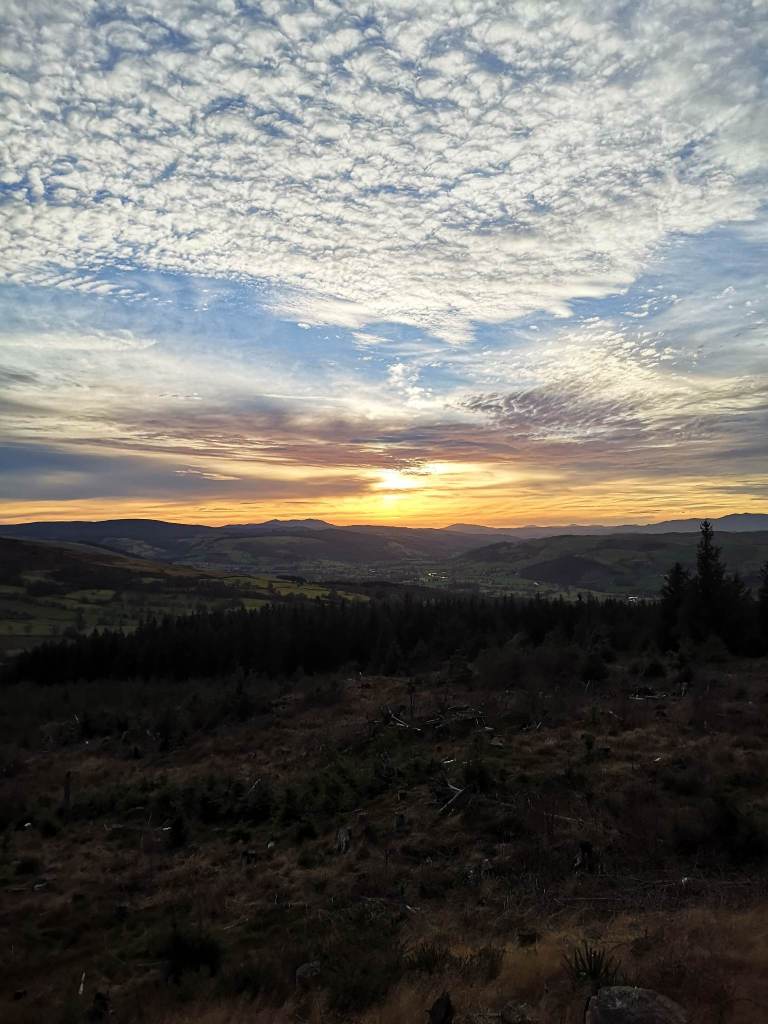
Lastly, on Sunday night, me and some beautiful sisters went to Wales for an incredible hike, where we sang songs and blessed the parts of the land that had been violated by humans such as destroyed trees and a cockfighting pit. The amount of healing I felt in these moments can’t be understated because it felt like while we were offering our love to the land to apologise and offer healing for the trauma She had faced, the land was sending love and healing back. My favourite moment on the hike was singing Wild Mountain Thyme/Blooming Heather, one of my favourite folk songs, with a sister called Bexi whom I’m convinced is an actual Disney princess. On our way back down, we almost got lost and ended up walking through wild forest where I almost fell over several times, but I didn’t: I think one of the benefits of my path becoming more earth-based and less heaven-based is that I’m learning to trust the Land a lot more to hold me, show me where I need to go, and not let me fall. I swear I’ve been a lot less clumsy lately on my outdoorsy excursions. When we got back to the off-grid retreat centre we were staying in, we ate a beautiful communal meal (I brought veggie curry), held a small ceremony, and spent the rest of the night under the stars and glorious full moon singing songs and talking. We then slept in a lovely little roundhouse, with the fire blazing all night to keep us warm.


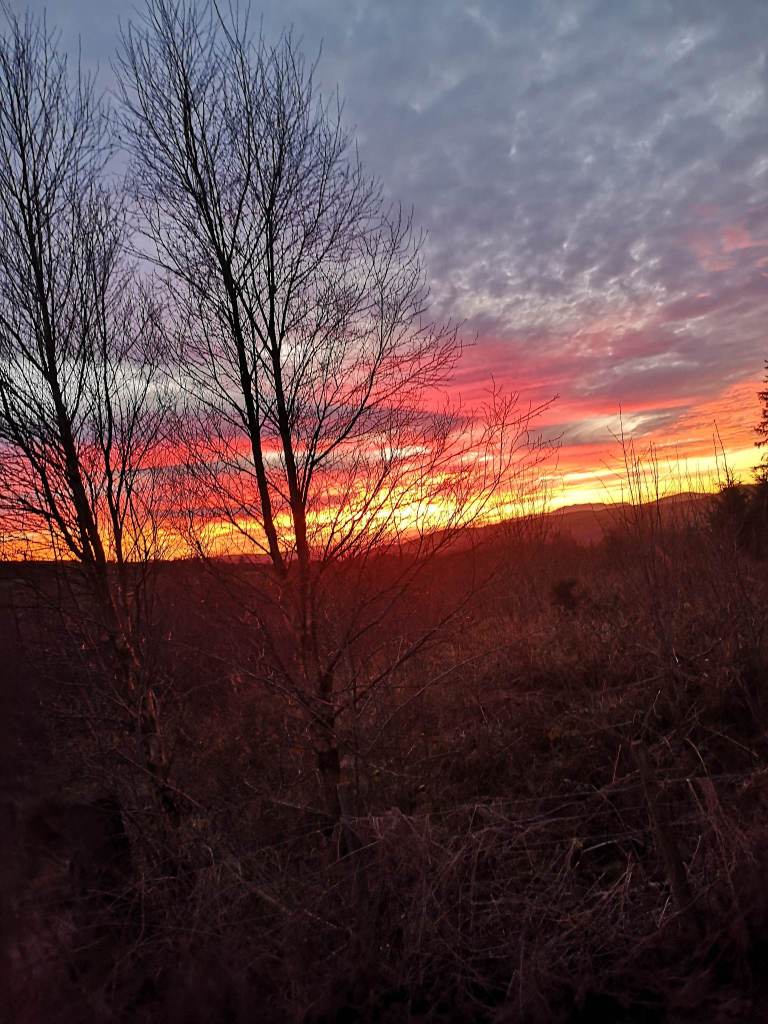
To finish off, I’d like to say that while it’s fun to honour different deities across the Wheel at points that are most associated with them, you don’t have to wait for Imbolc to pray to Brigid and tap in to Her energy. She is always there. Whenever you’re going through a dark night of the soul and need to be reminded that there is light at the end of the tunnel. Whenever you need inspiration to finish a poem, song or story. Whenever you need healing of mind, spirit or body. Whenever you need motivation to spring in to action. I began my journey with Her this time last year, but this Imbolc especially, She has been there for me in a huge way, healing my broken heart and awakening me from my slumber. Please let her be there for you too.
Blessings,
Rhianwen
-
Welcome!
Hello readers, whoever you may be!
This is the fourth blog I have ever began on Goddess religion. The first three, though, were from a time when my approach to it was much different than it is now. As such, I thought it was time for a clean slate. I have learned so much since I made my last blog entry, exactly a year ago today, on my old WordPress site.
For those of you who don’t know me, my name is Erin, but my ‘spiritual’, Goddess-inspired/channeled/given name is Rhianwen Dôn. The name apparently means ‘pure maiden’, but to me is also a combination of two goddesses I adore deeply: Rhiannon and Gwenhwyfar (Guinevere). Rhiannon’s name means ‘Divine Queen’ or ‘Great Queen’, while Gwenhwyfar’s likely means ‘White Enchantress’, ‘White Spirit’, etc. All three of my patron ‘Celtic’ goddesses (I also worship Venus) have associations with the color white. It typically represents maiden-like, gentle, pure, holy energy (though it has a shadow side which I’ll explore in the book I want to write on Gwenhwyfar). Purity doesn’t have to have the connotations many in the Christianized west hold it to have, for purity and innocence are available to any of us at any time, no matter how impure we may feel. The ‘Rhian’ part, the Queen part, is an acknowledgement of my understanding of Divine Sovereignty, particularly in relation to the divine feminine when women have been denied sovereignty in their own right for thousands of years. I’m going to explore that deeply in the book I’m currently writing, but I’m sure it’ll come up in my posts. Finally, my ‘last name’ is Dôn, the Welsh name for the ‘Celtic’ (I am aware this term is a great oversimplification and not historical but just for the purposes of this post please don’t kick up a fuss, I don’t have time to get in to migratory anthropology) Mother of the Gods also known as Dana, Danu, Anu, Ana. I chose the Cymric (Welsh) name because of my Cymric heritage, and an acknowledgement of the role that beautiful land, its stories and goddesses, have played in my spiritual journey since I was a little girl. As someone in the controversial ‘soft polytheistic’ camp, I view Dôn by all Her names as the Celtic manifestation of the Great Mother, who I view as not only an ‘Mother Earth’ figure but also an eternal, celestial force that existed before the physical planet Earth came in to being.
I have always been deeply religious and spiritual. I was raised Anglican, attended evangelical churches for a while, became a Mormon, then went back to evangelicalism for a short time while secretly keeping an altar to Sophia, the hidden divine feminine figure in Christianity. However, it wasn’t enough, I wanted more. I have been walking the path of the Sacred Feminine for about 8 years now. My spiritual path is ever-evolving. I have jumped the fence between a niche goddess tradition known as Filianism, hardline reconstructionism, new ageism, and back again multiple times. I now think it’s fair to say I sit between the revivalist/neopagan and reconstructionist camps; I try to stick to the original, ancient stories as much as possible, while believing it is okay to have our own interpretations and gnosis about them that others may not share. An example is my view of the Brythonic ‘Sovereignty Goddess’ as being a matriarchal concept and not a patriarchal one (again, will get more in to this in my upcoming book), and how I worship beings not typically regarded as goddesses by the hardcore reconstructionists who insist on having indisputable historical proof for everything (Gwenhwyfar, Rhiannon, Morgan le Fay, Olwen, etc).
It also must be said that at this point in my life, despite trying to include worship of the divine masculine/male gods in my practices, I find it hard to do so for I feel very little spiritual resonance there when I try. When I do, it is of Kings of the Land and consorts to my goddesses. I believe this comes from my spiritual upbringing and I do believe that while we still live in a world where 95% of spirituality is patriarchal, it’s not going to tip the scales in to an unbalanced gynarchy any time soon if a few pagan women want to focus on the feminine exclusively. Even in many of the pagan polytheistic faiths, many powerful goddesses in their own right began being reduced to mere helpmeets of male gods around 6,000 years ago as civilization began to lean more patriarchal for reasons that I am still pondering and exploring. I suppose one could compare my beliefs to the Shaktism branch of Hinduism, where the Devi is considered the supreme power of creation and therefore it is goddess-centric as opposed to Shaivism and Vaishnavism in which the goddesses are usually seen as consorts of the more frequently honored male gods. As I mentioned earlier, I believe in the Great Mother Goddess, the Lady of 10,000 Names, the primordial, elemental, eternal yet changing, cosmic yet earthly, feminine energy that permeates all of existence, and I believe one of the ways we can best connect with Her is through a relationship with the many ‘polytheistic’ goddesses, who are both Her and also individuals in Their own right. When I talk about ‘the Goddess’, I am talking about the One and the Many. I believe humans also possess some of Her creative spark through our inner feminine energy, which most people possess to some degree regardless of gender.
I do not typically practice ‘witchcraft’, but do believe in the power of manifestation, which I practice in a very goddess-focused way: aligning myself with my goddesses, carrying myself how I believe they would if they were to walk this planet, being their hands upon the earth. It is for this reason I currently call myself a Handmaiden of the Goddess. While I was initiated as a priestess in my old tradition (Filianism), I was always a spiritual leader online only, but now that I have diverged from Filianism (though I still believe in many of its metaphysics) I want to step in to priestesshood in my ‘real life’ community, and want to make a concerted effort to do so. Handmaiden was also a term used in Madrianism (old Filianism) to refer to something similar to a Deacon in Catholicism, and an aspirant priestess undergoing study before initiation. My other spiritual passions, interests and practices (budding or fully realised) include ritual practices, tarot, ecstatic dance, bardic arts (sacred storytelling, poetry and song), mantras & rosary beads, goddess embodiment & oracle practices, Jungian psychoanalysis, & more.
My non-spiritual interests include typical ‘girly girl’ stuff: pop music, video games, fiction books. To be honest, though, my spirituality is my life and my main area of interest. The Goddess has completely changed my life in so many names and teaches me new things every single year. She has been with me since I was a little girl seeing Her in the rolling hills of North Wales. She has healed my broken heart many times over, and been my best friend and closest confidante when I felt completely alone. I know now that I will be Her student my entire life.
Tomorrow I’m going to make my first proper post about how I celebrated Imbolc this year. In the mean time, you can find me at @rhianwendon on Instagram. Eventually I’ll be picking a better theme, creating an About page (which will probably just be this copied and pasted, to be honest) and getting set up properly. If you’d like to follow me I hope you enjoy learning about my walk with the Goddess and I hope it can inspire your own.
Blessed Be!
~ Rhianwen
-
Subscribe
Subscribed
Already have a WordPress.com account? Log in now.
 Idylls of the Queen